“हम सभी ने इस लोकप्रिय प्रेरक उद्धरण को सुना है – जहां इच्छा है, वहां रास्ता है; और इसलिए हमें अपनी ऊर्जा को दिशा देने की जरूरत है और अंतिम लक्ष्य को ध्यान में रखते हुए हमें जीत की दिशा में आगे बढ़ने की जरूरत है। खैर, यही है जीवन की यह खूबसूरत यात्रा!”
Book Review: “A Conversation With Time” By Author Nabaghan Ojha
“True courage results in some extraordinary outcomes, something which we hope for deep down in our hearts but don’t expect in our practical life and yet life surprises us with some beyond imaginable out-turns, only because of our courageous and bold decisions!”
Book Review: Moheni Govinda Nehette’s “Expression Of Devotion”
“Life is not easy for all until you make it smooth for yourself and with choosing a correct path of action, half the work is done for yourself. While the other half is done when you show sincere devotion to that path of action, which you have choose for yourself in order to make your life smooth!”
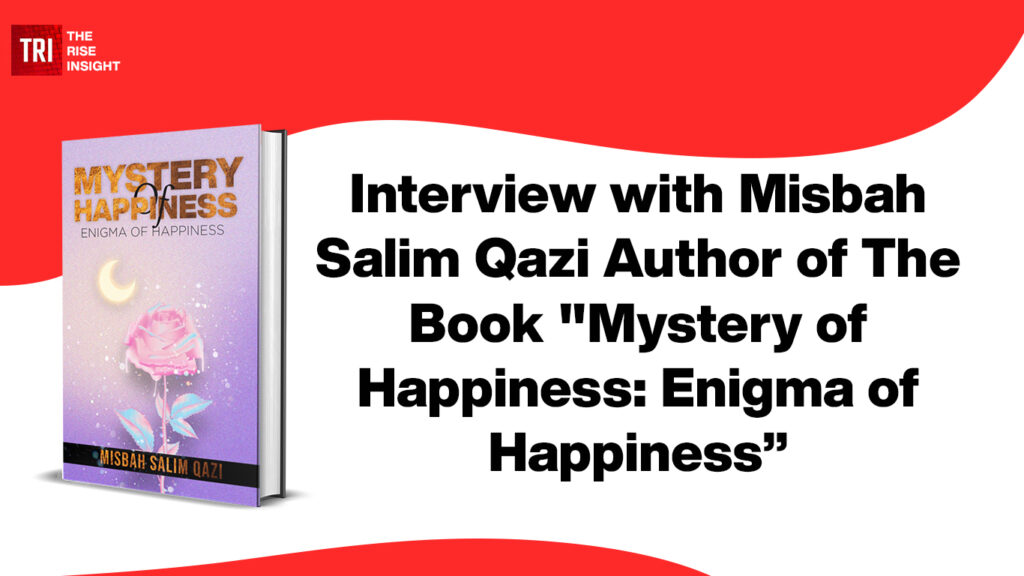
Interview with Misbah Salim Qazi Author of The Book “Mystery of Happiness: Enigma of Happiness”
1. The Rise Insight: I would like to begin by congratulating you on the publication of “Mystery of Happiness: Enigma of Happiness” How has the response to the book been so far? Misbah Salim Qazi: Thanks Saroha. Response to the book is quite satisfactory and I am pleased to see such a stunning response. 2. The Rise Insight: “Mystery of Happiness: Enigma of Happiness” seems to be quite different as per your choice of subject. What led to the idea of writing “Mystery of Happiness: Enigma of Happiness”? Were there any events that inspired the work? Misbah Salim Qazi: So, the idea behind writing Mystery of Happiness was to acquaint readers with the real meaning of happiness and to give few manageable steps to be happy. Yes, I have been an outdoor soul, so many times things happened life happened initially it made me grim but they say, “The wilderness holds answers to questions man has not yet learned to ask.” Which, gave me an idea of writing the Mystery of Happiness. 3. The Rise Insight: How easy or difficult was it for you to write on a subject that held relevance for all and also remain objective about it in your book“Mystery of Happiness: Enigma of Happiness”? Misbah Salim Qazi: Voyage of writing Mystery of Happiness was merciful but the thought process and depth with which I was dealing was something which I must say was challenging to put down. 4. The Rise Insight: What are your views about present-day writing? Do you think it does complete justice in depicting human nature in the light of “Mystery of Happiness: Enigma of Happiness”? Misbah Salim Qazi: My views about present day writing are quite complex and mixed. yes, it fulfills arbiter in depicting human nature, but there is lot more that needs to be added which I will surely be covering in the second part of the book. 5. The Rise Insight: “Mystery of Happiness: Enigma of Happiness” shows the uniqueness of your style of writing. Are there any authors that you enjoy reading or any books which are your favorites? Misbah Salim Qazi: I have my hands on none fiction books most of the times, There is no favourite author as such but The Secret by Rhonda Byrne is my all-time favorite edition. 6. The Rise Insight: “Mystery of Happiness: Enigma of Happiness” shows a cliché subject from a whole new perspective. How would you categorize “Mystery of Happiness: Enigma of Happiness” as its appeal seems to be to a broad audience? Misbah Salim Qazi: This is the book that can’t be categorized to a particular audience, as the Mystery of happiness starts with innocent thoughts but then further covers harsh realities, habits, poems, stories, and experiences. So categorizing it would not be fair enough. But yes, it’s the best gift for teens and adults. 7. Akhila Sarohit’s “Mystery of Happiness: Enigma of Happiness” has introduced you as a writer yet again and given an introduction to your potential. Can the readers expect more from you in the future? Would you please share about your future projects? Misbah Salim Qazi: Yes, readers can expect more. I would love to share my future projects but mystery must remain a mystery unless it’s the right time. 8. The Rise Insight: As a title, “Mystery of Happiness: Enigma of Happiness” is quite intriguing. What is the story behind its making? Misbah Salim Qazi: Oh! it has a nutty story behind making it. So when I was inscribing Mystery of Happiness my family did not know so, whenever they asked me what are you doing I use to reply I am doing something mysterious …. And the additional reason was that whenever someone is happy or successful people do ask what’s the mystery behind your success, happiness so I thought it would be the perfect tittle. 9. The Rise Insight: “Mystery of Happiness: Enigma of Happiness” is your work in non-fiction writing. Do you plan to venture into fiction writing any time in the future? Would you share about your future projects with the readers? Misbah Salim Qazi: yes, fiction writing is in my bucket list. My future projects are secret for now. 10. The Rise Insight: In the present time, books exploring the subject of “Mystery of Happiness: Enigma of Happiness” do not find mention as such. What, according to you, could be the possible reason for that? Misbah Salim Qazi: I guess people have forgotten importance of long term happiness and towering relationships. 11. The Rise Insight: If you were to describe your book “Mystery of Happiness: Enigma of Happiness” in a few words without giving any spoilers, what would those words be? Misbah Salim Qazi: glory, towering, simple, cheerful would be right words to describe the book. 12. The Rise Insight: What advice would you give to budding writers who may be planning to write in the same genre as “Mystery of Happiness: Enigma of Happiness”? Misbah Salim Qazi: I would suggest that don’t be in a rush take your time and make sure that you prepare at least one draft of your ideas. 13. The Rise Insight: Thank you very much for sparing your time. I look forward to reading more books from you in the future. All the best. Misbah Salim Qazi: Thank you so much Akhila, it was a wonderful conversation.
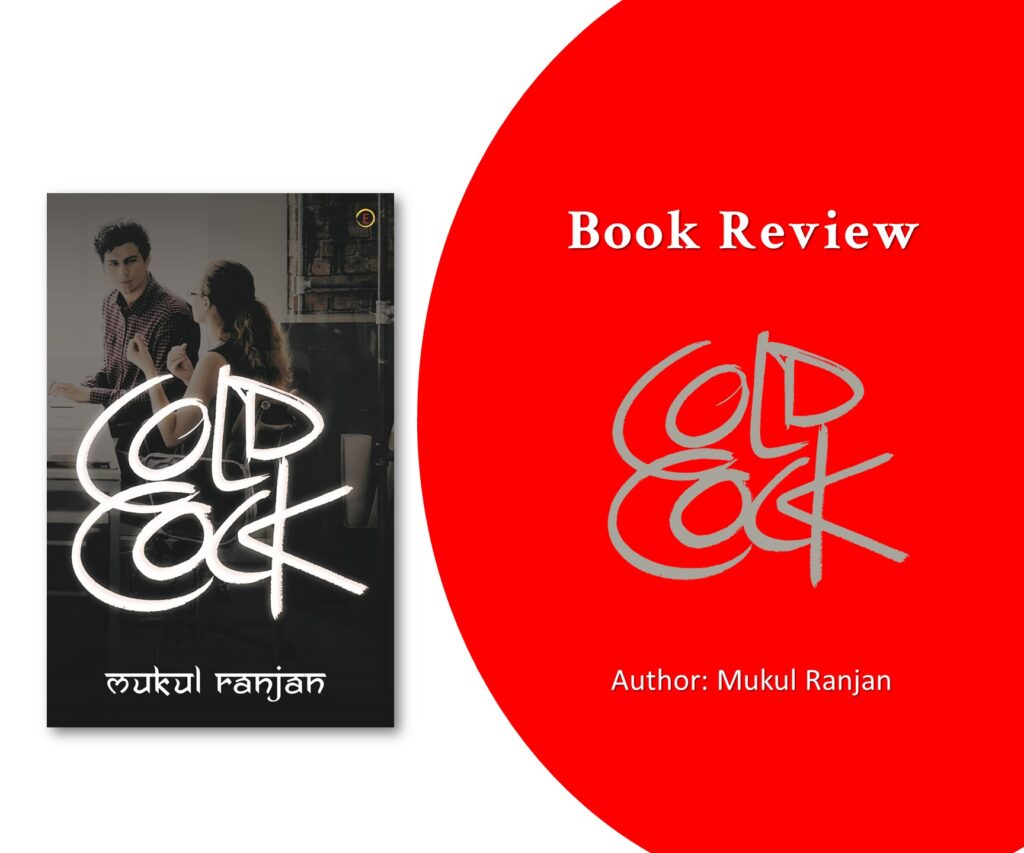
Book Review : Cold Cock by Mukul Ranjan
Mukul Ranjan’s book title, ‘Cold Cock’, is both unusual and unconventional. It is confusing an effortless attention-grabber, yet as it’s very uncanny to be a title for a book. If taken metaphorically, it justifies the events in the story accurately. But that is something that the readers can understand only when they read through the book. It is mainly focused on the teenage audience as many of them nowadays want to get into the entertainment industry and may be drawn towards it by the glamor it shows. However, the grown-up audience can also read the book due to the subject matter it contains. The story starts in December, on a rainy day featuring Dakshina, Imran, Swapan, and Ram Charittar, who are shown to be discussing a new plan and also having conflicts of opinion while trying to convince each other. In a short span of time, the plot changes its course, and the focus shifts to Ashwin, a boy from Bhopal who is looking for a job as an FCP machine manager. Ashwin is rejected by Dakshina during his job interview. While unfolding the plot of “Cold Cock,” keeping Ashwin at the centre, the author explores the hurdles and problems one can encounter when they plan to begin something new (here being the channel, Birha). Even after the launch of the channel, after much struggle, the readers get to know how difficult it is to run it smoothly as there are plenty of forces that would try to prevent it from happening. Ranjan shows this face of reality in an unfiltered and starkly realistic manner. The characters in “Cold Cock” are more or less the everyday people who have all the features and vices which would be present in any person. The affair between Ashwin and Mynah, the disagreement of people on different opinions, Dakshina’s act of running away with the money all show the acts any person would commit. This makes the characters realistic and inspired by real life instead of being fragments of the author’s imagination. The writer’s choice of words is very intriguing as it would attract both non-readers and bibliophile readers. The story mainly revolves around the launch of the Birha channel and all the situations that come as a package deal. Despite the presence of other characters making their mark, Ashwin is mainly the character in focus. The relationship between Mynah and Ashwin is very passionate and adventurous. The love affair of Ashwin and Mynah results in some amusing moments. The character of Mynah will provide readers with many funny scenarios as she handles every situation in a quirky fashion. This again reinforces the fact that the book being strongly inspired by reality, and this touch of reality would give the readers a lesson in the true sense. It would also show the unseen side no matter how it is. The first half of the story has some very well-placed humor elements, but the second half is deprived of it. The later part shifts to a rather serious mode which altogether balances the overall work. The writer in “Cold Cock” has also greatly focused on providing very minute details, which makes the important scenes feel more real. One of the instances in this regard could be providing some very authentic sounding names for the shows, such as Bhaujaiya de da dawaiya, etc. There are plenty of incidents where the readers would feel the essence of reality pervading the atmosphere of the book closely. Overall, the story is very well researched. It does a great job of showing us the harsh realities of the entertainment world and how hard it gets to sustain as a worker in this industry. The writer does not compromise with the work culture of Bihar. It also gives us an insight into how women’s harassment takes place in reputed organizations. It depicts perfectly how overwhelming this industry is. And, what toll it will take on oneself living with people who don’t have good work ethics. While many may know of the reality from hearsay and conjecture, Ranjan talks about it vividly in “Cold Cock” and even if he uses a fictional framework, the readers forget that it is anywhere a work of fiction. While the work may for once appear mainly for a particular set of readers, it remains open to reading for all who like to read reality-based content which is born from the present-day world and the contemporaneity of it would continue as long as there is the presence of the entertainment industry. The dynamics of the entertainment industry are likely to remain the same in whatever time it is placed; hence “Cold Cock” and the relevance of Mukul Ranjan’s work would also continue in whatever time it is read. Therefore, it is recommended to all readers whether they read fiction or non-fiction.
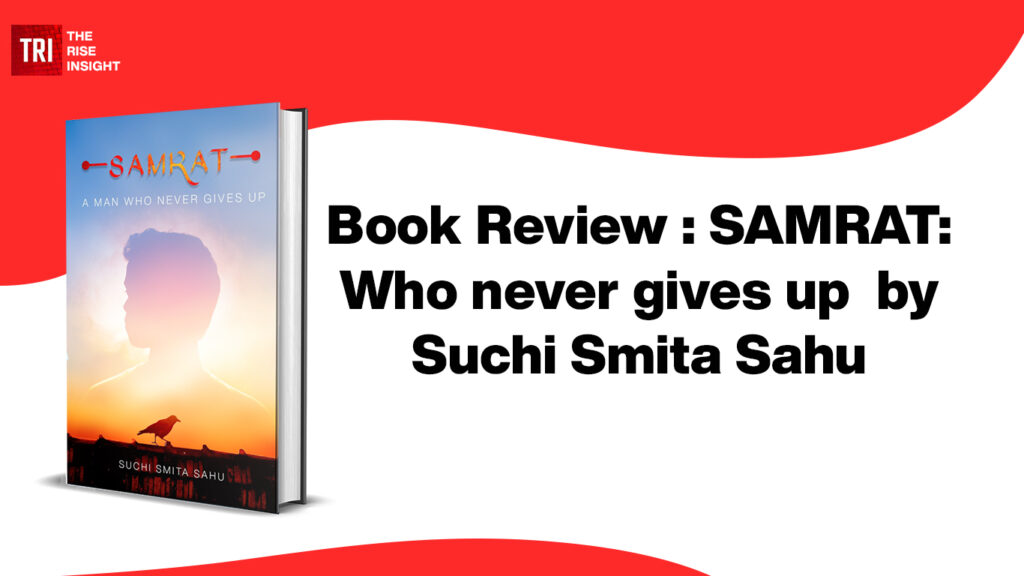
Book Review : SAMRAT: Who never gives up by Suchi Smita Sahu
The spirit of never giving up and going on steady is what is the main purpose of any person’s life. Everyone, from their childhood, is inculcated with the spirit of striving to thrive even in adverse circumstances. “Samrat: Who Never Gives Up” by Suchi Smita Sahu has the resonating effect of this philosophy, which the title character signifies and the subtitle substantiates. In her short book, Sahu captures the life of her protagonist and the different stages that occur while addressing different themes and issues which are prevalent and familiar in the lives of many. At the same time, she may have chosen to keep her characters concentrated, yet the book conveys many ideas apart from the message of the subtitle. The subtitle also becomes an essential attraction for the readers as it gives a vibe of positivity and an idea that what they are going to read is going to transport them away from the negativity of life and despite showing situations that may affect the protagonist in a negative way, yet they would see the positive that comes out of it. When the readers begin with the introduction as given by the author, they know that what they are going to read is be a work of fiction, yet the effect and validity it will have will be on a universal level. She gives just the required details in the introduction and touches the nerve of interest of the readers in no time. Although they know a bit about the plot, yet they are drawn towards reading the book due to the suspense and uncertainty with which the author packs the book. The story majorly revolves around the protagonist, Samrat, and the events of his life. Through one character, the author shows the different shades of life that occur in the life of an average human being and how they shape their personalities as a whole. She also shows that even a simple life can be eventful and filled with unimaginable changes and also shows the versatility of human nature and behaviour. “Samrat” comes across as a story that would be a characteristic of an average Indian household, and the circumstances the protagonist faces can also be found. This makes Samrat a representative of the many who would be like him. Sahu’s capturing his life right from his early days to the days when he looks at the early days of younger ones shows how life comes in a complete circle as time passes. In the midst of this, the author explores many themes and thoughts that incarnate Samrat’s life and the lives of many. These include the importance of family, compassion in relationships, complexities that life can throw at a person, the ability to adapt and adjust to new situations, and the significance of living on specific standards. Other thoughts that the readers may trace in the book include the world above materialistic madness; the marvels hard work can do in someone’s life, human beings and their emotional vulnerability, and the fact that those who live for others while living for themselves are remembered later. The story of “Samrat” touches the hearts of the readers both due to the purity of emotion with which the author portrays his life and also the faithfulness with which she builds it. At one juncture, the readers reminisce their lives with Samrat’s habits and mischief, and on the other hand, also see the mature version as times change. They would also be able to relate to it as they would have gone through similar circumstances. This opens Sahu’s book to reading by people of all ages. Younger readers would be able to enjoy the younger days of Samrat and learn about life in the later phases of the story, while the grown-up readers would be able to both reminisce and relate to the protagonist’s life. In addition, the author uses a language that all readers can read. Parents can also read this book to their children or choose this book to be read by their children for the content and the values the book imparts. These values would be instrumental in shaping their sensitivity as a human, therefore, “Samrat” would be a good book for children too. At the same time, the subtitle, “who never gives up,” also becomes significant since it teaches a crucial value of striving to thrive in life and not giving up no matter how challenging life becomes. In this light, the book also becomes a piece of motivational writing, and the readers carry the impression of taking life head-on in all circumstances. It also instills the readers with optimism even when Samrat faces adverse events.