

Dr. N. Lakshmi Thilagam is an architect, researcher, author, academician, yoga teacher, and well-being enthusiast whose journey beautifully brings together design, education, healing, and spirituality. With more than 25 years of experience, she has built a meaningful career in architecture and academics while also developing a deep interest in human well-being and inner growth. She is a graduate of the erstwhile Regional Engineering College, Trichy, now known as NIT Trichy. She later pursued her Master’s degree in Urban Design from the School of Planning and Architecture, New Delhi, in 1997. Her academic journey continued with a PhD from the Indian Institute of Technology, Kharagpur. Over the years, she has worked as a visiting professor in the fields of architecture and urbanism and has contributed to academic discussions through teaching, research, lectures, and professional interactions. Apart from her academic work, Dr. Lakshmi Thilagam is also known as an engaging speaker and resource person. She has participated in various forums and has shared her knowledge and experiences with different groups of learners and professionals. Her ability to connect practical knowledge with thoughtful reflection has made her work meaningful beyond the classroom. A major part of her life is also connected with health, balance, and emotional well-being. She is an internationally certified Yoga teacher and conducts courses and workshops focused on healthy and happy living. Her interest in wellness is not only professional. It grew from a deeply personal journey of recovery and self-discovery. The loss of her husband became a major turning point in her life. Moving through grief and emotional pain led her toward introspection and opened the door to a deeper spiritual journey. Instead of allowing loss to close her world, she slowly transformed that experience into a path of understanding, healing, and inner awareness. Her book, Notes From a Journey Called Life, reflects this personal transformation. Through real-life experiences and thoughtful reflections, she explores many human emotions, including love, grief, faith, relationships, surrender, resilience, and the search for meaning. The book does not speak from theory alone. It comes from lived experience, which gives her writing warmth and honesty. Dr. Lakshmi Thilagam’s work stands at an interesting meeting point of the outer and inner worlds. As an architect, she has spent years understanding spaces, cities, and human environments. Through yoga and writing, she explores the inner space of thought, emotion, and consciousness. She currently lives in Pondicherry, India, with her son, Aadhi Sivam. She is also engaged in the design and construction of her Yoga School, SIVAYAYOGAM, in Pondicherry. Through her academic work, yoga practice, workshops, and writing, Dr. N. Lakshmi Thilagam continues to inspire people to look at life with greater awareness, balance, and compassion. Her journey is a reminder that even difficult experiences can open the way toward deeper understanding and a more meaningful life.

Book Review: Notes From a Journey Called Life by Lakshmi Thilagam
Notes From a Journey Called Life by Lakshmi Thilagam is a warm, honest, and deeply reflective book about relationships, loss, faith, healing, and spiritual growth. It is not written like a heavy philosophy book. Instead, it feels personal, almost like sitting with someone who is calmly sharing the lessons she learned through her own life. The book is a collection of short reflections and real-life experiences. These are not extraordinary events in the usual sense. In fact, many of them are connected to emotions and situations that almost everyone faces at some point—love, expectations, disappointment, grief, family relationships, faith, anger, regret, and the search for inner peace. That is what makes this book easy to connect with. One of the most touching ideas in the book comes from the author’s own reflection that if she had possessed the same wisdom in her younger years, she might have loved her mother more unconditionally, expected less from her husband, and guided her son differently. This thought immediately gives the book a very human quality. There is no attempt to present a perfect life.In fact, the book quietly asks whether a perfect life even exists. That question stays with the reader because most of us spend a lot of time wishing that some parts of our life had happened differently. We regret certain words. We carry old hurts. We wish people had understood us better. We sometimes feel we could have loved differently, responded differently, or made better decisions. Lakshmi Thilagam does not try to hide these feelings. Instead, she looks at them with honesty. The book shows that wisdom often comes after experience. Many lessons cannot be learned from advice alone. We understand them only after going through relationships, mistakes, separation, loss, and emotional pain. This gives the book a gentle and mature tone. Another important part of the book is its focus on relationships. The author speaks about the emotional burden that relationships can sometimes create. Love can bring happiness, but expectations can also bring disappointment. We often want people to behave in the way we think is right. When they do not, pain begins. The book encourages the reader to look at relationships with more understanding. This does not mean accepting everything blindly. Rather, it means learning that every person carries their own experiences, limitations, and emotional struggles. Sometimes peace begins when we reduce unnecessary expectations. This idea may connect strongly with readers who feel tired by family conflicts or emotional misunderstandings. The book also talks about letting go of the past. This is easier to say than to do. Many people continue to live mentally inside old situations long after those situations have ended. We replay conversations. We remember hurtful words. We think about what should have happened. The author’s reflections encourage the reader to understand that holding on to pain does not change the past. It only keeps the pain active in the present. The idea of letting go in this book is not about forgetting. It is about learning to carry memories without allowing them to control your life. That is a powerful message. Another major theme is grief. Losing someone we love can change the way we see everything. The world continues, but something inside us may feel frozen. The book speaks to readers who are carrying that kind of loss. Instead of giving easy answers, it looks at grief with sensitivity. It reminds us that pain is part of love. When someone has been deeply important to us, their absence naturally leaves a space. The spiritual side of the book becomes especially meaningful here. Lakshmi Thilagam draws inspiration from Yoga and Saiva Siddhantham to explore questions about life, God, suffering, and surrender. But the book does not feel like a religious lecture. The spiritual ideas come through personal experiences. This makes them easier to understand. The author explores the connection between the individual, the world, and God. She encourages readers to look beyond immediate pain and ask deeper questions. Why do we suffer? Why do we become attached? Why do we expect so much? What is the meaning of surrender? What does faith look like when life does not go according to our wishes? These are difficult questions, and the book does not try to give one simple answer to all of them.Instead, it invites reflection. This is one of the strengths of the book. It does not force the reader to believe something. It gently opens a door and allows the reader to think. Another beautiful theme is kindness. In difficult times, small acts of kindness can have a huge impact. A kind word, a patient conversation, a small gesture of care—these things can stay in someone’s memory for years. The book reminds us that spiritual growth is not only about meditation or prayer. It is also about the way we treat people in everyday life. This is a very practical message. The book also explores faith in a very honest way. Faith is not shown as something that is always strong and clear. Sometimes faith includes doubt. Sometimes it includes anger at God. Sometimes it includes questioning why certain things happened. This makes the book more believable. Many people feel guilty when they become angry with God during difficult times. But the book seems to accept that spiritual searching can include confusion. A real relationship with faith is not always simple. Sometimes we move closer to understanding only after passing through doubt. The theme of resilience also appears throughout the book. Resilience does not mean never feeling pain. It means continuing even after pain. The author’s experiences show that difficult events can change a person, but they do not always destroy them. Sometimes they create a deeper understanding of life. The book is especially meaningful for readers who are emotionally tired. If someone is struggling with family relationships, old memories, grief, loneliness, spiritual questions, or the feeling that life has become too heavy, this book may feel comforting. Not because it gives
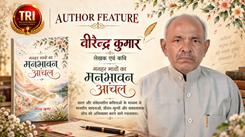
Author Feature: वीरेन्द्र कुमार — संवेदनाओं और मानवीय मूल्यों के कवि
वीरेन्द्र कुमार एक समर्पित साहित्यकार और कवि हैं, जिनकी लेखनी मानवीय भावनाओं, जीवन मूल्यों और सकारात्मक सोच को सरल भाषा में प्रस्तुत करती है। उनका जन्म ग्राम डुडैला, पोस्ट कांठ, जिला मुरादाबाद, उत्तर प्रदेश में हुआ। वे स्वर्गीय श्री घसीटा सिंह और स्वर्गीय श्रीमती मूंगा देवी के पुत्र हैं। वर्तमान में वे सहारनपुर में निवास करते हैं। वीरेन्द्र कुमार ने सहकारी बैंक केन्द्रीयकृत सेवा, उत्तर प्रदेश में उप महाप्रबंधक पद से सेवा निवृत्ति प्राप्त की। सेवाकाल के साथ-साथ उनका साहित्य के प्रति गहरा लगाव बना रहा और वे लगातार साहित्य सेवा में सक्रिय रहे। उनके प्रकाशित काव्य संग्रहों में भाव अनुभूति, भावनाओं का आंचल, सम भाव पुष्पांजलि, भाव पुष्प और मनहर भावों का मनभावन आंचल शामिल हैं। इसके अतिरिक्त उनकी अनेक रचनाएँ विभिन्न प्रकाशनों के साझा संकलनों में भी प्रकाशित हो चुकी हैं, जिसके क्रम में उन्हें कई सम्मान पत्र प्राप्त हुए हैं। साहित्य सेवा में मनोयोग से जुड़े वीरेन्द्र कुमार लगातार नई रचनाओं और नई पुस्तकों के प्रकाशन के लिए प्रयासरत हैं। उनका संदेश है—“अप दीपो भव, सबका मंगल हो।” उनकी रचनाएँ भाव, संवेदना और सकारात्मक जीवन दृष्टि का सहज संगम प्रस्तुत करती हैं।
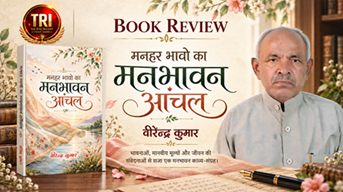
Book Review: Manhar Bhavo Ka Manbhavan Aanchal by Virendra Kumar
Manhar Bhavo Ka Manbhavan Aanchal by Virendra Kumar is a heartfelt Hindi poetry collection that brings together emotions, values, relationships, and positive thoughts in a very simple and meaningful way. The book feels close to everyday life because its poems are not written in a difficult or highly literary style. Instead, they speak directly to the reader through familiar feelings such as love, kindness, hope, humanity, harmony, and self-reflection. The title itself gives a warm feeling. The word “Aanchal” creates an image of comfort, care, and emotional shelter. In the same way, the poems in this collection try to give the reader a sense of emotional closeness. The book is not only about personal feelings. It also talks about how we should live with others, how we should treat people, and how values can make life more peaceful and meaningful. One of the strongest qualities of the book is its focus on human emotions. Every person goes through happiness, pain, confusion, hope, disappointment, love, and longing. The poems reflect these different shades of life in a simple way. Because of this, the book can connect with readers of different age groups. Even if a reader does not usually read poetry, the language and ideas are easy enough to understand. Another important theme in the collection is humanity. The author repeatedly brings attention to compassion, respect, and the importance of treating others with kindness. In today’s fast-moving life, people often become too busy with personal goals and forget the emotional needs of those around them. The poems remind us that success is not only about money or position. A good life also depends on kindness, understanding, honesty, and the ability to stand with others. The book also gives importance to love and relationships. Love here is not limited only to romantic emotion. It includes love for family, society, nature, humanity, and life itself. This wider understanding of love makes the collection more meaningful. The poet seems to believe that many problems in society can become smaller if people learn to listen to one another, respect differences, and maintain warmth in relationships. A sense of harmony and unity also runs through the book. The poems encourage peaceful living and mutual respect. The author highlights the value of living together with a feeling of equality. This message feels especially relevant in a world where people are often divided by social, cultural, religious, or personal differences. The book reminds the reader that human emotions are common to everyone. One of the beautiful aspects of Manhar Bhavo Ka Manbhavan Aanchal is its positive tone. The poems may touch on serious emotions and social concerns, but they do not leave the reader with negativity. Instead, there is a repeated sense of hope. The author tries to show that difficult situations can be faced with patience, understanding, and a positive outlook. This positive approach makes the collection encouraging rather than heavy. The poems also reflect self-awareness. The author encourages readers to look within themselves and think about their actions, thoughts, and responsibilities. This is important because real change often begins from self-reflection. Before asking society to improve, we may need to examine our own behaviour. In this sense, the book has a quiet motivational quality. It does not sound like a self-help book, but many poems carry lessons that can inspire readers to live with greater awareness. Nature is another important element in the collection. Nature often becomes a source of peace, beauty, and inspiration in poetry, and this book also appears to connect human emotions with the natural world. Nature can teach patience, balance, change, and acceptance. When these ideas are expressed through poetry, they become easier to feel rather than simply understand. Virendra Kumar’s writing style is simple, sincere, and direct. This is probably one of the biggest strengths of the book. The poems do not try to impress through complicated vocabulary. Instead, they focus on feeling. This makes the book accessible to a wide range of readers. A poem does not always need difficult words to be meaningful. Sometimes simple words carry stronger emotions because the reader can connect with them immediately. This collection follows that idea well. The author’s concern for moral values is also visible throughout the book. Themes like compassion, honesty, equality, peaceful coexistence, and respect for others give the collection a thoughtful social side. These are values that may sound simple, but they are important in everyday life. The book can therefore be read not only for literary enjoyment but also for reflection. Why Should You Read This Book? There are several reasons why readers may enjoy Manhar Bhavo Ka Manbhavan Aanchal. First, it is easy to understand. Readers who feel that poetry is usually too complicated may find this collection more comfortable. Second, the themes are universal. Love, humanity, relationships, hope, nature, and self-awareness are feelings and ideas that most people can relate to. Third, the poems carry a positive message. They encourage kindness, unity, and peaceful thinking rather than anger or negativity. Fourth, the book can be read slowly. It is the kind of collection where a reader can read one or two poems at a time and think about them. Poetry does not always need to be finished quickly. Sometimes a single line can stay with the reader for a long time. Another reason to read this book is that it reflects Indian emotional and social values in a natural way. Hindi poetry often has the ability to express emotions with warmth and familiarity, and this collection follows that tradition. Positive Takeaways from the Book One positive message is that emotions should not be treated as weakness. Feelings help us understand ourselves and others. Another is that relationships become stronger when they are built on respect and understanding. The book also reminds us that unity is more meaningful than division. Peaceful coexistence is not only a social idea; it is something that begins in daily behaviour. The focus on optimism is another valuable takeaway. Life will

Book Review: Kyro Squad Mission: Battle for Peace by Krish Patil
Book Review: Kyro Squad Mission: Battle for Peace by Krish Patil Kyro Squad Mission: Battle for Peace by Krish Patil is the kind of book that immediately gives the feeling of adventure, teamwork, danger, and a larger mission. Even from its title and presentation, the book carries the energy of a fantasy-action story where courage, friendship, responsibility, and the fight for peace stand at the centre. What makes the book interesting is the idea behind the title itself. The words “Squad Mission” suggest that this is not the story of only one person. It gives the feeling of a team coming together, facing challenges, and moving toward a common goal. Stories based on a group of characters often become enjoyable because every person can bring a different personality, strength, weakness, and way of thinking. The phrase “Battle for Peace” also gives the story a meaningful direction. It suggests that the action is not only about fighting. There is a reason behind the struggle. Peace is something that has to be protected, and sometimes the characters may have to face difficult situations in order to achieve it. This makes the central idea more meaningful than a simple battle between heroes and enemies. One of the first things that attracts attention is the fantasy-style world of the book. The cover creates an atmosphere filled with mystery, magical energy, powerful creatures, and young characters who seem ready for a difficult journey. Dragons, mysterious objects, different personalities, and strong visual elements suggest a world where imagination plays a major role. This is one reason younger readers may enjoy the book. Fantasy gives readers the freedom to enter a world that is very different from everyday life. For a few hours, the reader can leave normal routines behind and become part of a mission filled with surprises, danger, friendship, and discovery. The book also appears to have a strong element of teamwork. This is one of the positive qualities of stories like Kyro Squad Mission. A team cannot succeed only because one person is powerful. Different members need to trust each other, understand each other, and work together. That idea has value even outside a fantasy story. In real life, whether we are in school, at work, playing sports, or working on a project, teamwork is important. People have different strengths. One person may be brave, another may be intelligent, another may remain calm under pressure, while someone else may bring emotional strength to the group. A story built around a squad can show readers that being different is not always a weakness. Sometimes those differences are exactly what make a team stronger. Courage is another theme that naturally fits the book. A mission becomes interesting when the characters have something to lose and still choose to continue. Courage does not mean that someone is never afraid. Real courage is often shown when a person feels fear but still takes the next step because something important depends on it. This is a positive message for young readers. Many children and teenagers struggle with fear in different forms—fear of failure, fear of judgment, fear of trying something new, or fear of not being good enough. Adventure stories can communicate an encouraging message without sounding like a lecture. When readers watch fictional characters face difficult situations, they may also begin thinking differently about their own challenges. Friendship is another reason a book like this can be enjoyable. Action may keep a reader turning pages, but friendships often make readers care about the characters. When people fight together, disagree, support one another, and grow through difficult situations, the emotional side of the story becomes important. Readers usually remember not only the battles but also the moments between them—the jokes, arguments, sacrifices, promises, and support shared among characters. The idea of peace in the title also deserves attention. Peace is often treated as something simple, but maintaining peace can require patience, understanding, sacrifice, and responsibility. A fantasy story can explore these ideas in an entertaining way. The best adventure stories often have a deeper message behind the action. They may ask questions such as: What is worth fighting for? When should power be used? What makes someone a true leader? Is winning a battle enough, or is protecting others more important? Questions like these can give a young fantasy story more meaning. Why Should You Read This Book? There are several reasons why Kyro Squad Mission: Battle for Peace can attract readers. First, it offers an escape into an imaginative world. Readers who enjoy fantasy, adventure, missions, magical elements, and action may find the concept exciting. Second, the team-based idea makes the story suitable for readers who enjoy seeing different characters work together. It gives room for friendship, leadership, loyalty, and personal growth. Third, the book carries a positive central idea. A “battle for peace” suggests that the characters are working toward something larger than personal victory. That can make the adventure feel more meaningful. The book may especially appeal to younger readers who enjoy animated, comic-inspired, or fantasy-adventure storytelling. The colourful presentation gives it a lively and energetic identity. Another reason to read this kind of book is that it can help develop imagination. Fantasy stories allow readers to picture unusual places, creatures, powers, and situations. Reading these stories encourages the mind to create its own version of the world rather than simply watching everything on a screen. That is one of the quiet benefits of reading fiction. The story’s focus on peace can also encourage readers to think about responsibility. Strength or power becomes meaningful when it is used to protect rather than harm. The squad format can also highlight loyalty and trust. Trust is built over time, especially when people go through difficult situations together. Young readers may also connect with the idea of self-belief. Adventure stories often show characters discovering abilities or confidence they did not know they had. This can be inspiring because many people understand their own strength only after facing challenges.

Author Feature: Dr. Uma Nath U — Exploring the Healing Value of Nature
Dr. Uma Nath U is an experienced academician, researcher, and author with a strong background in pharmaceutical sciences and natural product research. She has worked as a Professor of Pharmaceutical Analysis at Sreekrishna College of Pharmacy and Research Centre, Kerala, affiliated with the Kerala University of Health Sciences. With around 15 years of academic experience, Dr. Uma Nath U has spent a major part of her career teaching, researching, and studying the medicinal value of natural resources. Her academic journey includes an M.Pharm in Pharmaceutical Analysis, a PhD from Karpagam Academy of Higher Education, Coimbatore, and a post-doctoral program from Eudoxia Research University, USA. Her interest in medicinal plants and traditional knowledge is clearly reflected in her book, Indigenous Medicinal Plants of Kerala. The book presents useful information about native medicinal plants, their scientific identity, local names, families, and traditional uses in a simple and organized way. Through her work, Dr. Uma Nath U brings together academic knowledge and the rich natural heritage of Kerala. Her book can serve as a helpful reference for students, researchers, teachers, and readers interested in medicinal plants and traditional healthcare practices.

Book Review: Indigenous Medicinal Plants of Kerala by Dr. Uma Nath U
Indigenous Medicinal Plants of Kerala by Dr. Uma Nath U is a useful and informative book that brings together important details about traditional medicinal plants found in Kerala. The book is written in a clear reference style and is especially helpful for students, teachers, researchers, herbal medicine enthusiasts, and readers who are interested in understanding the medicinal value of plants used in Indian traditional practices. One of the first things that stands out about the book is its practical approach. It does not try to make the subject unnecessarily complicated. Instead, it introduces different plants one by one and provides important information about their botanical identity, family, local names, traditional uses, and medicinal importance. This makes the book easy to use as a reference whenever someone wants to learn about a particular plant. The book includes a range of indigenous medicinal plants such as Aeschynomene indica, Abrus precatorius, Celosia argentea, Achyranthes aspera, Curculigo orchioides, Dioscorea oppositifolia, Drosera indica, Aerva lanata, Dillenia indica, and several others. The inclusion of many plants gives the reader a broader picture of Kerala’s rich medicinal plant diversity. A major strength of the book is that the author does not only mention the scientific names. The plant entries also include details such as family, subfamily, common name, Hindi name, vernacular names, synonyms, and accepted species names. This makes the book more useful because one plant may be known by different names in different regions. For a student or researcher, this kind of information is very important for correct identification. The photographs included with the plant entries are also helpful. Botanical names can sometimes feel difficult or unfamiliar, especially for beginners. A photograph makes the plant easier to recognize and creates a stronger connection between the scientific information and the actual plant seen in nature. This visual support improves the practical value of the book. The section on Aeschynomene indica is a good example of the book’s simple presentation. The plant is introduced with its family information and vernacular names. The arrangement is straightforward, which means that even a reader without advanced botanical knowledge can understand the basic information. This is one of the best qualities of the book: it is technical enough to be useful, but not so complicated that it becomes difficult to follow. The entry on Abrus precatorius also shows the systematic approach followed throughout the book. The reader is given its family, subfamily, synonym, and species name. Such organization makes the book suitable for academic study as well as general reference. Instead of having to search for scattered information from many different places, the reader gets several basic botanical details together. Another interesting plant discussed in the book is Celosia argentea. The book provides a number of synonyms and classification details. This shows that the author has tried to make the work detailed and useful for readers who may come across different scientific references for the same plant. The medicinal-use sections are especially valuable. The book mentions traditional systems and uses connected with Ayurveda and other medicinal practices. In some entries, it also points to reported activities such as antimicrobial, antioxidant, anti-inflammatory, and other properties. These sections help readers understand why these plants have remained important in traditional healthcare systems. At the same time, the book should be read as an educational and reference work rather than as a self-treatment manual. Medicinal plants can be powerful, and some plants may be unsafe if used incorrectly. Their effects can depend on the part of the plant used, preparation, quantity, and individual health conditions. Because of this, the information in such books is most useful when combined with proper professional guidance and scientific understanding. What makes this book especially meaningful is its focus on Kerala. Kerala has a long history of plant-based healing traditions, especially through Ayurveda and local knowledge passed from one generation to another. The state is also known for its rich biodiversity. By documenting indigenous medicinal plants, the book helps preserve knowledge that may otherwise slowly disappear. This preservation is important today. Modern lifestyles have created distance between people and traditional plant knowledge. Many younger readers may recognize packaged herbal products but may not know the actual plants from which those products come. Books such as Indigenous Medicinal Plants of Kerala help bring that knowledge back into focus. The book also has educational value for students of botany, pharmacy, Ayurveda, biotechnology, herbal science, and related subjects. For them, the classification details can serve as a starting point for further study. Teachers may also find it useful for introducing students to medicinal plants in a more practical way. The language and structure of the book remain fairly direct. Rather than long theoretical discussions, the author focuses on information. Each plant is treated almost like an individual profile. This makes it easy to read the book in sections rather than from beginning to end. A reader can simply look for a plant of interest and study its details. This reference-style format is suitable for the subject because medicinal plant books often need to be used repeatedly. A reader may return to the same page many times. Clear headings, plant photographs, family details, and medicinal uses make this easier. Another positive point is that the book connects traditional knowledge with modern research language. For example, some plant uses are presented under traditional medicine while others mention reported biological activities. This gives the reader a sense that traditional knowledge and modern scientific investigation can both contribute to understanding medicinal plants. The book also encourages curiosity. When a reader sees that a commonly available plant has traditional medicinal use, they may become interested in learning more about its chemistry, ecology, or cultural importance. In this way, the book can act as an introduction to a much larger subject. However, readers who are looking for very detailed clinical evidence, dosage information, or advanced pharmacological analysis may need additional scientific sources. The main strength of this book appears to be its role as a compact guide and introduction

Author Feature: Dr. Aayushi Joshi — A Voice of Courage, Memory, and Humanity
Dr. Aayushi Joshi is a medical graduate and writer whose life journey has been shaped by education, travel, uncertainty, and extraordinary human experiences. Originally from India, she moved to Ukraine to pursue her dream of becoming a doctor. What began as a hopeful chapter of independence and learning soon turned into one of the most difficult periods of her life when war reached the city she had begun to call home. As a medical student living through such uncertainty, Dr. Joshi witnessed fear, separation, confusion, and loss. But alongside these difficult moments, she also saw something equally powerful—kindness. She saw people helping strangers, friends supporting one another, and ordinary individuals showing courage even when they were facing their own struggles. After leaving Ukraine, she continued her medical education in Georgia and slowly began rebuilding a sense of normal life. Writing became an important part of that process. It gave her a way to revisit memories, understand them, and preserve the people, places, and emotions that had deeply affected her. Her book, The Country I Left Twice, is more than a memoir of war. It is a deeply human story about home, displacement, friendship, resilience, and hope. Through her writing, Dr. Aayushi Joshi reminds readers that behind every war statistic is a real person, carrying memories, fears, dreams, and the quiet strength to begin again.

Book Review: The Country I Left Twice by Dr. Aayushi Joshi
The Country I Left Twice by Dr. Aayushi Joshi is a deeply personal memoir about Ukraine, war, memory, fear, change, and the meaning of home. But calling it only a war memoir would not be enough. The war is an important part of the story, but the heart of the book is much more human. It is about a young woman who goes to another country to study medicine, slowly builds a life there, begins to feel at home, and then sees that familiar world change in ways she could never have imagined. The book begins with an important message from the author. She tells the reader that this story is made of memories, not just events and dates. That simple idea sets the tone for the whole book. The writing does not feel like a report or a history lesson. It feels like someone sitting across from you and telling you about a part of life that still lives inside them. One of the strongest parts of the book is its honesty. The author does not try to present herself as fearless or heroic. She openly accepts that she was afraid, confused, uncertain, and emotionally shaken at different points. This makes the memoir feel real. Courage here is not shown as something grand. It is shown as the ability to continue even when fear is present. That human quality is what makes the book easy to connect with. The journey begins with a simple choice: “Ukraine, Italy, or Poland?” At the time, it seems like an ordinary educational decision. The author is choosing where to study medicine. She does not know that this one choice will later divide her life into a clear before and after. This section is especially interesting because it shows how life-changing decisions often look very small when we make them. There is no dramatic sign telling us that a certain choice will shape us forever. Sometimes it is just a form, a brochure, a conversation in an office, and a decision that feels practical at that moment. For Dr. Aayushi Joshi, Ukraine feels familiar. She remembers seeing it in school books and maps, and that small sense of recognition becomes part of her decision. This is a beautiful detail because it shows how memory works in quiet ways. A country that was once just a name in a textbook slowly becomes the place where she will study, grow, make friends, dream, and face one of the most difficult periods of her life. The chapter about Kharkiv is one of the most touching parts of the book. The author does not describe the city only through famous landmarks or facts. Instead, she remembers the version of Kharkiv that belonged to everyday life. She remembers walks to university, trams, students carrying coffee, green parks, changing seasons, winter mornings, streets that became familiar, and small shops that became part of her routine. These details make the city feel alive. This is important because when people hear the word “Ukraine” in the context of war, they may immediately think of destruction, sirens, ruined buildings, and conflict. The book reminds us that before war becomes a headline, a country is simply home to ordinary people. It has parks, bakeries, classrooms, families, friendships, routines, and dreams. The author’s description of Kharkiv before the war is therefore more than nostalgia. It is a way of protecting memory. She wants the reader to know that this city was not only a place of destruction. It was once a place of normal life and happiness. That makes the later emotional weight of the story even stronger. The book also handles the idea of home in a very meaningful way. At first, Ukraine is a foreign country. Slowly, it becomes familiar. The author learns the streets, becomes comfortable with the language around her, knows where to shop, where to walk, and how the city moves. This shows how home is not always the place where we are born. Sometimes home is created through repeated moments. A place becomes home when you stop needing directions. When faces become familiar. When routines become natural. When you begin making memories without realizing that they will later become precious. The title The Country I Left Twice itself carries emotional weight. It suggests not just physical departure, but a deeper kind of leaving. Sometimes we leave a country by boarding a plane. Sometimes we leave it because the country we knew is no longer the same. That idea stays with the reader. Another strong element in the memoir is the contrast between large events and small moments. War is huge. It changes borders, governments, cities, and millions of lives. But the author keeps bringing the focus back to small human experiences. A meal. A phone call. A friend’s support. A parent worrying from far away. A kind stranger. A goodbye. These moments make the story powerful because they remind us that in difficult times, people often survive emotionally through small acts of care. The author says that even in dark chapters, life leaves behind small pieces of light. That thought is reflected throughout the writing. The language of the book is simple and emotional. It does not try to impress the reader with complicated words. The sentences are clear, and the storytelling feels natural. This makes the memoir accessible even for readers who do not normally read war-related books. It also helps the emotional parts feel more genuine. At several points, the book invites the reader to think beyond the author’s personal journey. We begin to think about our own idea of home, safety, family, plans, and uncertainty. Many of us live as if our present life will always remain the same. We make plans, build routines, and assume that tomorrow will look similar to today. This memoir quietly reminds us that life can change without warning. That does not make the book hopeless. In fact, one of its strongest themes is resilience. The author goes through fear
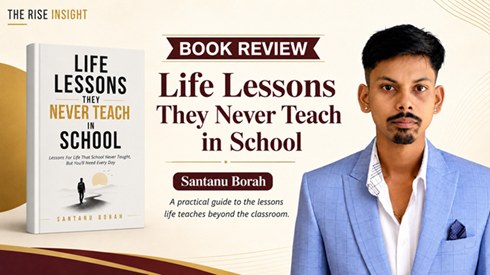
Book Review: Life Lessons They Never Teach in School by Santanu Borah
Life Lessons They Never Teach in School by Santanu Borah Life Lessons They Never Teach in School by Santanu Borah is a simple, practical, and inspiring book about the lessons that people often learn only after entering the real world. The book speaks about success, failure, fear, discipline, relationships, purpose, courage, personal growth, and many other areas of life that are very important but are not always taught in classrooms. The main strength of this book is its simplicity. It does not use difficult words or complicated theories. Instead, the author explains important ideas through relatable situations, short stories, examples, and practical reflections. Because of this, the book feels easy to read and understand. It can be useful for students, young professionals, entrepreneurs, and even older readers who want to think again about the way they are living their lives. The very title of the book gives a clear idea of its purpose. School teaches us many useful subjects, but life demands some different skills. We may study mathematics, science, history, and language for many years, but later we discover that real life also asks us to manage money, handle pressure, face rejection, make difficult decisions, communicate with people, recover from failure, and understand ourselves better. This idea is clearly explained in the first chapter, “Success Is Not What School Teaches.” The chapter starts with the memory of the first day of school. This makes the beginning very personal and familiar. Almost every reader can remember entering school with a new uniform, books, a school bag, and the hope that education would prepare them for the future. The author then talks about the common formula of success that many of us hear from childhood: study hard, get good marks, secure a good job, and build a successful life. There is nothing wrong with this advice, and the book does not criticize education. In fact, the author respects the importance of schools and teachers. But he also explains that education alone cannot prepare us for every situation. In the real world, people are not asked what marks they scored in school. Instead, they are judged by the way they solve problems, communicate, lead, manage emotions, deal with pressure, and take responsibility. This is one of the strongest messages of the book. A very meaningful thought in the first chapter is that school gives the lesson first and then the test, while life often gives the test first and the lesson later. This line explains the difference between academic education and real-life learning in a very simple way. Many of the most important lessons in life come after mistakes, failures, disappointments, or difficult experiences. Another beautiful chapter is “The Art of Letting Go.” This chapter begins with a simple story of a young boy sitting under a tree in autumn. He watches the tree lose its leaves and asks his grandfather whether the tree is afraid. The grandfather explains that the tree is not losing its life. It is preparing for a new season. This short story gives a deep lesson without becoming difficult. Sometimes, moving forward in life requires us to leave something behind. We often think that personal growth means gaining more—more knowledge, more success, more money, more relationships, or more achievements. But the author reminds us that growth can also mean letting go. We may need to let go of old memories, unhealthy habits, past failures, guilt, negative relationships, unrealistic expectations, or a version of ourselves that no longer helps us grow. The example of the tree is especially effective because it shows that letting go is natural. A tree does not hold every old leaf forever. If it did, there would be no space for new growth. In the same way, people also need space for new beginnings. This chapter can connect deeply with readers who are facing change. Letting go is never easy, but the book presents it as a necessary part of life rather than something to fear. Sometimes, what looks like an ending is actually preparation for a new chapter. The chapter “Fear: The Invisible Wall Between You and Your Dreams” is also one of the most powerful parts of the book. It begins with the story of a traveler standing near a mountain. He wants to climb it, but fear stops him before he even begins. An old guide tells him that the mountain is not stopping him—his fear is. This simple example explains how fear works in everyday life. Many people have dreams, talent, and opportunities, but they still do not move forward because they are afraid. The author discusses different kinds of fear such as fear of failure, rejection, judgment, losing, uncertainty, and not being good enough. These are not unusual fears. Almost everyone experiences them at some point. The book also makes an important distinction: fear itself is not always bad. Fear can protect us from real danger. The real problem starts when fear begins to control our decisions and stops us from taking steps that could improve our lives. This is a very practical lesson. Many people remain inside their comfort zone because safety feels peaceful. They avoid risks, difficult conversations, new opportunities, public speaking, business ideas, or creative work because they do not want to fail. But the author explains that the cost of always playing safe can be greater than failure itself. One of the best ideas in the chapter is that failure is temporary, while regret can remain for a long time. The book gives the example of two people. One starts a business and fails. The other never starts because he is afraid. Years later, the first person may have gained experience, knowledge, and confidence. The second may only have one question: “What if I had tried?” This is a powerful reminder that failure is not always the worst possible result. Sometimes, not trying at all can hurt more. The book also explains courage in a very realistic way. Courage does not mean that a