

Dr. N. Lakshmi Thilagam is an architect, researcher, author, academician, yoga teacher, and well-being enthusiast whose journey beautifully brings together design, education, healing, and spirituality. With more than 25 years of experience, she has built a meaningful career in architecture and academics while also developing a deep interest in human well-being and inner growth. She is a graduate of the erstwhile Regional Engineering College, Trichy, now known as NIT Trichy. She later pursued her Master’s degree in Urban Design from the School of Planning and Architecture, New Delhi, in 1997. Her academic journey continued with a PhD from the Indian Institute of Technology, Kharagpur. Over the years, she has worked as a visiting professor in the fields of architecture and urbanism and has contributed to academic discussions through teaching, research, lectures, and professional interactions. Apart from her academic work, Dr. Lakshmi Thilagam is also known as an engaging speaker and resource person. She has participated in various forums and has shared her knowledge and experiences with different groups of learners and professionals. Her ability to connect practical knowledge with thoughtful reflection has made her work meaningful beyond the classroom. A major part of her life is also connected with health, balance, and emotional well-being. She is an internationally certified Yoga teacher and conducts courses and workshops focused on healthy and happy living. Her interest in wellness is not only professional. It grew from a deeply personal journey of recovery and self-discovery. The loss of her husband became a major turning point in her life. Moving through grief and emotional pain led her toward introspection and opened the door to a deeper spiritual journey. Instead of allowing loss to close her world, she slowly transformed that experience into a path of understanding, healing, and inner awareness. Her book, Notes From a Journey Called Life, reflects this personal transformation. Through real-life experiences and thoughtful reflections, she explores many human emotions, including love, grief, faith, relationships, surrender, resilience, and the search for meaning. The book does not speak from theory alone. It comes from lived experience, which gives her writing warmth and honesty. Dr. Lakshmi Thilagam’s work stands at an interesting meeting point of the outer and inner worlds. As an architect, she has spent years understanding spaces, cities, and human environments. Through yoga and writing, she explores the inner space of thought, emotion, and consciousness. She currently lives in Pondicherry, India, with her son, Aadhi Sivam. She is also engaged in the design and construction of her Yoga School, SIVAYAYOGAM, in Pondicherry. Through her academic work, yoga practice, workshops, and writing, Dr. N. Lakshmi Thilagam continues to inspire people to look at life with greater awareness, balance, and compassion. Her journey is a reminder that even difficult experiences can open the way toward deeper understanding and a more meaningful life.
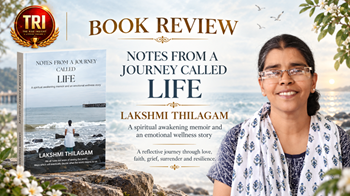
Book Review: Notes From a Journey Called Life by Lakshmi Thilagam
Notes From a Journey Called Life by Lakshmi Thilagam is a warm, honest, and deeply reflective book about relationships, loss, faith, healing, and spiritual growth. It is not written like a heavy philosophy book. Instead, it feels personal, almost like sitting with someone who is calmly sharing the lessons she learned through her own life. The book is a collection of short reflections and real-life experiences. These are not extraordinary events in the usual sense. In fact, many of them are connected to emotions and situations that almost everyone faces at some point—love, expectations, disappointment, grief, family relationships, faith, anger, regret, and the search for inner peace. That is what makes this book easy to connect with. One of the most touching ideas in the book comes from the author’s own reflection that if she had possessed the same wisdom in her younger years, she might have loved her mother more unconditionally, expected less from her husband, and guided her son differently. This thought immediately gives the book a very human quality. There is no attempt to present a perfect life.In fact, the book quietly asks whether a perfect life even exists. That question stays with the reader because most of us spend a lot of time wishing that some parts of our life had happened differently. We regret certain words. We carry old hurts. We wish people had understood us better. We sometimes feel we could have loved differently, responded differently, or made better decisions. Lakshmi Thilagam does not try to hide these feelings. Instead, she looks at them with honesty. The book shows that wisdom often comes after experience. Many lessons cannot be learned from advice alone. We understand them only after going through relationships, mistakes, separation, loss, and emotional pain. This gives the book a gentle and mature tone. Another important part of the book is its focus on relationships. The author speaks about the emotional burden that relationships can sometimes create. Love can bring happiness, but expectations can also bring disappointment. We often want people to behave in the way we think is right. When they do not, pain begins. The book encourages the reader to look at relationships with more understanding. This does not mean accepting everything blindly. Rather, it means learning that every person carries their own experiences, limitations, and emotional struggles. Sometimes peace begins when we reduce unnecessary expectations. This idea may connect strongly with readers who feel tired by family conflicts or emotional misunderstandings. The book also talks about letting go of the past. This is easier to say than to do. Many people continue to live mentally inside old situations long after those situations have ended. We replay conversations. We remember hurtful words. We think about what should have happened. The author’s reflections encourage the reader to understand that holding on to pain does not change the past. It only keeps the pain active in the present. The idea of letting go in this book is not about forgetting. It is about learning to carry memories without allowing them to control your life. That is a powerful message. Another major theme is grief. Losing someone we love can change the way we see everything. The world continues, but something inside us may feel frozen. The book speaks to readers who are carrying that kind of loss. Instead of giving easy answers, it looks at grief with sensitivity. It reminds us that pain is part of love. When someone has been deeply important to us, their absence naturally leaves a space. The spiritual side of the book becomes especially meaningful here. Lakshmi Thilagam draws inspiration from Yoga and Saiva Siddhantham to explore questions about life, God, suffering, and surrender. But the book does not feel like a religious lecture. The spiritual ideas come through personal experiences. This makes them easier to understand. The author explores the connection between the individual, the world, and God. She encourages readers to look beyond immediate pain and ask deeper questions. Why do we suffer? Why do we become attached? Why do we expect so much? What is the meaning of surrender? What does faith look like when life does not go according to our wishes? These are difficult questions, and the book does not try to give one simple answer to all of them.Instead, it invites reflection. This is one of the strengths of the book. It does not force the reader to believe something. It gently opens a door and allows the reader to think. Another beautiful theme is kindness. In difficult times, small acts of kindness can have a huge impact. A kind word, a patient conversation, a small gesture of care—these things can stay in someone’s memory for years. The book reminds us that spiritual growth is not only about meditation or prayer. It is also about the way we treat people in everyday life. This is a very practical message. The book also explores faith in a very honest way. Faith is not shown as something that is always strong and clear. Sometimes faith includes doubt. Sometimes it includes anger at God. Sometimes it includes questioning why certain things happened. This makes the book more believable. Many people feel guilty when they become angry with God during difficult times. But the book seems to accept that spiritual searching can include confusion. A real relationship with faith is not always simple. Sometimes we move closer to understanding only after passing through doubt. The theme of resilience also appears throughout the book. Resilience does not mean never feeling pain. It means continuing even after pain. The author’s experiences show that difficult events can change a person, but they do not always destroy them. Sometimes they create a deeper understanding of life. The book is especially meaningful for readers who are emotionally tired. If someone is struggling with family relationships, old memories, grief, loneliness, spiritual questions, or the feeling that life has become too heavy, this book may feel comforting. Not because it gives

Book Review: Kyro Squad Mission: Battle for Peace by Krish Patil
Book Review: Kyro Squad Mission: Battle for Peace by Krish Patil Kyro Squad Mission: Battle for Peace by Krish Patil is the kind of book that immediately gives the feeling of adventure, teamwork, danger, and a larger mission. Even from its title and presentation, the book carries the energy of a fantasy-action story where courage, friendship, responsibility, and the fight for peace stand at the centre. What makes the book interesting is the idea behind the title itself. The words “Squad Mission” suggest that this is not the story of only one person. It gives the feeling of a team coming together, facing challenges, and moving toward a common goal. Stories based on a group of characters often become enjoyable because every person can bring a different personality, strength, weakness, and way of thinking. The phrase “Battle for Peace” also gives the story a meaningful direction. It suggests that the action is not only about fighting. There is a reason behind the struggle. Peace is something that has to be protected, and sometimes the characters may have to face difficult situations in order to achieve it. This makes the central idea more meaningful than a simple battle between heroes and enemies. One of the first things that attracts attention is the fantasy-style world of the book. The cover creates an atmosphere filled with mystery, magical energy, powerful creatures, and young characters who seem ready for a difficult journey. Dragons, mysterious objects, different personalities, and strong visual elements suggest a world where imagination plays a major role. This is one reason younger readers may enjoy the book. Fantasy gives readers the freedom to enter a world that is very different from everyday life. For a few hours, the reader can leave normal routines behind and become part of a mission filled with surprises, danger, friendship, and discovery. The book also appears to have a strong element of teamwork. This is one of the positive qualities of stories like Kyro Squad Mission. A team cannot succeed only because one person is powerful. Different members need to trust each other, understand each other, and work together. That idea has value even outside a fantasy story. In real life, whether we are in school, at work, playing sports, or working on a project, teamwork is important. People have different strengths. One person may be brave, another may be intelligent, another may remain calm under pressure, while someone else may bring emotional strength to the group. A story built around a squad can show readers that being different is not always a weakness. Sometimes those differences are exactly what make a team stronger. Courage is another theme that naturally fits the book. A mission becomes interesting when the characters have something to lose and still choose to continue. Courage does not mean that someone is never afraid. Real courage is often shown when a person feels fear but still takes the next step because something important depends on it. This is a positive message for young readers. Many children and teenagers struggle with fear in different forms—fear of failure, fear of judgment, fear of trying something new, or fear of not being good enough. Adventure stories can communicate an encouraging message without sounding like a lecture. When readers watch fictional characters face difficult situations, they may also begin thinking differently about their own challenges. Friendship is another reason a book like this can be enjoyable. Action may keep a reader turning pages, but friendships often make readers care about the characters. When people fight together, disagree, support one another, and grow through difficult situations, the emotional side of the story becomes important. Readers usually remember not only the battles but also the moments between them—the jokes, arguments, sacrifices, promises, and support shared among characters. The idea of peace in the title also deserves attention. Peace is often treated as something simple, but maintaining peace can require patience, understanding, sacrifice, and responsibility. A fantasy story can explore these ideas in an entertaining way. The best adventure stories often have a deeper message behind the action. They may ask questions such as: What is worth fighting for? When should power be used? What makes someone a true leader? Is winning a battle enough, or is protecting others more important? Questions like these can give a young fantasy story more meaning. Why Should You Read This Book? There are several reasons why Kyro Squad Mission: Battle for Peace can attract readers. First, it offers an escape into an imaginative world. Readers who enjoy fantasy, adventure, missions, magical elements, and action may find the concept exciting. Second, the team-based idea makes the story suitable for readers who enjoy seeing different characters work together. It gives room for friendship, leadership, loyalty, and personal growth. Third, the book carries a positive central idea. A “battle for peace” suggests that the characters are working toward something larger than personal victory. That can make the adventure feel more meaningful. The book may especially appeal to younger readers who enjoy animated, comic-inspired, or fantasy-adventure storytelling. The colourful presentation gives it a lively and energetic identity. Another reason to read this kind of book is that it can help develop imagination. Fantasy stories allow readers to picture unusual places, creatures, powers, and situations. Reading these stories encourages the mind to create its own version of the world rather than simply watching everything on a screen. That is one of the quiet benefits of reading fiction. The story’s focus on peace can also encourage readers to think about responsibility. Strength or power becomes meaningful when it is used to protect rather than harm. The squad format can also highlight loyalty and trust. Trust is built over time, especially when people go through difficult situations together. Young readers may also connect with the idea of self-belief. Adventure stories often show characters discovering abilities or confidence they did not know they had. This can be inspiring because many people understand their own strength only after facing challenges.

Author Feature: Dr. Aayushi Joshi — A Voice of Courage, Memory, and Humanity
Dr. Aayushi Joshi is a medical graduate and writer whose life journey has been shaped by education, travel, uncertainty, and extraordinary human experiences. Originally from India, she moved to Ukraine to pursue her dream of becoming a doctor. What began as a hopeful chapter of independence and learning soon turned into one of the most difficult periods of her life when war reached the city she had begun to call home. As a medical student living through such uncertainty, Dr. Joshi witnessed fear, separation, confusion, and loss. But alongside these difficult moments, she also saw something equally powerful—kindness. She saw people helping strangers, friends supporting one another, and ordinary individuals showing courage even when they were facing their own struggles. After leaving Ukraine, she continued her medical education in Georgia and slowly began rebuilding a sense of normal life. Writing became an important part of that process. It gave her a way to revisit memories, understand them, and preserve the people, places, and emotions that had deeply affected her. Her book, The Country I Left Twice, is more than a memoir of war. It is a deeply human story about home, displacement, friendship, resilience, and hope. Through her writing, Dr. Aayushi Joshi reminds readers that behind every war statistic is a real person, carrying memories, fears, dreams, and the quiet strength to begin again.
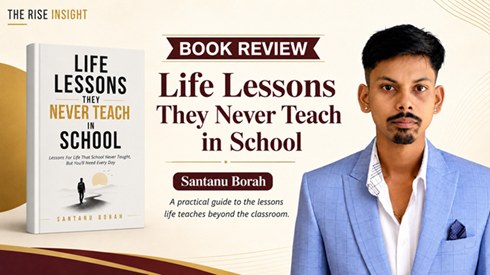
Book Review: Life Lessons They Never Teach in School by Santanu Borah
Life Lessons They Never Teach in School by Santanu Borah Life Lessons They Never Teach in School by Santanu Borah is a simple, practical, and inspiring book about the lessons that people often learn only after entering the real world. The book speaks about success, failure, fear, discipline, relationships, purpose, courage, personal growth, and many other areas of life that are very important but are not always taught in classrooms. The main strength of this book is its simplicity. It does not use difficult words or complicated theories. Instead, the author explains important ideas through relatable situations, short stories, examples, and practical reflections. Because of this, the book feels easy to read and understand. It can be useful for students, young professionals, entrepreneurs, and even older readers who want to think again about the way they are living their lives. The very title of the book gives a clear idea of its purpose. School teaches us many useful subjects, but life demands some different skills. We may study mathematics, science, history, and language for many years, but later we discover that real life also asks us to manage money, handle pressure, face rejection, make difficult decisions, communicate with people, recover from failure, and understand ourselves better. This idea is clearly explained in the first chapter, “Success Is Not What School Teaches.” The chapter starts with the memory of the first day of school. This makes the beginning very personal and familiar. Almost every reader can remember entering school with a new uniform, books, a school bag, and the hope that education would prepare them for the future. The author then talks about the common formula of success that many of us hear from childhood: study hard, get good marks, secure a good job, and build a successful life. There is nothing wrong with this advice, and the book does not criticize education. In fact, the author respects the importance of schools and teachers. But he also explains that education alone cannot prepare us for every situation. In the real world, people are not asked what marks they scored in school. Instead, they are judged by the way they solve problems, communicate, lead, manage emotions, deal with pressure, and take responsibility. This is one of the strongest messages of the book. A very meaningful thought in the first chapter is that school gives the lesson first and then the test, while life often gives the test first and the lesson later. This line explains the difference between academic education and real-life learning in a very simple way. Many of the most important lessons in life come after mistakes, failures, disappointments, or difficult experiences. Another beautiful chapter is “The Art of Letting Go.” This chapter begins with a simple story of a young boy sitting under a tree in autumn. He watches the tree lose its leaves and asks his grandfather whether the tree is afraid. The grandfather explains that the tree is not losing its life. It is preparing for a new season. This short story gives a deep lesson without becoming difficult. Sometimes, moving forward in life requires us to leave something behind. We often think that personal growth means gaining more—more knowledge, more success, more money, more relationships, or more achievements. But the author reminds us that growth can also mean letting go. We may need to let go of old memories, unhealthy habits, past failures, guilt, negative relationships, unrealistic expectations, or a version of ourselves that no longer helps us grow. The example of the tree is especially effective because it shows that letting go is natural. A tree does not hold every old leaf forever. If it did, there would be no space for new growth. In the same way, people also need space for new beginnings. This chapter can connect deeply with readers who are facing change. Letting go is never easy, but the book presents it as a necessary part of life rather than something to fear. Sometimes, what looks like an ending is actually preparation for a new chapter. The chapter “Fear: The Invisible Wall Between You and Your Dreams” is also one of the most powerful parts of the book. It begins with the story of a traveler standing near a mountain. He wants to climb it, but fear stops him before he even begins. An old guide tells him that the mountain is not stopping him—his fear is. This simple example explains how fear works in everyday life. Many people have dreams, talent, and opportunities, but they still do not move forward because they are afraid. The author discusses different kinds of fear such as fear of failure, rejection, judgment, losing, uncertainty, and not being good enough. These are not unusual fears. Almost everyone experiences them at some point. The book also makes an important distinction: fear itself is not always bad. Fear can protect us from real danger. The real problem starts when fear begins to control our decisions and stops us from taking steps that could improve our lives. This is a very practical lesson. Many people remain inside their comfort zone because safety feels peaceful. They avoid risks, difficult conversations, new opportunities, public speaking, business ideas, or creative work because they do not want to fail. But the author explains that the cost of always playing safe can be greater than failure itself. One of the best ideas in the chapter is that failure is temporary, while regret can remain for a long time. The book gives the example of two people. One starts a business and fails. The other never starts because he is afraid. Years later, the first person may have gained experience, knowledge, and confidence. The second may only have one question: “What if I had tried?” This is a powerful reminder that failure is not always the worst possible result. Sometimes, not trying at all can hurt more. The book also explains courage in a very realistic way. Courage does not mean that a
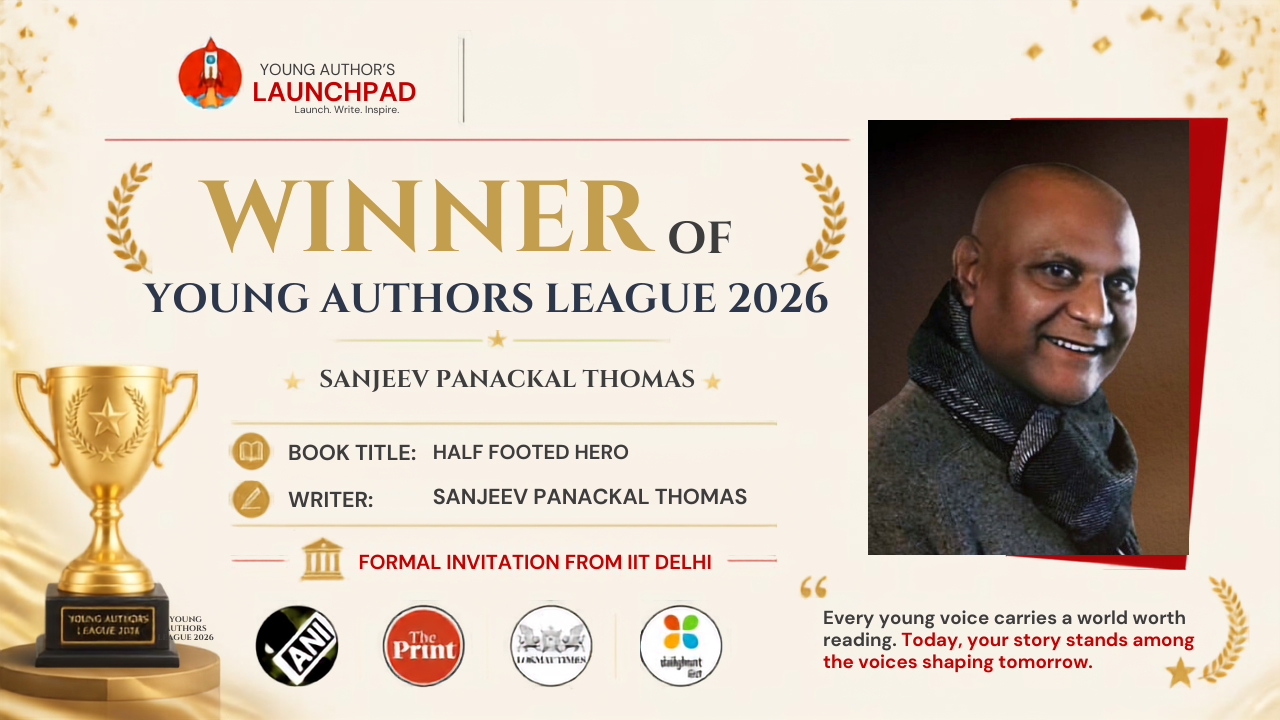
Congratulations to Sanjeev Panackal Thomas: Celebrating a Remarkable Journey of Memory, Resilience and Reinvention
Uncategorized
It is a pleasure to congratulate Sanjeev Panackal Thomas, an engineer, business leader, entrepreneur, author and artist whose remarkable journey reflects resilience, reinvention, leadership and an enduring commitment to creativity. His book, Half-Footed Hero: A Tale of a Lovedale Boy (1971–1979), is perhaps one of his most personal expressions. More than a memoir of school life, it is a thoughtful return to the experiences, relationships, struggles and seemingly ordinary moments that quietly shaped the person he eventually became. Some schools simply educate their students. Others become an inseparable part of their identity. For Sanjeev, The Lawrence School, Lovedale, was the latter. In 1971, a young boy from Kerala arrived at Lovedale. What followed over the next eight years would become far more than an education. Against the misty fields and hills of one of India’s iconic boarding schools, he encountered friendship and rivalry, discipline and rebellion, achievement and humiliation, confidence and uncertainty. Half-Footed Hero returns to those formative years decades later. But Sanjeev does not romanticise the past simply for the sake of nostalgia. Instead, he revisits it with affection, humour and honesty. He meets again the awkward boy, the outsider, the athlete, the friend, the rebel and the dreamer he once was. He examines moments when that boy succeeded and moments when he stumbled, slowly recognising that growing up rarely happens on a perfectly level playing field. That idea gives the title Half-Footed Hero its distinctive meaning. It represents courage without certainty. Resilience without guarantees. And the effort to find balance even when one feels that both feet are not firmly planted on the ground. The memoir therefore becomes much larger than a story about boarding-school life. It is about becoming. It is about friendships capable of surviving decades, failures that unexpectedly become teachers, institutions that continue to influence us long after we have left them, and childhood experiences whose significance may only become clear years later. Sanjeev’s own life after Lovedale gives those reflections an extraordinary additional dimension. A merit scholar and former Head Boy of The Lawrence School, Lovedale, he went on to earn a BTech in Mechanical Engineering and an MBA. His professional journey subsequently took him into senior leadership positions in India, Europe and the United States. He headed companies, served as Chairman of the CII Kerala South Zone and received recognition for his contribution to industry and society, including an ASSOCHAM award presented by Dr. A. P. J. Abdul Kalam and a National CSR Award. Yet one of the most interesting chapters in his life came when many people might have chosen stability. At the age of 58, Sanjeev reinvented himself again. He stepped into entrepreneurship and founded Narmada Kaolin Pvt. Ltd., driven by a vision of using technology and innovation to create value from India’s mineral resources. That decision says something important about the philosophy underlying Half-Footed Hero. Becoming does not stop when childhood ends. Neither does reinvention. A life can continually evolve. And despite decades spent in engineering, industry and leadership, Sanjeev’s creative identity remained equally important. He has published books, held solo art exhibitions and continued using both writing and painting as ways of examining people, memory and the human experience. In Half-Footed Hero, these worlds converge. The businessman looks back at the boy. The artist observes memory. The writer gives those memories language. And the adult begins to understand experiences that the child could never fully comprehend. Perhaps that is what makes the book especially meaningful. It is not written merely to document what happened at Lovedale. It attempts to understand why those years continued to matter. As the story moves beyond the school gates, the reader discovers the extraordinary distance travelled by the young boy introduced at the beginning of the memoir. The journey eventually includes leadership, enterprise, creativity and even a moment standing in a room with the Prime Minister of India. Yet that moment is not treated as the final destination. Instead, it becomes an almost improbable response to the deeper question running beneath the entire memoir: What can become of a boy who once felt he was standing on only half a foot? The answer is not simply found in professional accomplishments or recognition. It lies in the journey itself. In continuing after failure. In remembering friendships. In accepting imperfections. In finding humour in difficult memories. In reinventing oneself. And in eventually understanding that some of the experiences we once believed were holding us back may actually have been preparing us for what came next. Half-Footed Hero is therefore not simply Sanjeev Panackal Thomas’s story. It invites readers to think about their own. Who were we before the world taught us who we were supposed to become? Which friendships changed us? Which failures shaped us? Which places continue to live within us long after we have left them? And how differently might we understand the child we once were if we could meet them today? Through this honest and reflective memoir, Sanjeev gives readers an opportunity to ask those questions for themselves. We congratulate Sanjeev Panackal Thomas on Half-Footed Hero and on a life that beautifully demonstrates the power of resilience, curiosity, creativity and reinvention. From the classrooms and playing fields of Lovedale to corporate boardrooms, entrepreneurship, art and literature, his journey reminds us that the most meaningful stories are often not simply about where we arrive. They are about everything that shaped us along the way. Congratulations, Sanjeev Panackal Thomas, on this deeply personal and memorable literary journey. Featured Book Half-Footed Hero: A Tale of a Lovedale Boy (1971–1979) Author: Sanjeev Panackal Thomas Available on Amazon:https://amzn.in/d/08oOwk8O

Pickled: When Love Becomes the Invisible Work of a Lifetime
Book: Pickled: A Portrait of Motherhood Sandwiched Between Responsibilities Author: Srushti Sodha There are books about motherhood that celebrate tenderness, books that discuss parenting, and books that document family life. Srushti Sodha’s Pickled: A Portrait of Motherhood Sandwiched Between Responsibilities does something more intimate. It looks closely at the kind of love that becomes so ordinary within a household that people stop noticing how much effort it requires. The mother remembers who has eaten, who is worried, who needs a phone call, whose medicine is running out, which festival is approaching, and which child needs reassurance even after becoming an adult. None of these acts may look dramatic on their own. Together, they form an invisible system that keeps generations connected. That is why Pickled feels important. It recognizes a generation of women who were expected to care in every direction at once. They raised children while remaining daughters to aging parents. They learned the moods of husbands, the needs of extended families, the rhythms of kitchens, the pressures of social expectation, and the endless small negotiations required to keep a home emotionally functional. The phrase “sandwiched between responsibilities” is not simply descriptive. It captures a whole way of living in which a woman’s identity can become compressed between what others need from her. The title gives the book its most memorable metaphor. To be “pickled” is to be preserved, soaked, seasoned, and changed over time. In the book, this becomes a way of thinking about women who were not necessarily destroyed by responsibility, but were transformed by it. They learned patience because patience was required. They developed emotional intelligence because someone had to understand the family without being told. They became strong because there was rarely time to ask whether they wanted strength. Like something left to mature slowly, their personalities absorbed the flavors of duty, resilience, affection, compromise, humor, irritation, and endurance. What makes this metaphor work is that the book does not treat sacrifice as a one-dimensional tragedy. There is warmth in these lives. There is pride, competence, wit, tradition, and genuine love. A mother packing homemade snacks for a child living thousands of miles away may be tired, but she may also feel joy in still having a way to care. A mother who urges her daughters to “fly higher” than she did may experience the loneliness of distance, but she also sees their independence as evidence that her work mattered. Pickled respects this complexity instead of forcing motherhood into the simple categories of victimhood or sainthood. One of the strongest aspects of the book is its attention to domestic detail. Pressure cookers, tea, phone calls, parcels, family meals, temple bells, newspaper pages, small-town rhythms, and the predictable language of concern make the emotional world believable. These details are not decorative. They reveal how care is actually delivered. Love is often not announced. It arrives as food, reminders, instructions, waiting, planning, and the ability to anticipate a need before it is spoken. In many families, “Did you eat?” carries more emotional weight than a grand declaration of affection. The book becomes especially moving because it is written from the perspective of a daughter approaching motherhood herself. Pregnancy changes the way she looks backward. What once seemed normal begins to look astonishing. The mother who always seemed available was not magically free of exhaustion. She repeatedly made herself available. The home that felt secure did not become secure by accident. Someone built that feeling through thousands of quiet choices. The daughter begins to understand that the comfort she received was the result of effort she could not recognize as a child. This shift in perspective is one of the book’s greatest strengths because it will feel familiar to many adult children. We often understand our parents only after reaching the ages or responsibilities they once carried. The same decisions that seemed strict begin to reveal fear. The same routines that felt ordinary reveal discipline. The same repeated questions reveal attachment. Pickled captures that late-arriving recognition with softness rather than guilt. It asks readers to notice more carefully, not to punish themselves for not having noticed earlier. The book also raises a difficult but necessary question: must love always require self-erasure? For many women, especially in older generations, motherhood was considered complete only when the mother placed herself last. Dreams could be postponed. Careers could be limited. Personal space could disappear. Exhaustion could become proof of devotion. Pickled does not mock that model or dismiss the women who lived by it. Instead, it asks whether the next generation can preserve the depth of that love without reproducing all of its costs. That question gives the book a contemporary urgency. Many women today are still negotiating multiple identities: daughter, mother, partner, professional, caregiver, friend, and individual. They may have more language for boundaries and self-care than previous generations did, but the emotional expectations have not disappeared. The desire to be present for everyone can still become overwhelming. Pickled creates a bridge between generations by suggesting that change does not have to mean rejection. A daughter can deeply honor her mother’s sacrifices while choosing a different definition of motherhood for herself. The book is also valuable because it expands our idea of power. Power is usually imagined as loud, visible, and commanding. The mothers in Pickled often exercise another kind of influence. They create stability without constantly announcing their authority. They build trust so gradually that it feels natural. Their guidance may sound like advice rather than instruction, and their leadership may appear as warmth. Yet those quiet choices shape the people their children become. The book’s insight is simple but powerful: influence does not have to be dramatic to be permanent. Another beautiful idea in the book is the paradox of raising children to leave. A mother spends years becoming the center of a child’s world, only to hope that the child will eventually be strong enough to build a world elsewhere. Success therefore contains loss. The independent daughter is
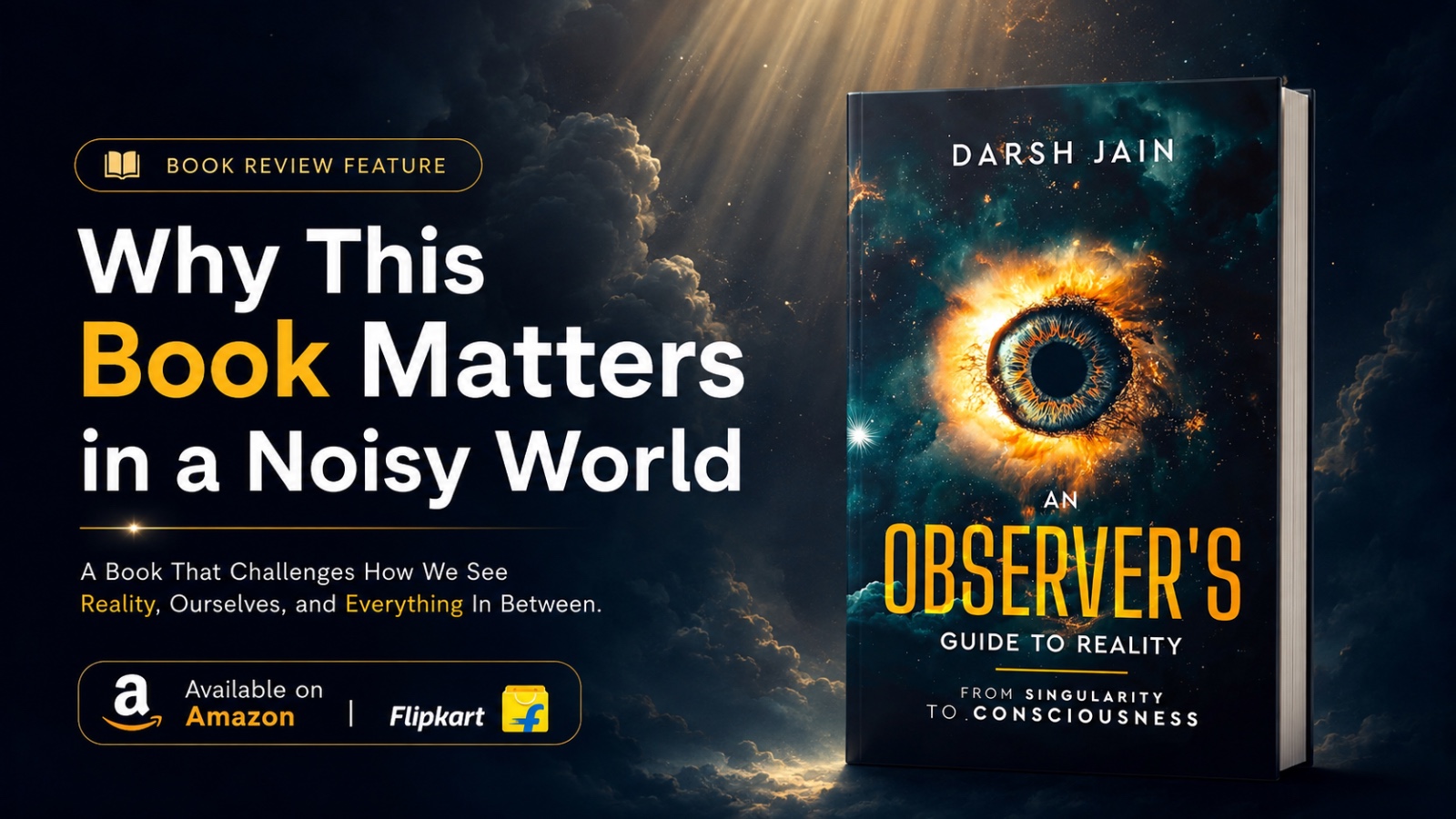
From the Big Bang to the Human Mind: Why An Observer’s Guide to Reality Is Worth Reading
Some books begin with a person, a place, or a problem. An Observer’s Guide to Reality begins with almost everything. Darsh Jain starts with the birth of the universe and then slowly brings the reader closer and closer to the present moment: from the Big Bang to particles, from particles to atoms, from atoms to the Earth, from the Earth to life, from life to evolution, and from evolution to the strange human ability to ask, “Who am I?” That large movement is the first reason this book matters. It does not treat cosmology, biology, anthropology, history, and philosophy as separate islands. It tries to show them as parts of one continuous story. The reader is not simply learning facts about stars or genes. The reader is being shown how the same universe that formed galaxies eventually produced a living brain capable of looking back at the universe and wondering what it all means. The book’s ten-chapter structure makes this huge journey surprisingly easy to follow. The opening chapters discuss the beginning of the cosmos, the planet of life, and the evolution of living organisms. The middle chapters move through primates, the origins of the genus Homo, and Homo sapiens. The later chapters become more psychological and philosophical: The Human Matrix, The Meaning of Meaninglessness, The Illusion of Self, and finally Observe the Observer. This progression is important because it gives the book a strong sense of direction. The author does not suddenly jump from quantum particles to consciousness. He builds a bridge. By the time the reader reaches questions about identity, morality, belief, and free will, the earlier chapters have already established the biological and evolutionary background needed to understand why those questions are being asked. One of the book’s strongest qualities is its insistence that science should be understandable to ordinary readers. Jain repeatedly writes as a curious observer rather than as someone trying to impress the reader with technical authority. Difficult ideas such as singularity, quantum mechanics, atomic structure, energy, thermodynamics, natural selection, genetics, neural activity, and the prefrontal cortex are explained through examples drawn from everyday experience. The goal is not to make every reader a specialist. The goal is to make the reader feel comfortable enough to ask questions. That choice matters because many people lose interest in science during school, where it can become a list of definitions, formulas, and examination answers. This book tries to restore the wonder that often existed before science became a subject to memorize. The transition from physical reality to biological life is also one of the book’s most satisfying features. Instead of presenting life as a sudden mystery disconnected from matter, the book follows energy, atoms, molecules, cells, genes, and environmental pressures. It explains evolution not as a ladder with humans waiting at the top, but as an enormous process of variation, survival, adaptation, and chance. Dinosaurs, mammals, primates, hominins, Neanderthals, and Homo sapiens appear not as decorative history but as parts of the reader’s own background. This creates a useful sense of humility. Human beings are extraordinary in many ways, but the book continually reminds us that our bodies, instincts, fears, emotions, and social behaviours carry deep evolutionary histories. Understanding those histories can change how we see ourselves. The chapter on Homo sapiens expands that idea by asking what truly made our species so powerful. The answer is not simply intelligence. The book gives special importance to cooperation, communication, culture, and imagination. Human beings survive because knowledge can move from one mind to another. A tool discovered by one person can be copied by many. A ritual can travel across generations. A story can unite strangers. This prepares the reader for one of the book’s most memorable ideas: imagined orders. Money, nations, laws, status, sacred symbols, and social identities may not exist in nature in the same way a mountain or river exists, yet they become powerful because large groups of people believe in them together. The point is not that such things are useless. The point is that their power comes from collective agreement. This is where the book becomes more than a popular-science overview. It turns into a study of the human world. A piece of paper can become money. Cloth can become a flag. Lines on a map can become national borders. Words written in a constitution can shape the lives of millions. The physical materials are ordinary, but the meanings placed upon them are enormous. Jain asks the reader to notice the difference between material reality and the stories humans build around it. That distinction is important because it helps explain both human cooperation and human conflict. The same imagination that allows strangers to build cities, institutions, and systems can also divide people into opposing identities and make them defend inherited beliefs without examining where those beliefs came from. The later chapters become even more personal. After examining how humans create shared realities, the book asks where meaning itself comes from. If the universe does not provide a clear purpose, does life become empty? Jain’s answer is not to hand the reader a new belief system. Instead, he explores the possibility that meaning is something the human brain makes. We feel love, grief, ambition, wonder, belonging, and purpose because our biology and experience allow these states to exist. This can sound unsettling at first, especially for readers who are used to thinking of meaning as something given from outside. Yet the book tries to show that a created meaning is not automatically a false or worthless meaning. A song can move us even though sound is vibration. Love can matter deeply even when hormones and neural circuits are involved. The discussion of the self and free will adds another layer. The book asks whether the “I” we feel at the centre of our lives is a fixed, independent controller or a story created by the brain from memory, sensation, emotion, language, and neural activity. It considers how decisions emerge from biological processes

An Interview with Anand Lakshmivarahan R. and Neha Taneja, Authors of Bytes and Breaths: The Vitasphere Quest
The authors discuss artificial intelligence, emotional intelligence, leadership, storytelling, and the future of human-centred innovation. Bytes and Breaths: The Vitasphere Quest is a contemporary leadership parable exploring the powerful intersection of Artificial Intelligence and Emotional Intelligence. Through the journey of Zara, a founder navigating professional pressure, uncertainty, loneliness, and personal transformation, the book examines an increasingly important idea: the future of leadership will not be shaped by technology alone. It will depend equally on empathy, self-awareness, emotional resilience, sound judgement, and meaningful human connection. In this insightful conversation, authors Anand Lakshmivarahan R. and Neha Taneja discuss the inspiration behind the book, their collaborative writing process, the creation of its characters, and the role AI could play in developing emotionally intelligent leaders. Q1. What was the original spark that led you to write Bytes and Breaths: The Vitasphere Questtogether? We would trace it back to something we had each noticed independently during our corporate journeys: transformation programmes rarely stall because of technology alone. More often, they struggle because of what is happening within the people responsible for leading them. A casual conversation between us revealed how strongly we both felt about this subject. Within a few exchanges, we knew we wanted to create something that combined the complexity of the systems we had built with the rawer and less frequently discussed reality of how leaders feel while working under pressure. The book grew from that intersection between technological transformation and human emotion. Q2. You both come from technology backgrounds, yet you chose fiction instead of writing a conventional business or self-help book. Why did the parable format feel right? A conventional business book would have allowed us to hide behind frameworks, models, and recommendations. Fiction does not offer that protection. When you place a founder in a room after losing a co-founder, or show her looking at a dashboard that indicates her company is shrinking, you cannot reduce the emotional reality of that experience to three bullet points and a management model. The parable format required us to remain inside the discomfort rather than analyse it from a safe distance. That is probably why readers tell us they recognise themselves in Zara instead of simply agreeing with the advice presented in the book. Q3. The book suggests that emotional intelligence may be even more important than technical capability in modern leadership. Where did that conviction come from? The idea initially came from Neha, almost as an aside, during one of our earliest conversations about the direction of the book. The moment she expressed it, the entire project was reframed. We had both spent years in professional environments where even the strongest technology strategies failed because the emotional undercurrents in the room were misunderstood or ignored. Once we clearly identified that idea, emotional intelligence stopped being a secondary theme. It became the central spine supporting the entire narrative. Q4. What was it like translating complex ideas about AI, technology, and data systems into narrative fiction? It was both challenging and rewarding. It was challenging because data platforms and AI architecture do not naturally lend themselves to scenes and dialogue. A character cannot explain a system design for several pages while the writer expects the reader to remain emotionally invested. However, the process became rewarding once we found the right balance. Technology stopped being the subject of the book and became part of its texture instead. It appears in the way Aria, the AI coach, listens to Zara, the way a board meeting unfolds, and the way a dashboard communicates only one part of a much larger story. The writing process taught us to trust restraint rather than explanation. Q5. Zara is a founder dealing with external market pressure and internal emotional conflict. How did you develop her character? Zara is not based on any single individual. She is a composite of several leaders we have observed closely, including, if we are being honest, versions of ourselves during difficult periods. We developed her character by asking what could truly break someone who appeared completely in control from the outside. We then worked backwards from that point. Her professional competence was never in doubt. What interested us was the gap between how capable she appeared and how invisible her internal struggle remained to everyone around her—including Zara herself—for a significant part of the story. Q6. Aria is a compelling fictional AI construct. How did you design her, and what ethical boundaries did you establish for her role? Aria had to earn her place in the story. An AI character can easily become either a gimmick or an unrealistic solution to every problem. We designed her around the idea of helping Zara observe and understand her own reactions rather than providing ready-made answers. Aria is closer to a mirror than an oracle. The ethical line we maintained throughout the book was clear: Aria could strengthen Zara’s judgement, but she could never replace it. Any version of Aria that began making decisions on Zara’s behalf would have undermined the book’s entire argument about human responsibility, self-awareness, and leadership. Q7. The friendship between Zara and Hana feels deeply authentic. How important was their relationship to the book’s larger message about trust and collaboration? It was enormously important. Leadership stories often isolate the protagonist, creating the impression that personal growth happens in a vacuum. Zara and Hana’s friendship challenges that idea. Real trust—the kind that allows someone to say something uncomfortable without destroying the relationship—is one of the few forces powerful enough to interrupt a leader’s descent into isolation and self-protection. We wanted at least one relationship in the book that was not transactional. Their connection is not based on the dynamic between a founder and a coach or a mentor and a mentee. They are simply two people who continue to show up for each other. Q8. What did your collaborative writing process look like? How did you maintain a unified voice while preserving your individual perspectives? We divided the chapters between us early in the process and
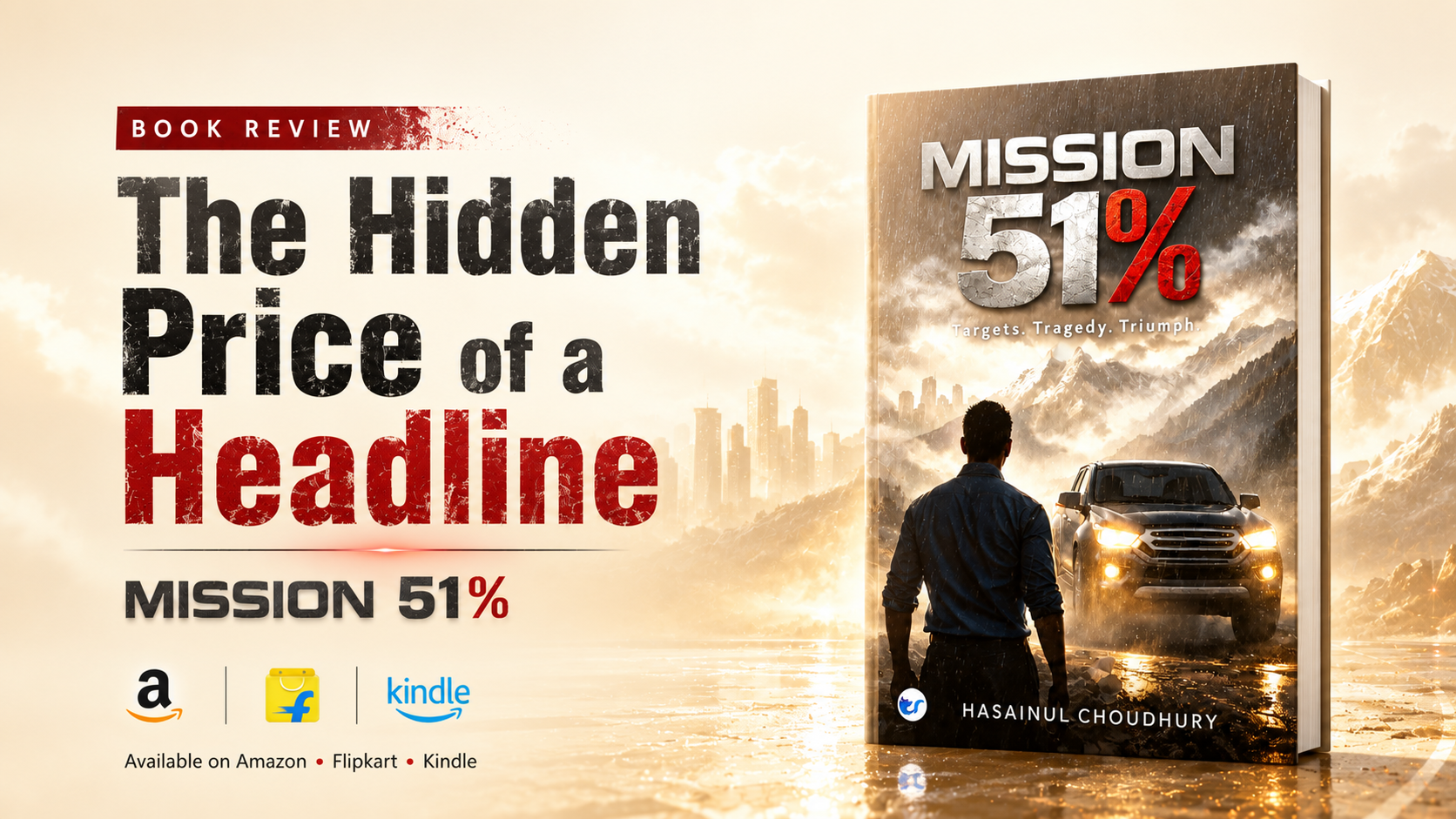
The Hidden Price of a Headline (What Business Thrillers Rarely Dare to Say)
Every quarter, India’s automotive companies publish achievement reports. Records broken, targets crushed, market share gained. The language is clean, triumphant, and utterly silent about the people who made those numbers happen. Mission 51% by Hasainul Choudhury breaks that silence — not with data or policy, but with story. Specifically, with the story of Arjun Chowdhury, a field sales executive in a small-town automobile market, and the brutal, human-scaled cost of hitting one seemingly impossible target. The Mission the Headlines Won’t Cover Behind every billion-dollar corporate milestone is an army of invisible workers. They are the field operators — the people who carry a product into dusty markets, negotiate face to face with suspicious customers, absorb the fallout of decisions made in air-conditioned boardrooms, and keep showing up the next morning. These are not the people who get profiled in business magazines. They are the people who make the profiles possible. Mission 51% places one such person at the centre of the story. Arjun is assigned an impossible target — 51% market share for his dealership — and given a deeply compromised product to achieve it with. The Turbo Cheetah, the truck Arjun must sell, suffers from cracked chassis, faulty engines, and failing tires. It is not a fictional metaphor. It is a precise portrait of what happens when corporate timelines override engineering integrity, and the consequences land not in a boardroom but on a sales executive standing in front of an angry customer. As customers turn violent, legal walls begin closing in, and the personal cost of the mission escalates toward the unbearable, the novel forces a question that India’s business culture rarely asks aloud: who actually pays for corporate ambition? The answer, in Mission 51%, is always the person at the bottom of the hierarchy — the one closest to the ground. “The targets come from the top. The consequences land at the bottom. That is the story Mission 51% refuses to look away from.” The Death That Changes Everything The novel’s central act of violence is not a market crash or a product recall. It is the silencing of Isha — a whistleblower and the only moral anchor Arjun has left. Her death transforms Mission 51% from a high-stakes business thriller into something darker: a story about what institutions do to the people who try to tell the truth inside them. In today’s corporate landscape, these are live conversations. Corporate India is navigating intensifying discussions about whistleblower protection, product liability accountability, and the ethics of growth-at-all-costs management culture. Isha’s fate reads not as fiction but as pattern recognition — a compressed dramatisation of outcomes that, in the real world, unfold slowly enough that nobody names them as stories at all. Choudhury is not naive about this. He spent more than two decades in the automotive industry before writing this novel. He is not observing the system from outside. He is reconstructing it from memory, with the precision of someone who knows exactly how the blunders get distributed downward. How to Read This Book Mission 51% is best approached as a thriller first and a business story second. Begin with Chapter 1 — The Call — which opens in a storm with danger, rescue, and immediate physical stakes. It feels like the opening sequence of a film. That is intentional. Choudhury is establishing the register: this is not a slow-burn workplace drama. This is action-driven, consequence-heavy fiction. Chapter 9, Where the Mission Began, introduces the central concept in full — the 51% target, the competitive landscape, and the impossible arithmetic of what Arjun has been asked to accomplish. Chapter 16, The Stand-Off at the Stand, is the novel’s first full collision between field reality and the expectations of a system that cannot see the field. Chapter 33, The Mileage Challenge, is the closest the novel comes to a sports-movie climax — and Chapter 40, The Day the Mountains Wept, is where the emotional account finally falls due. Do not skim Chapter 40. It is the chapter that earns the novel its claim to say something true. Why This Story Matters Right Now India’s commercial vehicle market is expanding. Logistics networks are scaling. Revenue targets are rising accordingly. And somewhere inside every company celebrating those numbers, there is an Arjun — carrying a quota, a product, a caseload of customer promises, and the private weight of everything the headline will never mention. Mission 51% exists to make that person visible. Not as a lesson. Not as a framework. As a story that is honest enough about the cost of business success that the people who live it will recognise themselves — and the people who benefit from it without knowing its price might, for the first time, understand what they have been reading past.