

“India’s Blind Spot: Understanding and Managing Our Cities” by Devashish Dhar is a thought-provoking and comprehensive study that sheds light on the complexities of urbanization in India. This book delves deep into the denial of urbanization in Indian policy and its detrimental impact on the development of effective solutions to a myriad of issues plaguing cities across the country. Dhar’s astute analysis and presentation of facts expose the urgent need for a paradigm shift in our understanding and management of Indian cities. One of the standout strengths of this book is its ability to provide a holistic view of the challenges associated with urbanization. Dhar skillfully navigates through a wide range of critical issues, including governance deficits, infrastructure shortfalls, mismanagement of land, neglect of city economies, access to potable water, flooding, traffic congestion, urban green spaces, public spaces, safety concerns, and the marginalization of urban poor, migrants, and vulnerable communities. By highlighting these multidimensional problems, the author creates a comprehensive portrait of the urban landscape in India and underscores the urgent need for effective management strategies. Dhar’s approach is characterized by meticulous research, well-reasoned arguments, and practical policy recommendations. Drawing on real-life examples and compelling narratives, the author offers a nuanced understanding of the challenges faced by Indian cities. He goes beyond mere analysis and provides innovative ideas and solutions to address these challenges. From advocating for transparent and accountable governance structures to encouraging citizen participation in decision-making processes, Dhar empowers readers with the tools necessary to envision a better future for Indian cities. One of the most striking aspects of this book is its emphasis on sustainable development. Dhar recognizes that the issues plaguing Indian cities cannot be viewed in isolation but must be considered within the broader context of long-term sustainability. He emphasizes the need to balance economic growth with social and environmental considerations, stressing the importance of creating livable and inclusive urban environments. By integrating climate adaptation strategies, efficient resource management, and the use of renewable energy sources, the book provides a timely and relevant perspective on the intersection of urbanization and environmental sustainability. The readability and accessibility of “India’s Blind Spot” make it engaging for a wide range of readers. Dhar’s writing style is clear, concise, and free from unnecessary jargon, making the book accessible to both experts and non-experts alike. The use of real-life examples and anecdotes adds depth and relatability to the concepts discussed, enabling readers to connect with the issues on a personal level. Furthermore, the book’s focus on policy solutions and innovations sets it apart from other works on urbanization. Dhar not only highlights the challenges but also offers practical and creative ideas to tackle these complex issues. His exploration of diverse topics such as creative land use, lowering rents and addressing housing shortages, women’s safety, terrorism, innovation, creative economy and tourism, increased utilization of fixed assets, child-friendly cities, and the importance of public transport and demand management showcases the author’s comprehensive understanding of the subject matter. In conclusion, “India’s Blind Spot: Understanding and Managing Our Cities” is an indispensable resource for policymakers, urban planners, scholars, and anyone interested in the future of Indian cities. Devashish Dhar’s comprehensive analysis, policy recommendations, and emphasis on citizen participation and sustainable development make this book a valuable contribution to the discourse on urbanization in India. By shedding light on India’s blind spot towards urbanization, the book serves as a wake-up call and provides a roadmap for creating vibrant, inclusive, and resilient cities in the years to come. It is a must-read for anyone seeking a deep understanding of the complexities of urbanization and its implications for India’s future.

How to publish book on Amazon KDP for free: Easy step complete guide
If you have written a book and want to publish it. You can easily publish your book on Amazon for free. You may publish paperback hardcover and e-book also on Amazon KPD. After publishing your book will be available worldwide through Amazon platforms. Amazon takes the cost of printing of your book from MRP of book and after deduct the print cost and distribution if you sell paperback versions, publishing via KDP is free. Just follow few steps and you can make a KDP account. Here I am writing here how we can publish book on amazon for free.

Book Review: Saga of Vinasha Book 03: The Pearl of Amruta
Shrideep Ghogare’s “Saga of Vinasha Book 03: The Pearl of Amruta” brings readers on a thrilling trip into a world where myth and science mix together. This book delves into the historical myths surrounding a mystery pearl with the ability to provide immortality while exploring the limitations of modern science.
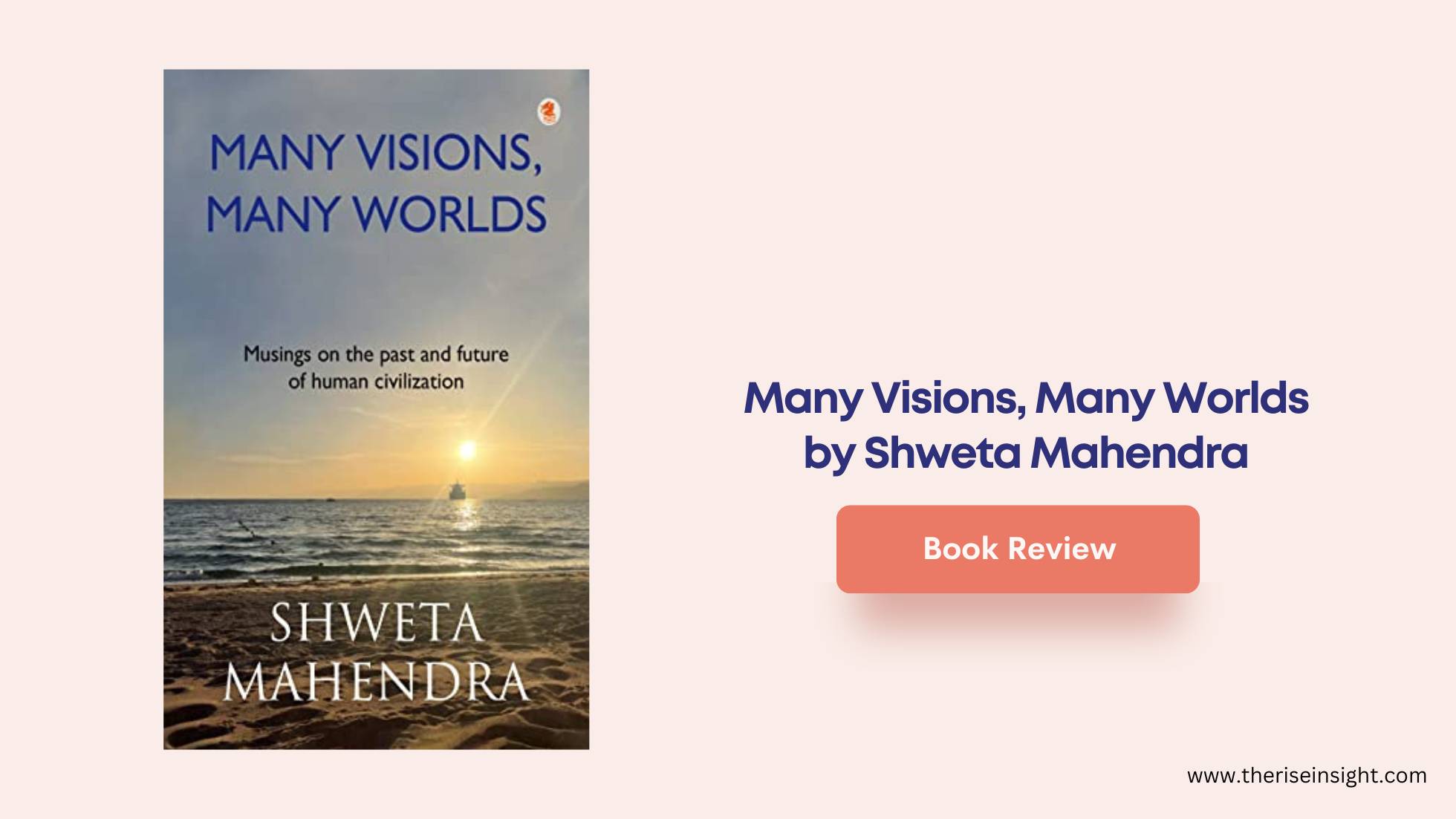
Many Visions, Many Worlds by Shweta Mahendra: Book Review
Introduction In the vast tapestry of human existence, the threads of the past, present, and future are intricately woven together, creating a rich fabric of experiences and possibilities. But what if these threads extend beyond the boundaries of a single lifetime? What if there are hidden connections that bind ancient myths, folktales, and the technologies of tomorrow? These are the questions that Shweta Mahendra explores in her compelling book, “Many Visions, Many Worlds.” The author, Shweta Mahendra, brings a wealth of knowledge and experience to her exploration of the past, present, and future. With over 25 years of corporate work experience in various sectors, including retail, telecom, and futuristic technologies, Mahendra’s understanding of the ever-evolving landscape of human progress is both broad and deep. Currently associated with Reliance Jio, she continues to be at the forefront of technological advancements that shape our modern world. Beyond her professional pursuits, Mahendra is a polymath with diverse interests that span history, archaeology, ancient scripts, sociology, politics, travel, fashion, and fitness. This multidimensional perspective infuses her writing with a rich tapestry of insights and connections, allowing readers to explore the human experience from myriad angles. Mahendra’s academic background, having studied engineering at IIT Roorkee, provides her with a solid foundation in analytical thinking and problem-solving. This, coupled with her passion for uncovering the mysteries of our collective past, allows her to approach her subject matter with both intellectual rigor and a sense of wonder. Also Read: Book Review : The Art of Being Happy The Review Many Visions, Many Worlds by Shweta Mahendra is a thought-provoking and enlightening exploration of the interconnectedness of various dimensions of space and time. The author takes readers on a captivating journey through ancient history, mythology, legends, current developments, and futuristic technologies, weaving them together to reveal the profound mysteries and potential of our existence. One of the notable aspects of this book is the author’s intention to share her own perspective without challenging anyone’s ideology or theory. Shweta Mahendra’s aim is to present her perceptions after extensive research into past civilizations and the progress made by humanity to reach our current state. She believes that the enigmatic riddles of the past hold invaluable clues to our future. Drawing on her travels to ancient sites in Turkiye, Egypt, Jordan, and her native India, Shweta Mahendra establishes a firm belief in the importance of understanding our roots, harnessing energy, embracing karma, and contemplating the afterlife. For readers intrigued by these concepts, the book provides numerous references for further reading and exploration. The author’s underlying belief in one world, one religion, and one God is a guiding principle throughout the book. Shweta Mahendra diligently seeks common threads that have transcended various cultures over the ages, illuminating the shared human experiences that unite us all. This perspective aligns with the concept of “Vasudhaiva Kutumbakam” from India, which translates to “the world is one family.” Shweta Mahendra speculates that technology, in its potential to connect us on a global scale, may play a pivotal role in bringing humanity together as a harmonious family once again. The strength of Many Visions, Many Worlds lies in its ability to intertwine diverse topics seamlessly. The author adeptly combines scientific theories, historical anecdotes, and spiritual insights to paint a holistic picture of the human experience and the possibilities that lie ahead. Readers are invited to contemplate the profound mysteries of our existence and envision the potential paths we might take as a species. The book encourages readers to engage their understanding, will, and imagination in drawing their own conclusions and deriving personal lessons from the material presented. Shweta Mahendra does not offer prescriptive advice but rather stimulates readers’ curiosity and critical thinking. This approach empowers readers to explore the depths of their own beliefs and perspectives, fostering a sense of personal growth and introspection. While the book does provide a wide range of information and insights, it may not delve deeply into every subject it touches upon. Some readers seeking more comprehensive analyses of specific topics may find themselves wanting more. However, it is important to note that the book’s intention is not to provide exhaustive explanations but to inspire readers to embark on their own intellectual and spiritual journeys. Many Visions, Many Worlds succeeds in presenting a thought-provoking tapestry of ideas, blending ancient wisdom with modern concepts. Shweta Mahendra’s passion for understanding our interconnectedness shines through her writing, captivating readers and stimulating their own intellectual explorations. By combining history, mythology, science, and spirituality, this book offers a unique and compelling perspective on the possibilities that lie ahead for humanity. Verdict In conclusion, Many Visions, Many Worlds is a captivating and enlightening book that delves into the depths of space, time, and human existence. Shweta Mahendra’s unique perspective, grounded in her extensive research and personal experiences, invites readers to contemplate the mysteries of our past, present, and future. This thought-provoking journey will leave readers inspired to explore their own understanding of the world and their place within it.

Book Review : Saga of Vinasha: A Mythological Masterpiece of Cosmic Annihilation
“Saga of Vinasha: A Mythological Masterpiece of Cosmic Annihilation” by Shrideep Ghogare is a captivating and immersive journey into the realms of ultimate destruction and the cataclysmic events preceding it. Set against the backdrop of ancient mythology, this book unveils the awe-inspiring story of the moments leading up to Shiva’s fateful awakening and the commencement of his cosmic dance, the Tandava.
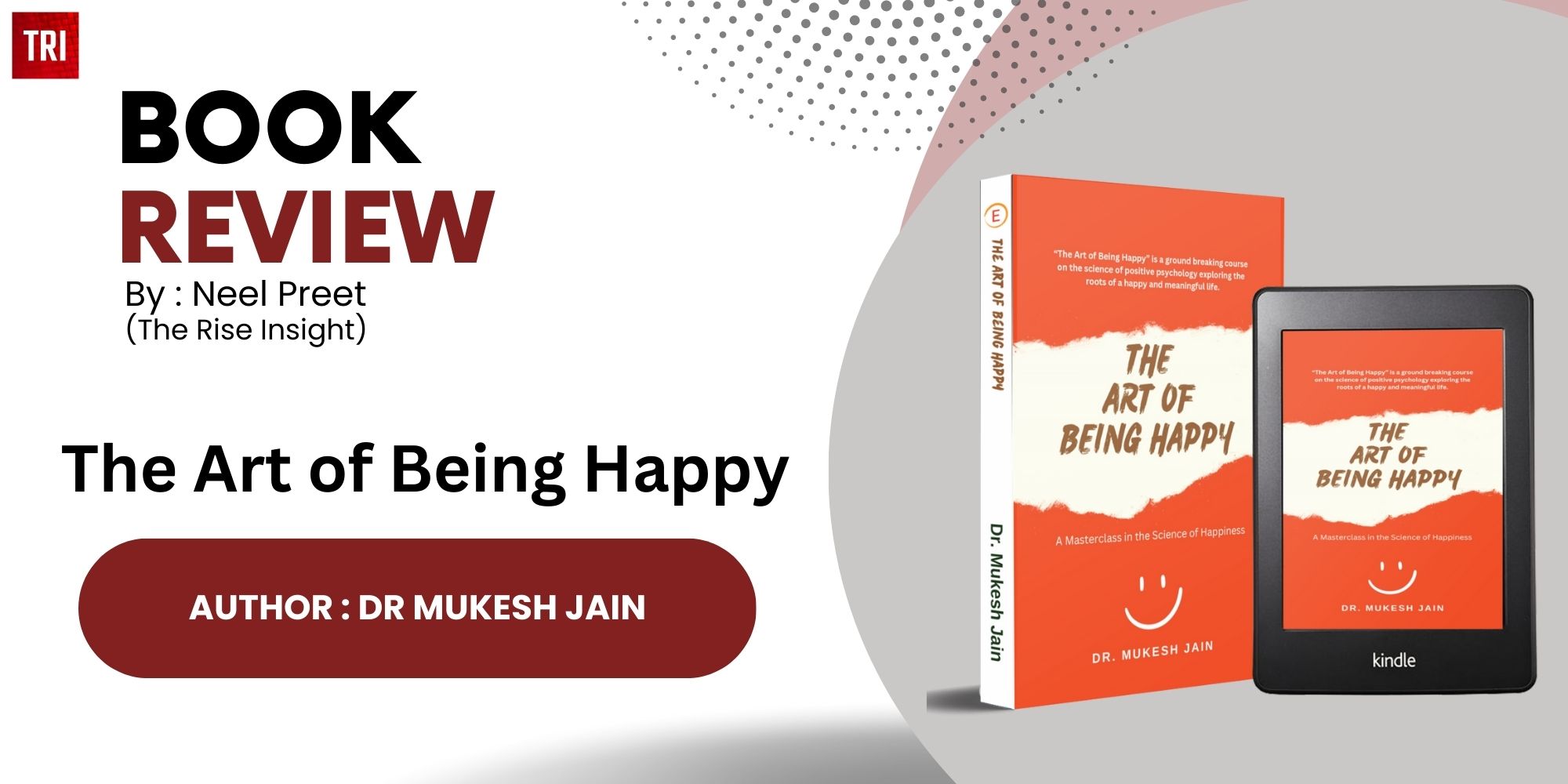
Book Review : The Art of Being Happy
This incredible book, “The Art of Being Happy” by Author Dr. Mukesh Jain is a ground breaking book that delves into the science behind true happiness. Drawing upon the latest research in positive psychology, neuroscience, and evolutionary biology, this enlightening work challenges traditional notions of happiness and provides readers with evidence-based strategies to cultivate lasting well-being.

Book: Symphony To Jazz – The Rise Insight
Uncategorized
This book, “Symphony To Jazz” by Author Ankit Khemka is a business guide and comes under the category of ‘Business & Strategy!’ In this remarkable title, the author explores the powerful analogy of jazz music as a metaphor for teamwork, creativity, and innovation in the business world.

Journeying My Articulacy by Mir Hadia Ashiq
I was a shy girl who did not talk too much. I can recall that as I entered into my teenage years I started to read more. Writing has really boosted my confidence and helped me with my self esteem because when you feel good inside, it always resurfaces outside.
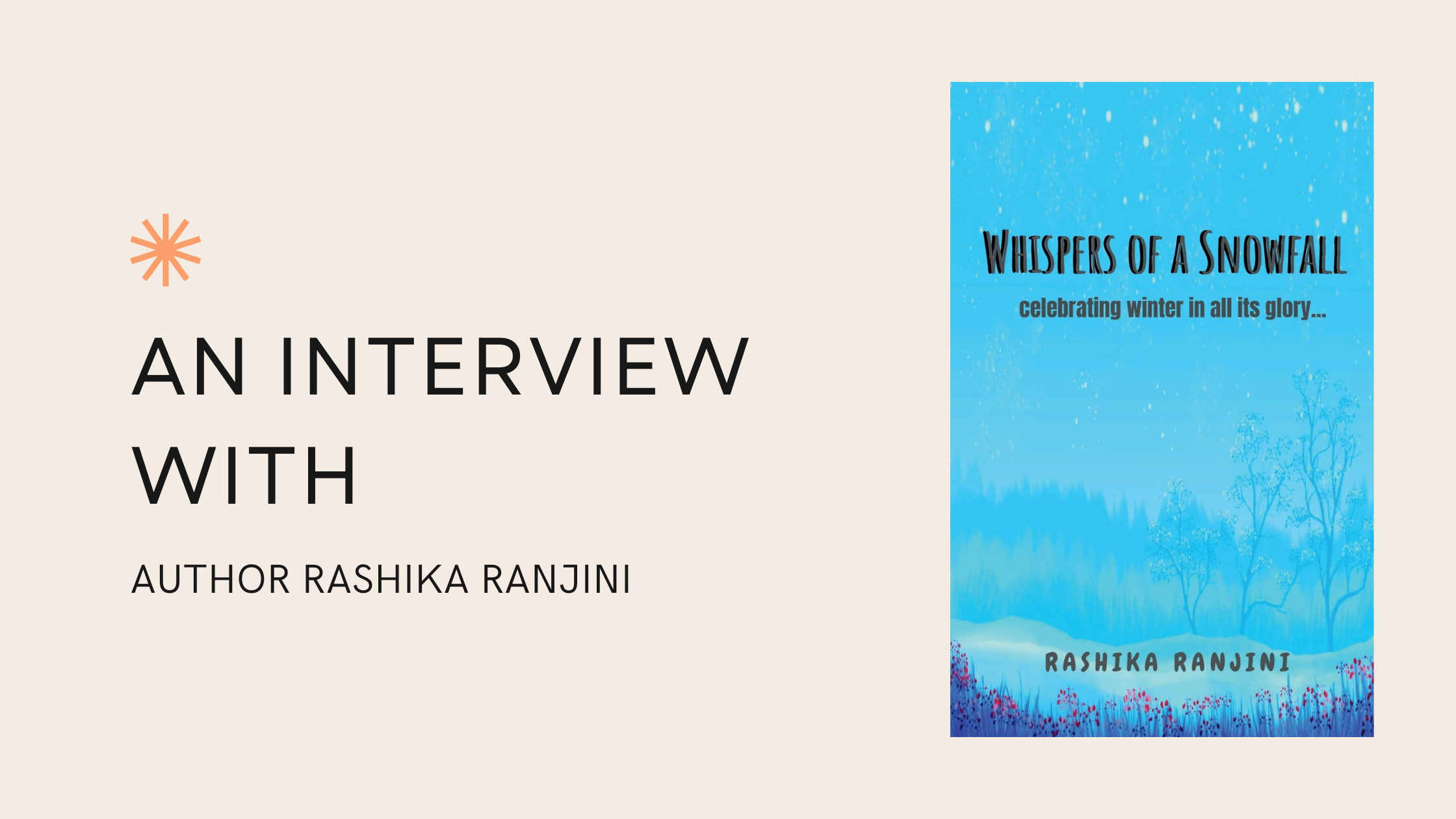
An Interview with Rashika Ranjini – Whispers of a Snowfall
In a parallel universe, Rashika is sure to be a professional juggler, because in this universe, she certainly aspires to be one. Her mind-bogglingly diverse interests range from wildlife conservation to human rights advocacy, from mental health awareness to physical fortitude building, and from reading voraciously to scribbling incessantly. She dabbles in art, writing, and music when life permits and firmly believes in tenacity and perseverance. Giving and sharing are very close to Rashika’s heart. She has founded Pari, a handmade decor, crafts, and jewellery brand, that focuses on selling art for charity. Pari has had a successful run thus far, with their creations getting all sold out during recent exhibitions and sale fests. Pari is planned for further expansion as a provider of digital accessible career-focused education and training to under-privileged women who wish to equip themselves with skills for sustainable careers. The Rise Insight: We would like to begin by congratulating you on the publication of “Whispers of a Snowfall.” How has the response to the book been so far? Rashika Ranjini: Thank you so much. The responses have been very motivating. I was quite jittery about getting this book out there, but it’s heartening to see the praise and comments via email and DM, and I am so glad I did not chicken out of getting this book published. The Rise Insight: What led to the idea of writing “Whispers of a Snowfall”? Were there any events that inspired the work? Rashika Ranjini: I wouldn’t want to claim that this has been dwelling on my mind for months and years and decades. The idea of writing this collection up started from just one poem – and the credit for inspiring that goes to Signorina Winter of course. One poem grew into a collection, and I am so thrilled that I am able to share my words with the world today. The Rise Insight: How easy or difficult was it for you to decide the placement of poetry in “Whispers of a Snowfall” and keep it simple to understand for the readers? Rashika Ranjini: I started scribbling one poem, and I felt I couldn’t contain all my thoughts into just one. At the same time, I did not want to combine and club all the different enthralling factors of Winter into just one poem. So I started thinking of each segment of Winter that has played a strong part of my childhood, and my memories, and thus was born this collection. I strongly believe that writing that comes from the heart would definitely resonate with the readers. Hence I just tried my best to articulate my thoughts as best as I could. The Rise Insight: “Whispers of a Snowfall” shows the uniqueness of your style of writing. Are there any poets that you enjoy reading or any books which are your favorites? Rashika Ranjini: Maya Angelou and Margaret Atwood have been two of my greatest inspirations. I grew up plastering posters of their words on my walls. Emily Dickinson’s poems have figured in my favourites list, as have as have Edgar Allan Poe’s and ST Coleridge’s. The Rise Insight: How would you categorize “Whispers of a Snowfall” as its appeal seems to be to a broad audience? Rashika Ranjini: This book does not really have a single rivet point. It’s an effort resulting from a moment of inspiration, that gave rise to several moments. I honestly believe that the more spontaneous and prompt poetry is, the more endearing it becomes. From that perspective, I can say that “being spontaneously thought provoking, porting the reader into a world of reflective meditation”, is what this book is all about! The Rise Insight: “Whispers of a Snowfall” has given a powerful introduction to your potential as a writer. Can the readers expect more from you in the future? Please share about your future projects. Rashika Ranjini: I am working on two projects at the moment – a fantasy series, from which I am currently writing Book One – The Hymns of Angamoria. I am also working on a non-fiction project, which I am hoping to release later this year – Chartered for Magnificence. The Rise Insight: What is the story behind the title of your work, “Whispers of a Snowfall”? Rashika Ranjini: As evident from my ranting, Winters have been very special to me right from a very young age. The spirit of giving, the cheer in the air, the echoes of the year that’s ending, the eager and almost impatient anticipation of the new year, and at the same time, the yearning of wanting to hold on to the end of the year a wee bit longer, and the resolutions being made once we step into the new year, and the glee with which we look forward to the first flowers of Spring, all make Winters a glorious time. I started thinking of each segment of Winter that has played a strong part of my childhood, and my memories, and thus was born this collection. The Rise Insight: Thank you very much for sparing your time. I look forward to reading more books from you in the future. All the best. Rashika Ranjini: Thanks lots for the thought-provoking questions. This was a fun interview session.

Vaidehi Taman Talks About Her Latest Book “LIFE BEYOND COMPLICATIONS”
Vaidehi Taman has been a journalist for 20 years and is the Founding Editor of Afternoon Voice and The Democracy. She is an Investigative Journalist from Mumbai, who believes in fighting against all odds in the fourth estate, for which she has been bestowed with three Honorary Doctorates in Journalism. She has contributed significantly to society as an editor, ethical hacker, philanthropist, and author. In the past, she has worked with many major media houses such as The Times of India, Free Press Journal and Sunday Observer. She has three other books to her name. An Interview with Author Vaidehi Taman The Rise Insight: Congratulations for the launch of your recent book “LIFE BEYOND COMPLICATIONS” How did you come across Sadhguru Shri Riteshwar’s story? Vaidehi Taman: I am journalist, met Sadguru in one award event and form there we developed an affinity. His lifestyle is mesmerising, when I probed further I came to know many aspects of his life. The Rise Insight: What was the inspiration behind writing this book? Vaidehi Taman: There are many saints in India who went to jail under some or the other allegations. Sadhguru Shri Riteshwar ji only saint who started his spiritual journey from jail. He understood the pain of under trials and also what one faces when wrongly convicted. He worked intensely for the jail reforms and also brought peace behind bars. The Rise Insight: What was your goal in mind when you wrote this book? Vaidehi Taman: My intention is to tell people life is all about the choices we make. Sadguru had many choices but he chose spiritual path and elevated in life. He gave up all materialistic pleasures and walked his path. I wanted to tell my readers when our life goes beyond complications, we remain with compound solutions. The Rise Insight: What do you want readers to learn from this book? Vaidehi Taman: Many things, my Job is to write and convey, what one has to receive is reader’s choice. The Rise Insight: What are your other upcoming publications? Vaidehi Taman: My first Hindi novel Vedanti. It is a unique love story. I believe on this earth LOVE is the only hope. But unfortunately love is mistaken. This love story emphasises the need of Brahmacharya, means to stay in conduct within one’s own Self. The Rise Insight: Do you think you have an affinity for the genre of non-fiction? Vaidehi Taman: Not at all, my next book is purely a fiction The Rise Insight: What are the aspects of the life of Sadhguru Shri Riteshwar that inspired you a lot? Vaidehi Taman: His royal way of living and wisdom to win over the odds. The Rise Insight: What challenges did you face while writing this book? Vaidehi Taman: Absolutely no challenges, I have already mentioned I am journalist and investigating facts and assessing it is not difficult for me. Rather I enjoyed each moment while writing it.