
Book Review: Tadoba Through My Lens by Ojas Dongre
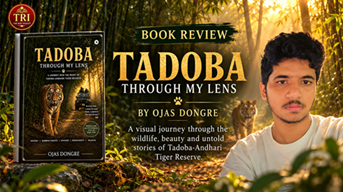
Tadoba Through My Lens by Ojas Dongre is a beautiful combination of wildlife photography, personal experience, storytelling, and love for nature. The book takes readers into the world of Tadoba-Andhari Tiger Reserve in Maharashtra and allows them to see this rich wildlife landscape through the eyes of a young photographer and nature lover. It is not only a book of photographs. It is also a book of observation, learning, curiosity, and respect for the natural world.
The first thing that makes this book special is its subject. Tadoba is known for its forests, wildlife, birds, animals, and especially its tiger population. Many people may have heard about Tadoba, but not everyone gets the chance to visit it. Through this book, readers can experience at least a part of that world through photographs and stories. The book creates a feeling of being close to nature, even for someone reading it from home.
Ojas Dongre uses photography as a way of storytelling. A good wildlife photograph does more than show an animal. It can show mood, movement, silence, danger, beauty, and even personality. A tiger standing quietly in the forest can tell a story. A bird sitting on a branch can show patience. A road through the jungle can create a feeling of mystery. In this way, the book allows photographs to speak along with the written descriptions.
Another strong point of the book is that it does not present wildlife only as something beautiful to look at. It also tries to make readers understand the importance of conservation. Forests and animals need protection, and books like this can help people develop more respect for nature. When readers see wildlife closely through photographs, they may begin to understand why these places matter.
This is especially important for young readers.
Many children and teenagers spend more time with screens than with nature. A book like Tadoba Through My Lens can encourage them to become curious about forests, birds, animals, photography, travel, and conservation. It may even inspire some readers to pick up a camera, go birdwatching, learn about wildlife, or simply become more aware of the natural world around them.
The book also reflects the author’s patience.
Wildlife photography is not easy. Animals do not appear whenever a photographer wants them to. Sometimes one may wait for hours and still not get the perfect moment. A photographer has to be patient, alert, and respectful of the environment.
That kind of patience can be felt in a book based on real wildlife experiences.
This makes the photographs more meaningful because each image may have a story behind it.
Maybe it required waiting.
Maybe it came unexpectedly.
Maybe it captured a moment that lasted only a few seconds.
That is what makes wildlife photography exciting.
The storytelling part of the book adds another layer of interest. Instead of only showing images, the author also shares descriptions, information, and personal experiences. This helps readers understand what they are looking at.
A photograph becomes more interesting when we know what was happening at that moment.
Where was it taken?
What was the animal doing?
What did the author notice?
What made the moment special?
These details can turn a simple photograph into a memory.
The book also gives readers a sense of Tadoba as a place, not just as a wildlife destination. Nature reserves are not only about spotting a tiger. They are about forests, trees, sounds, weather, birds, insects, water, tracks, silence, and the entire ecosystem.
This wider view is important.
Sometimes people visit a forest only hoping to see one famous animal. But nature has much more to offer. Even if a tiger does not appear, the experience can still be rich. A bird call.A deer crossing the road. A butterfly. A tree. Morning mist. The sound of leaves. These small things also make a forest special. Tadoba Through My Lens seems to encourage that kind of observation. The book is also meaningful because it comes from a young author. Ojas Dongre’s interest in wildlife, photography, and storytelling gives the book a fresh energy. It shows that age does not limit curiosity or creativity. Young people can notice the world deeply.
They can tell stories. They can create meaningful work. And they can inspire others. This is a very positive message. The title itself, Tadoba Through My Lens, is simple and perfect for the book. It tells the reader that this is not just information about Tadoba. It is Tadoba as seen by the author. That personal point of view matters. Two people can visit the same forest and return with completely different memories. One person may remember a tiger. Another may remember birds. Someone else may remember the silence of the forest. Photography captures one person’s way of seeing. That makes the book personal. Why Should You Read This Book? One reason to read this book is its visual beauty. Readers who enjoy wildlife photography will find the subject attractive.Another reason is that the book combines images with useful information and stories. This means the reader is not only looking at pictures but also learning something. The book can be especially enjoyable for nature lovers, wildlife enthusiasts, photographers, students, and families. It can also be useful for people planning to visit Tadoba because it can help them understand the place before they go. Another good reason to read the book is its positive message about nature conservation.
The book reminds us that forests are not only tourist spots. They are homes. They are homes for animals, birds, plants, and many forms of life. Humans are visitors there. That understanding is very important.
What Makes the Book Positive?
The book encourages curiosity.
It encourages patience.
It encourages observation.
It encourages young readers to spend more time learning about nature.
Most importantly, it encourages respect.
Respect for wildlife.
Respect for forests.
Respect for the balance of nature.
These are valuable lessons.
The book also shows that hobbies can become meaningful creative work. A love for photography can become a book. A visit to a forest can become a story. A personal interest can inspire other people.
That is another positive takeaway.
Simple and Enjoyable Reading
Another good thing about Tadoba Through My Lens is that it can be enjoyed slowly.
Readers do not need to rush.
They can look at a photograph, read the description, and spend time noticing details.
Books like this can be relaxing.
They create a different reading experience from a normal novel.
Sometimes the reader can simply stop at one page and look.
That is enough.
The combination of photography and storytelling makes the book suitable even for people who do not usually read long books.
A photograph creates interest, and the text adds meaning.
This balance makes the book easy to enjoy.
A Young Voice for Nature
Ojas Dongre’s passion is clearly at the heart of this book.
That passion is important because readers can often feel when a subject genuinely matters to the author.
The book does not appear to be created only to display beautiful photographs.
It also wants people to care about what they are seeing.
That difference matters.
Wildlife photography can become a form of awareness.
When people see the beauty of a forest, they may begin to think about protecting it.
When they understand an animal better, they may care more about its survival.
That is how a book can have an impact beyond its pages.
Final Thoughts
Overall, Tadoba Through My Lens by Ojas Dongre is a warm, informative, and visually engaging book about wildlife, photography, nature, and personal exploration. It brings readers closer to Tadoba-Andhari Tiger Reserve through photographs, stories, and observations. Its biggest strength is the combination of beauty and purpose. The photographs celebrate wildlife. The stories make the experience personal. The information helps readers learn. And the larger message encourages conservation. The book is especially meaningful because it comes from a young author whose passion for nature can inspire other young people. It reminds us that nature is always around us, but we have to learn how to notice it. Sometimes we only need to slow down.
Look carefully. Listen. Observe. And appreciate what is already there. For anyone who loves wildlife, nature, photography, travel, or simple real-life storytelling, Tadoba Through My Lens can be a refreshing and enjoyable read. It is more than a photography book. It is an invitation to see nature with more attention, more respect, and more wonder.
amazon link – https://www.amazon.in/Tadoba-Through-Lens-Ojas-Dongre/dp/B0HBWQJK7D/