

What do the world’s most loved furniture brand, the nation’s highest selling mobiles and the highest on-time airlines in the country have in common? They have all borrowed words from Anindita. Better known as Annie in the advertising circuits, she has also lent voice to hospitals, leading dailies, automobiles, fashion brands, FM channels, gender sensitive social causes alike. Her work has earned her several prestigious awards and accolades in creativity and effectiveness. An alumnus of the Indian Institute of Mass Communication, Delhi, she grew up with a love for story telling in the green city of Guwahati. This is her first attempt to write something without a client’s approval. She also giddily warns her readers that this isn’t going to be her last either. Akhila Saroha: I would like to begin by congratulating you on the publication of “What The Pandemic Learned From Me.” How has the response to the book been so far? Anindita Das: The response has been warm so far, but I am hoping it’s going to pick up more in the coming days. Within two days of launch, it got a top best seller rank in the humor and self-help categories of Amazon. It has also been consistently ranking in the Top 5 Hot Releases. Messages and mentions have been pouring in from many readers and bloggers letting me know that they could relate to it and they seem to have had a few good laughs. Akhila Saroha: What led to the idea of writing “What The Pandemic Learned From Me”? Were there any events that inspired the work? Anindita Das: Let’s just consider this – we have all given two years of our life so far to the pandemic. While for some people this has been an extremely productive phase, I felt in my case, it wasn’t so. The feeling of being stuck alone in a house, grappling with all-encompassing grief, and scrolling endless bad news on social media pushed me to do something positive. I took to writing so I could process my feelings. That’s how the idea of turning it into a book and maybe help people to anchor themselves to some positive experiences or at least derive some form of momentary entertainment during the lockdown came into being. Akhila Saroha: How easy or difficult was it for you to write on a subject that held relevance for all and also remain objective about them despite being personal at the same time in “What The Pandemic Learned From Me”? Anindita Das: I almost gave up on publishing when the second wave peaked, because though we all knew it would happen, nothing had prepared us for the intensity of it. It often felt crippling to keep up with the nonstop cheerful tonality of the book considering what people in the country were experiencing and I, myself was feeling. I was often riddled by doubts if my view was too frivolous and myopic, and I had to constantly work on reminding myself why this made sense not just for me but for other people also. It made sense to dig into something light and happy after many months of just doom and despair. It’s what our soul needed. Akhila Saroha: What are your views about present-day writing? Do you think it does complete justice in depicting human nature in the light of “What The Pandemic Learned from Me”? Anindita Das: I wouldn’t presume to comment on the state of present-day writing. I realize in recent times quite a few lockdown diaries have come out, though I personally haven’t read any of them. From what I have seen of the book blurbs, I do feel my book handles the topic in a completely different light. It’s a mix of humorous anecdotes, insightful observations and a hint of satire. It’s a peek into our collective experiences and our lockdown lives. Akhila Saroha: “What The Pandemic Learned From Me” shows the uniqueness of your style of writing. Are there any authors that you enjoy reading or any books which are your favorites? Anindita Das: It’s embarrassing but I have been in a bit of reading slump. But this year, I have read a few books that I quite enjoyed. I have a special soft corner for historical fiction – The Book Thief by Markus Zusak, Pachinko by Min Lee and The Forest of Enchantments by Chitra Banerjee Divakaruni are the ones I have read recently. I am also fond of books by Phillipa Gregory and Indu Sundesaran. Akhila Saroha: How would you categorize “What The Pandemic Learned From Me” as its appeal seems to be to a broad audience? Anindita Das: This is a good question, because while this is a book in humor genre, it is also about the huge array of experiences we didn’t plan for, thanks to the pandemic. At some point, we all tried our hands in reviving an old hobby that we had to let go off or latch onto a completely new form of distraction for the sake of our sanity. Simply, because of that it is relatable to a vast number of readers but especially to girls who might be spending the lockdown days alone. I was surprised when the book became a best seller in the self-help category and not just in the humor category on Amazon. Akhila Saroha: “What The Pandemic Learned From Me” has given a powerful introduction to your potential as a writer. Can the readers expect more from you in the future? Please share about your future projects. Anindita Das: I do intend to write something more in the future, a young adult romance perhaps. But the idea is really at a very nascent stage right now. Then there’s also the writing that I do as an advertising creative, hopefully there will be some good campaigns coming out soon. I have also been helping out Osmo International, a school focused on educating economically backward students through innovative mind mapping techniques back in Assam. Akhila Saroha:

Featuring Reewen George D Silva Author of the book “SANKALP”
Reewen George D Silva, born in Manipal, Udupi with schooling in Mangalore, is an MBBS student at Belagavi Institute of Medical Sciences of 2017 batch. He edited his first book in MBBS 2nd year. Further this year he has added 2 more to this list which aim to add students’ academic knowledge.

Pankaj Lochan Talks About His Latest Book ‘Sigma: as life sums it all…’
Uncategorized
Pankaj is a writer, music enthusiast and a philanthroper who is very passionate about climate change initiatives at fundamental level. He grew up with parents who always taught him the larger meaning of life and ensured he was observant to the extraordinary in seemingly ordinary things and people in life. Pankaj feels that his wife Piyusha and daughter Prisha bring out the best in him and his writing. Professional Background: Mr Pankaj Lochan has more than 2 decades of experience with organizations like Tata Steel, Dr Reddy’s and JSW Group. He joined his current role as Executive Director & Group CHRO with JSPL from Ambuja Cements where he was working as President – Manufacturing. He has worked in various functions like Manufacturing, Projects, Human Resource, Research & Development, and Business Transformation etc. Pankaj is an engineer by profession and holds a degree in Mechanical Engineering from IIT-BHU and has also done his management education program from IIM Ahmedabad. Pankaj has authored several books in the field of TQM and HR and holds several patents and copyrights in the field of manufacturing and Total Quality Management. He is a Master-black-belt in Six Sigma and also trained in other improvement methodologies like Lean, TOC and TPM. Pankaj has also been trained on Open Innovations from the Haas School, Berkley and on TQM from Japanese Union of Scientists & Engineers (JUSE), Tokyo. Neha Sharma: First and foremost, Congratulations for doing a wonderful work authoring this splendid work called Sigma. I am sure a lot of positivity must be pouring-in related to the book. Am I right? Pankaj Lochan: Thank you so much! I am getting a lot of positive feedback from a lot of people – they’ve liked the whole concept of Sigma. Neha Sharma: What would you like to say about the Sigma concept in the shortest possible or may be as the gist of the book? Pankaj Lochan: SIGMA is about the “cause” & “Effect” in life; something that we don’t understand clearly. The retributions that we receive in life can only be commensurate with our due efforts. We shouldn’t expect more. Neha Sharma: I was amazed reading the long-list of your qualifications and achievements in life. In what ways, do you cherish the values the rest of them carry while balancing with your accolades in writing? Pankaj Lochan: I only value my being a good human being, and that’s precisely what I value in others too! All other virtues that come by my educational or material accomplishments maybe relevant today, may not be relevant tomorrow. But my “goodness” as a human being is there to stay! Neha Sharma: What inspires you to start with a new idea, each time to write? Pankaj Lochan: Everything around has become so complicated – food, our living, our relationships, our society, our work environments. They are far more stressed or expanded that what we require. I want to educate people to simplify things – and make things easier in the world. Sigma is the first step in simplifying relationships and straightening our deeds. Neha Sharma: Who is your role model in the field of writing, if any? Pankaj Lochan: I’m mostly into ancient Indian literature – Vedas, puranas, Upanishads etc. The Shruti and smriti literature inspires me. I also respect contemporary, modern literature. Neha Sharma: Do you have a dream book which is yet to be penned-down by you? If I may get a clue, what is it about? Pankaj Lochan: Yes! The ones written and in the offing are mostly about relationships at work, society and home; The dream book would be about a model code of conduct for the modern urban workplaces. I don’t have the architecture in mind, but will certainly come up with it. This book is where my two fields of work (my earlier books) will merge – my books/work on management practices and those on human & societal relationships (like Sigma) Neha Sharma: What advice would you like to offer to aspiring authors, about tackling the infamous writer’s block as well as otherwise? Pankaj Lochan: I think all of us must connect and write from a basis – “our philosophy”. As long as that happens, the writers’ block doesn’t happen. I also appreciate that pure fiction / genre writers may face this problem. They just have to do some radical thinking/living to get new ideas and overcome the block. Neha Sharma: Given the 24 hours in a day, what time suits you the best for writing? Pankaj Lochan: Anytime an idea occurs to me Neha Sharma: When did you start your writing journey? Were you going through a good or challenging phase when you started? Pankaj Lochan: I wrote more in difficult times. I get more ideas when I’m stressed. Neha Sharma: What suggestions would you like to share with those writers who have completed a work and are now on their hunt for a good publishing team? As in, what criteria should they set to zero-in at one. Pankaj Lochan: A great publishing team does wonders to your work, like in my case. However, I strongly feel you should rely on your work quality only. Long-term success through quality work is like butter in milk; I will always float up! Neha Sharma: Thank you for your times and efforts to make this interview happen. Wish you all the best for all your present as well as future endeavours. Pankaj Lochan: Thank you. I wish you all the best too! Be well, healthy and happy!

A memoir of trip to Shimla – Tribute to Mr. Jansdell
A memoir of trip to Shimla Tribute to Mr Jansdell. I was in Chandigarh for my book-related work.

Book Review : Business strategies Post Pandemic by Author Swati Saksena Jha
The author has inserted wise thoughts and famous sayings of business men in the book at regular intervals to keep the reader motivated to prepare for the challenges that lie ahead. Future marketing strategies hold a key to recovery and Ms Swati Saksena Jha effectively mentions solutions in this regards as well, highlighting the need of giving more importance to customer service and designing sales processes in order to make it easy for the client to carry out transactions and fulfill their needs with ease. With her rich experience in the field of sales and marketing, the author generously inserts motivational quotes and imperatives to mobilize the readers towards reaching their goals.
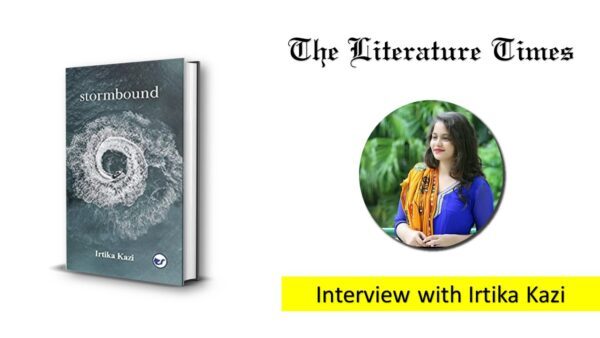
Akhila Saroha Interviews author Irtika Kazi – Stormbound
Irtika Kazi in “Stormbound” writes poetry on random subjects that connect one emotion to another. Simultaneously, it also connects the readers to their abilities to observe and appreciate how the author gives words to ideas that would otherwise find difficulty in expression. Author has shared some more insights on her literature career during her latest interview with The Literature Times. Here are some glimpse of the interview we had with her.