
Before You Commit a Year to Exam Preparation, What Should You Know About the Career You Want? A Review of Life Skills to Reach the Top by Ashok Kumar and OP Manocha
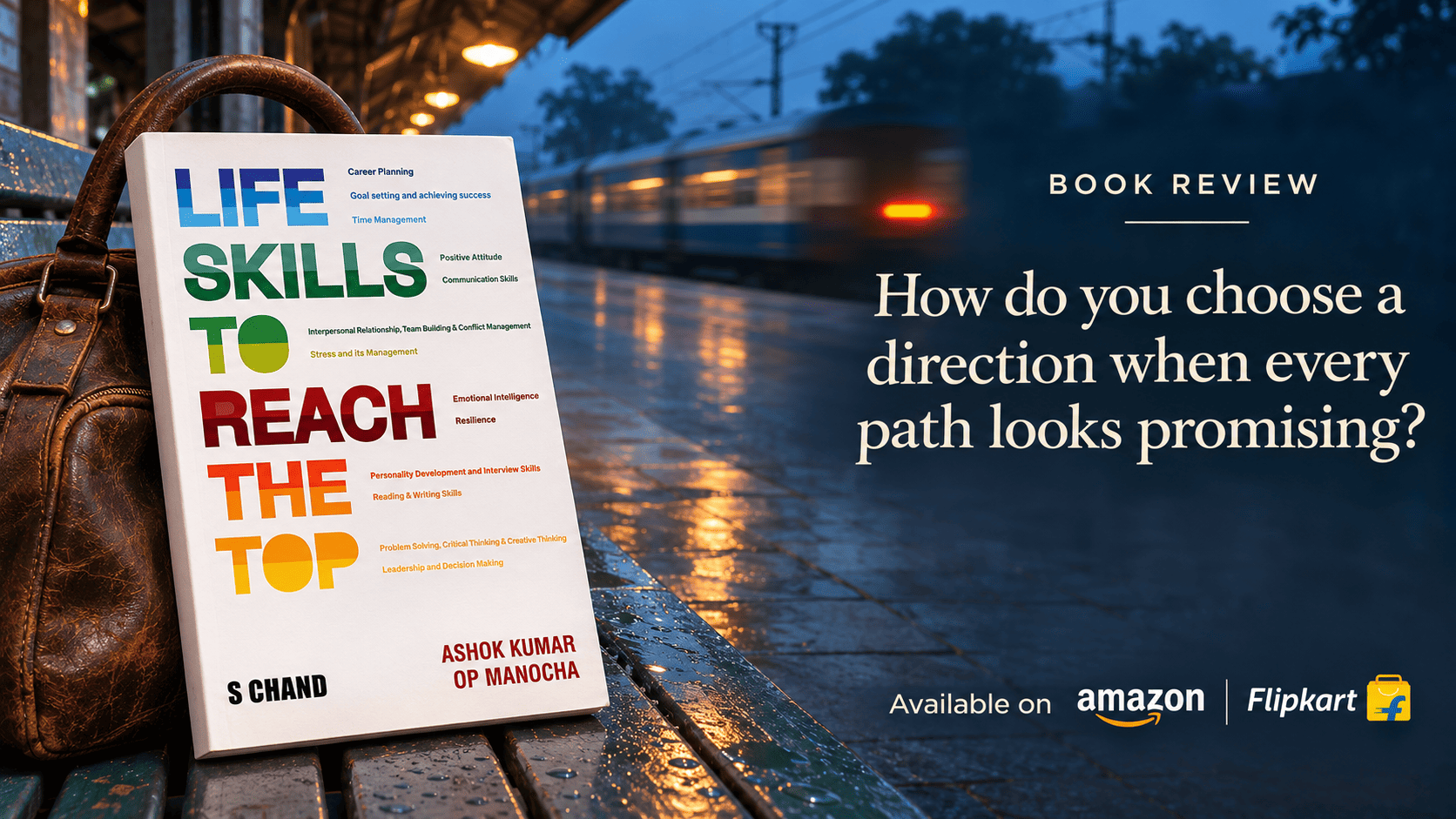
Life Skills to Reach the Top · Ashok Kumar and OP Manocha
“An hour with someone who does the job could change what she does with the next year.”
A student tells the family she wants to sit for the civil services examination. Someone recommends a coaching centre. Someone else sends last year’s reading list. By dinner, several people have helped her plan the next twelve months. Who has asked what she wants to do on an ordinary working day? Ashok Kumar and OP Manocha’s Life Skills to Reach the Top belongs on that dinner table.
Early in the book, a section called “Reality Check” interrupts the agreeable business of imagining a career. The authors ask readers who have a profession in mind to look at what entry actually requires. They also make room for aptitude and interest tests. There is a welcome distinction here. A good mark in a subject tells a student something about what she can do. Whether she would willingly spend another afternoon doing it is a different piece of evidence. A career decision deserves both.
The book brings together Ikigai, SWOT analysis and SMART goals. Three frameworks could easily turn career planning into another assignment to complete for marks. Their value becomes clearer if a reader takes one decision through all three. Suppose our student likes the idea of public service because she enjoys settling disputes. She can ask where else that interest might lead, whether she can afford a year of preparation, and which local officer she could ask to meet this Friday. An hour with someone who does the job could change what she does with the next year.
There are limits to what even a carefully drawn plan can settle. A graduate who needs an income this month has fewer choices than one whose family can pay for another attempt. The book is most helpful when readers bring those circumstances into the exercise. Once the cost of a decision is on the page, it becomes easier to discuss it honestly with the people who will share it.
I would put this book in the hands of a final-year student and give a second copy to the relative who keeps asking about the future. Both might enjoy the discussion more if they began with a smaller question. What could the student find out by Friday that nobody at the dinner table knows today?