
Book Review – Kismet Pariah by Ashish Suhas Sahasrabudhe: A Gripping Mystery of Hidden Truths, Identity, and the Past
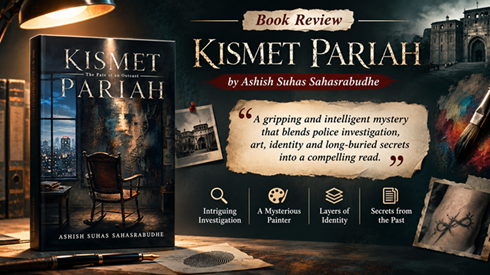
Some mysteries begin with a shocking crime, while others begin with something that looks completely normal. Kismet Pariah by Ashish Suhas Sahasrabudhe belongs to the second category. Set against the quiet and unsettling background of the COVID-19 lockdown, the novel introduces readers to a mysterious death that appears simple at first but gradually reveals a much larger story. With an interesting police investigation, hidden family secrets, questions about identity, and connections to the world of art, the book promises an engaging reading experience for lovers of crime and mystery fiction.
The story begins in Pune at exactly 23:41 hours. The city is under lockdown, and the streets are almost empty. Inspector Vishwas Khare is called to investigate the death of a man found inside a house. At first glance, there is nothing particularly unusual about the scene. The dead man appears peaceful, almost as though he has simply fallen asleep. His clothes are neatly arranged, his hands are relaxed, and the room shows no obvious signs of disturbance. However, the careful arrangement of everything makes the situation suspicious.
This opening creates an interesting atmosphere. Instead of beginning with violence or dramatic action, the author introduces a quiet scene filled with unanswered questions. The unusual calm surrounding the dead body immediately suggests that something is being hidden. It also introduces an important quality of Inspector Khare: he does not easily accept what appears to be the obvious explanation.
As the investigation begins, Khare discovers a message addressed to the dead man’s mother. The message refers to two different faiths that were never meant to exist under the same roof. This detail introduces a sensitive and complicated subject into the mystery. It suggests that the death may be connected to religious differences, personal relationships, or painful events from the past. A fresh tattoo on the man’s body provides another clue, making the case even more mysterious.
One of the strongest elements of the book’s premise is the way ordinary details become important. A message, a tattoo, a locked phone, and a carefully arranged room may appear unrelated, but each has the potential to change the direction of the investigation. These small details make the mystery interesting because readers are encouraged to observe everything carefully and question what they see.
Inspector Vishwas Khare is central to the story. From the description of his investigation, he appears to be a thoughtful and observant police officer who understands that appearances can be misleading. His unwillingness to trust a simple explanation makes him a promising detective character. Rather than rushing to conclusions, he follows the available clues and looks for connections that others might overlook.
The investigation soon moves beyond Pune when a locked phone leads Khare towards Solapur, the forgotten birthplace of the dead man. This change of location adds another layer to the mystery. The journey suggests that understanding the present crime requires an examination of the victim’s past. It also creates opportunities to explore old relationships, forgotten memories, and events that may have remained hidden for many years.
The most intriguing part of the story is the connection to a mysterious painter named Kismet Pariah. The painter has remained away from public attention for twenty-two years, and the mystery surrounding his work becomes an important part of the investigation. The name itself carries special meaning. Kismet represents fate or destiny, while Pariah refers to someone who is rejected or treated as an outsider. Together, these two words create a powerful idea about belonging, identity, and the influence of circumstances on a person’s life.
This connection between crime and art gives the novel an unusual appeal. Many detective stories focus mainly on suspects, motives, and evidence, but Kismet Pariah introduces the possibility that artistic work and an artist’s hidden history may contain important answers. The mysterious painter adds depth to the premise and raises questions about why someone would remain hidden for more than two decades.
As Khare continues his search, the investigation connects several different places and people. A gallery, a minister, a laboratory, and a jeweller become part of the developing mystery. Each represents a different world, suggesting that the case reaches beyond an ordinary murder investigation. The presence of these varied connections gives the story a wider scope and creates curiosity about how they might eventually fit together.
Another interesting aspect of the novel is its focus on identity. During the investigation, even the identity of the dead man becomes uncertain. This development changes the nature of the mystery. The important question is no longer simply who caused the man’s death, but also who the dead man really was and why his past matters. Such questions can make a crime thriller more engaging because they challenge the reader’s understanding of the story.
The relationship between the dead man and his mother also appears significant. The suggestion that she knows more than she should introduces emotional tension into the investigation. Family relationships often contain memories, secrets, and difficult decisions that outsiders cannot easily understand. By connecting the mystery to a mother and her hidden knowledge, the book adds a personal dimension to the crime.
The lockdown setting is another effective feature of the story. Empty streets, restricted movement, and an atmosphere of uncertainty provide a suitable background for a suspenseful investigation. The silence of a city during lockdown can make even an ordinary house feel mysterious. This setting also gives the opening a distinctive identity and separates it from a conventional crime story.
The book’s central themes appear to include fate, social rejection, religious differences, family secrets, and the lasting influence of the past. These subjects suggest that the novel is interested in more than identifying a criminal. It also raises questions about how personal histories shape people’s lives and how difficult truths can remain hidden beneath seemingly ordinary circumstances. The title Kismet Pariah is particularly meaningful in this context. It brings together two ideas that may seem contradictory: destiny and exclusion. It invites readers to think about whether people control their own lives or become trapped by events, decisions, and social expectations. This deeper meaning gives the title a connection to the mystery while creating room for personal interpretation. What makes the story especially appealing is its gradual expansion. It begins with one dead man in one house and moves towards a larger network of people, places, and secrets. The questions become more complicated as the investigation develops. This structure creates the promise of suspense through discovery rather than depending only on dramatic incidents.
Ashish Suhas Sahasrabudhe presents a premise that combines the familiar appeal of detective fiction with questions about human identity and forgotten history. Readers who enjoy police investigations, unusual clues, secretive characters, and mysteries connected to the past are likely to find the story interesting.
The book’s closing thought, that some cases are not truly ended but merely buried, gives the mystery an especially memorable meaning. It suggests that discovering the truth and achieving closure are not always the same thing. Some events may remain hidden for years, but their consequences continue to influence the present.
Final Verdict
Kismet Pariah by Ashish Suhas Sahasrabudhe offers an intriguing crime-thriller premise built around a suspicious death, an observant police inspector, a mysterious painter, and secrets that stretch across decades. Its combination of murder investigation, uncertain identity, family relationships, and hidden history gives the story both suspense and emotional possibilities.
The novel stands out through its unusual opening, meaningful title, and the connection between an apparently straightforward crime and a much older mystery. For readers who appreciate detective stories with thoughtful clues, layered secrets, and questions that go beyond the crime itself, Kismet Pariah is a compelling title to explore.
Amazon Link – https://www.amazon.in/Kismet-Pariah-Ashish-Suhas-Sahasrabudhe-ebook/dp/B0HJGYRKYY/