

Aruna Shaibya was born in the Mirzapur district of India and grew up in the city of Varanasi. She graduated from Banaras Hindu University (BHU) with a degree in Hindi Literature and also holds a master’s in Social Work and a doctorate in Vedic Studies. In place of boring government job it is with writing that she has deepest connection and she is founder of an NGO called Aali-Foundation, which works to help women and children who are facing problems in life. Motivated by her father who still spends hours reading and writing every day, she has already written 5 Hindi poetry books and two novels, Niyatinati and Apoorva, and is now working on a 5 book series based on Indian mythology, called VIJAYSANGRAM Today, Aruna lives in National Capital Region (N.C.R.) and spends her free time reading, writing, listening to music and experimenting with new recipes in her kitchen. She has a deep connection with nature and children and enjoys travelling to quieter corners of the planet whenever she can, visiting temples and sacred places that provide her with comfort and inspiration. Her hopes for the future include doing enough positive things that bring great change to the world, causing others to one day write about her. She wants to see women treated as equals in society and have the same opportunities as men and to bring Indian mythology to life through her books so that even more people can learn about it and use it to change their own circumstances. Author Interview Akhila Saroha: I would like to begin by congratulating you on the publication of “Niyatinati.” How has the response to the book been so far? Aruna Shaibya: Thank you Akhila! I am getting very good response from the readers out there and I am very thankful to them for such a great response and reviews. I am very grateful to have all of you take some inspiration from my novel and bring some change in the society. Success comes the hard way so do the justice we have to work for it. No, matter what we must always follow the good and fight against bad. Ignoring what is going around us is not going to help any of us. So, we must fight for the good and make world a better place for the coming generation. Akhila Saroha: What led to the idea of writing “Niyatinati”? Were there any events that inspired the work? Aruna Shaibya: Yeah, this novel is related to some real-life events. Since, the day I am born I have seen the different colours and shades of life. Evil is spreading wide each day as most of us nowadays are just focusing ourselves and no, one wants to take interest to bring positive change in society. No, one wants to fight against the crime and violence in the society until it has happened to them and that’s when we all realize the importance of good karma and ultimate justice of niyati. Through this novel I am sending a message to the society that always fight for good and justice for the greater good of coming age and your next generation it will make our life peaceful and joyful. Akhila Saroha: How easy or difficult was it for you to decide the placement of ideas in “Niyatinati” and keep it simple to understand for the readers? Aruna Shaibya: No, it was not difficult and I think it is not much difficult to write and place the ideas in your novel when you know exactly what you want to convey and tell your readers. As an author, we do know how to create fictional and non-fictional stories. This novel of mine is non-fictional novel. It holds real-life events and experiences from my life so it came to me that it would be the perfect idea to put this in an inspirational novel. So, I was able to express emotions of each character and have put them in such an inspirational which all of the reader can understand easily in simple language. Akhila Saroha: What are your views about present-day writing? Do you think it does complete justice in depicting human nature in the light of “Niyatinati”? Aruna Shaibya: In present-day writing as an author, I want to make human society a better place for women. I hope to bring change to human society and make women seen as equal to men. I want to bring out the sinful things, crime and violence against women in society in the light of “Justice” and help women and society to stand and fight against crime and violence. Yes, it does complete justice in depicting human nature in the light of “Niyatinati”. We all get paid for karma whether it is good or bad. However, we must not rely on destiny and just sit there and do nothing. We must work hard for our dreams and goals. By, bringing change in ourselves we can bring some change in society. We should bring light to the bad things happening around us otherwise we will lose the peace in our life. Akhila Saroha: “Niyatinati” shows the uniqueness of your style of writing. Are there any authors that you enjoy reading or any books which are your favourites? Aruna Shaibya: Yes, it does. Thank you!!! I enjoy reading books and novels by Narendra Kohali. “Mahasamar” by Narendra Kohli which is a series of 9 books is my favourite and I love and enjoy reading it all the time. Akhila Saroha: How would you categorize “Niyatinati” as its appeal seems to be to a broad audience? Aruna Shaibya: “Niyati” is an inspirational non-fictional novel written for a social cause. It brings light to the unspoken reality of our society. In Niyatinati readers will find different phases of our lives and how life can change at any moment. Youth should learn about these parts of life. They should learn to take inspiration from such events in life like “Vivek” from this novel. In

“Niyatinati – the ultimate justice of Karma” by Aruna Shaibya: Book Review
Sometimes, one lifetime is enough to show the different phases of time and impact the personality of a person into an entirely different and unique person. The fact that a person is a product of the circumstances holds true when one reads “Niyatinati- the ultimate justice of Karma” by Aruna Shaibya. Through her story, the author shows the different phases of a person’s life and all that goes into the making of his personality on the whole. It also takes the readers into the different points of time in the protagonist’s life where there are sad times and happy times and times that make them wonder about the untold stories that exist in society and the life of a person. It also raises several issues of power, honesty, the corrupt nature of people, and the innocent being a victim in a major case. In that sense, the novel rises from being a simple story and becomes a writing for a social cause. “Niyatinati” has an interesting title that bears impressions throughout the story. Even though the readers can understand its meaning, its relevance at different levels makes sense when they read the story till the end. In one word, the title sums up the whole idea of the novel and yet does not spill the beans explicitly. This is the beauty of it. It is only later when the readers start exploring the book in depth and understand the happenings in the light of being a design of destiny that they experience the hold of destiny in people’s lives and its relevance on the whole. Although the effects of Niyatinati silently resonate in the book, they make their mark in the later phases of the novel when the protagonist resolves to finish the unfinished business of his father. It is here that the powerplay of destiny makes absolute sense. When Shaibya’s novel begins, the readers are taken into a happy world where everything seems perfect and more of a dream life. Things begin in an ideal world where everything seems perfect and falls into place like the natural course of life. “Niyatinati” takes the readers into a world that has talented college students with big dreams and hopes to achieve the heights of success based on their educational experience backed up by support from their families. This reflects in their behavior as well as their conduct among themselves and their peers. In the midst of this, they equally experience the highs and lows of life, only to understand who is there for them and who is not, thus resulting in the filtering of the right people. Thereafter, when the plot is constructed, the author gives it a twist that would not have been anticipated by the readers anytime in the plot. While this twist shows the characters, it leaves the readers lost in equal shock and wonder about how unpredictable life can be and how one moment is enough to change a person’s life, their share of responsibilities as well as the fact that life’s goodies may not always last for long. This holds true in the context of the plot of “Niyatinati.” The author shows how destiny pulls the strings of people’s lives and how everything that happens for a reason also has a fundamental purpose in determining the meaning of the life of any person. On observing “Niyatinati” closely, the readers also notice numerous themes and questions of relevance that the author covers in the novel. These range from personal to social issues and issues of universal relevance. Dheeraj’s troubles to adapt to different societal requirements, Vivek’s family’s short-lived happy days, his father’s and sister’s fate, and the fate of many girls like his sister, which is shown through Mrigi later and the contributing characters who also show a different side of life through them all address the different themes of ‘Niyatinati.” In this sense, “Niyatinati” has a wider significance on a universal level due to covering different issues at the same time. It also raises the serious issue of the innocent being prey to cunning and corrupt individuals who make the lives of others miserable in order to fill their treasury. While this issue disturbs the readers, it also opens their eyes to the unspoken reality and the stories of many who do not find mention anywhere and mostly die the same way. Hence, “Niyatinati” also becomes a novel for a social cause. Since it is available in both Hindi and English, it is likely to attract a larger reader base. This book is recommended to all readers who are interested in reading fiction and works that are of social relevance and hold a universal validity at the same time. It would also be enjoyed by people who are interested in reading books that evolve through the different phases of life and show the different sides of characters as life progresses and unfolds further.

The CLOWN: The Rakshasa Gana by Author Piyusha Pushp – Review
As the popular Hollywood Actor Keanu Reeves has said, “When you truly understand Karma then you realize that it is you who is responsible for everything in your life!” Well, with that same theme this remarkable title, “The CLOWN: The Rakshasa Gana” by Author Piyusha Pushp has been written & presented to the readers. The book is one of its kind and very different from most of the other literary fiction titles. A great presentation about the theory of the different levels of the Ganas (Inbuilt Nature) has been made where all 3 Ganas, be it the Deva Gana (Devine) or the Manushya Gana (Human) or the Rakshasa Gana (Demonic) have been highlighted by the author in this volume! Author Piyusha Pushp has done her Masters in the field of Biochemistry and she is passionate about teaching the subjects of Physics & Chemistry. She feels excited about reading, researching & developing utilitarian practices from the Sanatana Literature. Author Piyusha is a fitness freak and she is very much passionate about Yoga too. She is a person with a positive mindset & attitude who believes in the strong value systems imparted by her parents to her. Well, she is passionately associated with Non-Government Organizations that supports a chain of orphanage as well as old age homes. Author Piyusha Pushp is married to Pankaj Lochan, who himself is an author of several management books and other literature titles. Readers can find this title, ‘The CLOWN: The Rakshasa Gana’ on any of the top online marketplaces and the book is available in both paperback as well as in e-book format. This amazing title, “The CLOWN: The Rakshasa Gana” by Author Piyusha Pushp is a sequel to the title ‘SIGMA, as life sums it all’ by Author Pankaj Lochan (Author’s Husband) and the second part of the ‘Karmic Short Stories Trilogy’ by the husband-wife author duo. The real people & the true events of their life has inspired the stories in this trilogy. The book is also about Sanatana, the fountainhead of ancient Indian wisdom and explores deeper layers of the belief system with a lens of human nature, its impact on the social ecosystem and the ways it may be course-corrected. The ‘3 Books’ in the trilogy are based upon the three Ganas – Rakshasa, Manushya and Deva well, this particular volume: The CLOWN is about the Rakshasa Gana! The book is masterfully written and the author has done an excellent job of bringing the world of the Rakshasa Gana into the limelight. The characters are richly drawn and the plot is filled with twists and turns that keep the reader on the edge of their seat. The author has very well used the Indian mythology and folklore as that is something, which adds a sense of depth and richness to the story. Well, the readers would find an incredible collection of stories through the “7 Reading Worthy Chapters” presented by the author in this book. Coming to the choice of the Book Title, we find that the title “The CLOWN: The Rakshasa Gana” for this book, which is a collection of short stories based upon the beliefs of the Sanatana Literature is certainly an appropriate one. Moreover, with reference to the collection of chapters added to this book by the author the book title makes complete sense. In addition, it is a very ‘Catchy Title’ and this is something, which makes the book even more interesting, as the title itself compels you to pick up this book for a read. In this case, the title is giving a very interesting & thrilling vibe so you would feel the urge to go inside the book. In addition, I must mention that the title of this book is much “Justified” with regards to the sequence of the chapters in this book. Undoubtedly, it is a very apt title for this title and the author had been extremely wise to go for a book title like this one! Well, if we go over the Readers’ Connect part for this book then interestingly we can note that this title, ‘The CLOWN: The Rakshasa Gana’ is written in a real appealing manner. In addition, the various chapters in this title are indeed engrossing & fascinating and the narration carried out by the author is so amazingly lucid, that it would totally hook the readers until the very last page of this incredibly written title. Moreover, it should be noted that this is one such title, which will make the readers think about the stories inside this book for several times, even after completing the book. The book covers a great story revolving around some of the main characters and the incidents of their lives. The manner in which the events will occur in the lives of the prime characters is certainly going to bind the readers and feel the thrill while going through this amazing novel. The book is an interesting read and the author has narrated the events in a real clever manner that will make the readers go deep in the storyline! Now, coming to the final part, i.e. the Book’s Verdict where I must mention that a title like, “The CLOWN: The Rakshasa Gana” is for sure a MUST READ one& deserves a chance by the readers. The book is most certainly a collection of reading worthy stories for the people of all ages and is written in a very clever manner. We do not get to see much amazing titles very often in the market so it will be a great deal for the book lovers to give this title a chance. In addition, author Piyusha Pushp deserves all the appreciation for her honest & hard work in this title! Overall, this particular volume is a gripping and powerful novel that is sure to leave a lasting impression on readers. The author’s skilful use of the Indian mythology and folklore, combined with well-drawn characters and a thought-provoking plot, simply makes this book
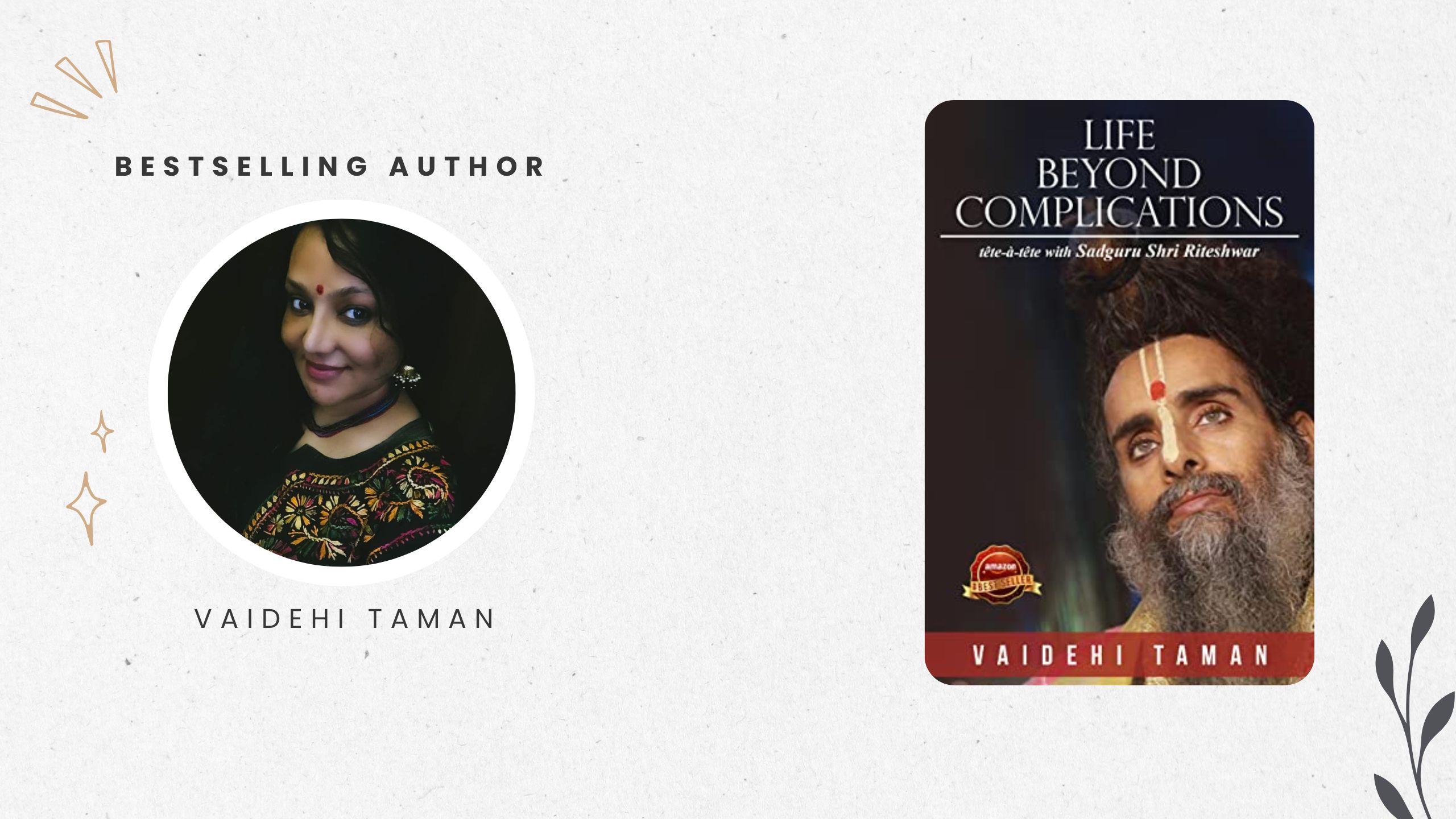
Life Beyond Complications by author Vaidehi Taman is a coming of age story of a young boy and his serendipitous introduction to spirituality
Life beyond complications by author Vaidehi Taman is a coming of age story of a young boy and his serendipitous introduction to spirituality and spiritual practices of Hinduism through a chance meeting with the Shiv Sena Supremo Bala Saheb Thackeray. This is a work of non-fiction and a fresh, confessional, insightful view of a young boy’s journey from ignorance to a better understanding of himself and his spiritual senses. It is a tete-a-tete with Sadhguru Shri Riteshwar who was not born as his public persona but was a commoner unaware of his spiritual obligations and far from the quest to understanding his place in the universe and the beauty of the Creator. The book talks about his journey as a young boy from Jharkhand who became a student leader in undivided Bihar at the age of 20. He led the student wing called ABVP of a leading political party of India named BJP. As a leader of ABVP he was a karyakarta and a staunch believer and flag bearer of the ideals of the party which are deeply rooted in Hindutva. It was in the year 1993 that he came across a gathering in which Bala Sahed Thackeray was giving a speech enthusiastically which instilled in him the values that he was working on and he felt inspired by that speech to further the cause of Hindutva. This made him put his thoughts into action and he called for public prayers among the masses and started to conduct Maha arti. His immediate presence and influence at such a large scale rattled the ruling party and the then government asked for immediate actions to be taken against him which led to him being convicted in a false murder case. This shook his mother to the core and made her die of shock. This became a major turning point in his life which is also the major climax of this book. Prison is where he became closer to his spiritual self but did not lose touch with reality. He began to hear about the problems of prisoners in his jail and started to fight for their rights and their needs. This made others look up to him as a reformative revolutionary. In jail he continued with spreading the word of spirituality and brought about spiritual awakening among the prisoners through conducting prayer meets and satsang. After the four years in jail, he was transformed into a completely different person who became closer to his spiritual self and did not have any inclination to return to worldly life. This is the point that he became the Sadhguru that he is revered as now. This book is a sneak peek into the life of one such ordinary person who became extraordinary by firmly holding on to the light of faith that is within each individual but is realised by few. He is a believer of Shri Krishna and his word Shrimad Bhagwat Mahapuran only. He acknowledges that happiness and sorrows are temporary part of life but the real goal is to unite with the inner light within all people which is a part of the higher light. The realisation of this is the realisation of higher spirituality that will lead to spiritual awakening and overall betterment of life. The book is an inspiring read and one that instils hope in the reader that despite all the mistakes that people make, despite their ordinariness and all the worldly temptations, they can all transform themselves and unite with the goodness of the higher world setting their goals in place. Author Vaidehi’s writing style is simple, easy to follow with apt vocabulary and clear explanation of thoughts. There is no circumlocutory manner of noting anything. The language is formal and respectful of the topic at hand. All these incorporate the twist of fate that brings an honest soul towards its goal of becoming one with their real duties in this world and make them exemplary through their good deeds. It is this clear, straight forward manner of relaying the journey of Sadhguru Shri Riteshwar that makes for an interesting read. The book does not dictate anything to the reader but leaves the reader to absorb the core values that Sadhguru Shri Riteshwar’s life resonates so that the reader may whole heartedly and in an open minded manner deduce the morals and key takeways from his life. This is done so that they may imbibe these lessons in their own daily lives and bring about a lifestyle change. The goal of the book is clear. It is about showing people real living examples of how being at one with one’s inner light of faith and having their goals adjusted to causes that benefit humanity will eventually bring about betterment for themselves and those around them. Not once is Sadhguru Shri Riteshwar talked of in terms of someone who is out of this world. It is his journey from being ordinary to an extraordinary individual that makes his story so relatable and worth replicating. At around 80 pages, the book is a short read though it is deep and thought provoking. The book also has a lot of beautiful, colourful photos of high definition that makes for an engaging read. Title: LIFE BEYOND COMPLICATIONS: tête-à-tête with Sadguru Shri Riteshwar Author: Vaidehi Taman (http://authorvaidehi.com/) Genre: Biographies & Autobiographies/ Spirituality Publisher: Astitva Prakashan Reviewed By: Tasnima Yasmin Order Book: Amazon

Pyaari – Tarawali Ek Satya Katha – Book Review
Uncategorized
लेखक रजनीश दुबे के इस हिंदी प्रेम प्रसंगयुक्त शीर्षक, “प्यारी – तरावाली एक सत्य कथा” की समीक्षा शुरू करने से पहले, मैं बता दूं कि लेखक ने इस उपन्यास के साथ एक शानदार प्रयास किया है। पुस्तक में कुछ मुख्य पात्रों और उनके जीवन की घटनाओं के इर्द-गिर्द घूमती एक महान कहानी शामिल है। जिस तरह से कहानी आगे बढ़ती है वह वास्तव में अविश्वसनीय है; और इस अद्भुत उपन्यास के माध्यम से पाठकों को रोमांच का अनुभव कराएंगे।

Mancando by Shreyas Mogal: Book Review by Soudia Parveen
Uncategorized
A fictional book framed by the imaginative ideas of a being can sometimes drive differently in the ocean of minds. Though one knows that the characters, plots, setting, is fabricated and based on the author’s imagination, we tend to believe it and get deep into the thoughts of the author tending to believe every inch of it. Added up to this, if the book remains suspense till the end appears to be more eye-catching and demanding along with the varieties in characters varying from one suspect to another.

Book Review : The Blossoming Lotus by : J.P. Desai
Book: The Blossoming Lotus Author: J.P. Desai Publisher: Evincepub Publishing (2022) Reviewed By: Neel Preet “Poetry is the play of right words with some of the most in-describable emotions, while poets are those players who plays with the beautiful words and makes way to compose these heart touching and soulful poems for us!” Reviewing this beautiful poetry collection book, “The Blossoming Lotus” by Author-Poet J.P. Desai has been a very satisfying experience to me since I started my writing journey as a poet. And now whenever I get a chance to review a Poetry Collection book, I not only enjoy reading these new and expressive poems, where the Poet conveys some unheard messages through their words, but also I get the opportunity to learn something new regarding the composition of poetry, each time! About the Author: The Author, J.P. Desai was born and brought up in the remote village of Maharashtra in India where the poet passed his primary school while working as cowboy, supporting in the field. He struggled hard, suffered a lot working and studying from S.S.C. to graduation, post-graduation. He kept changing jobs from child labour to the clerk, finally settled, and made personal and family development as a secondary school teacher. He earned additional income teaching English in the tuitions classes. He successfully taught English as a subject for 35 years. He has been reading English literatures throughout the life, but did not get time enough to think and write anything. His novel “Thank you Dad” was published after the retirement based on educational experience. The extensive travelling enriched the overall knowledge. Presently he has published an English poetry collection, “The Blossoming Lotus.” Book’s Theme & Introduction: Poetry – This book, The Blossoming Lotus is having a long collection of poems, one after another. This poetry collection book presents the beautiful poems on the floral offerings by the Kashmiri gardens at the feet of the snow crowned mountain Himalaya and the picturesque landscapes of the Sahyadri Ranges. It highlights the Nation’s past, present glory. The illustrations in the poetical form of the social well beings are also covered. The Marital Love is an outstanding, unique feature under which its characteristics, the foundations are precisely, artistically displayed to meet the pleasure unending. All the poems have been blossomed, born out of the enormous grief, strain, agony of death of the Poet’s wife late Kamal which is befitting the title “The Blossoming Lotus!” Book Title: The title, “The Blossoming Lotus” for this poetry collection book is certainly an appropriate one, with reference to the collection of poems added to this book by the Author. In addition, it is a very ‘Catchy Title’ and this is something, which makes the book even more interesting, as the title itself compels you as a poetry lover to pick up this book for a read. In this case, the title is giving a very positive and beautiful vibe so you would feel the urge to go inside the chapters and try to understand the Author’s expression of words! In addition, I must mention that the title of this book is much “Justified” with regards to the poems in this book. Undoubtedly, it is a very apt for this poetry collection book and the Author had been extremely wise to go for this title. Book Cover: The portrayal of “A beautiful Lotus in the water body along with greenery and hill” in the book’s front cover is not just giving a very “Specular Impression” but also, creating a very optimistic and beautiful vibe just like the Book’s Title! The readers can interpret the book cover design in a thousand different ways as per their sense of interpretation, but the most common interpretation could be that the illustration on the book cover is showing the beauty of the Mother Earth! Readers’ Connect: The way, Authorhad expressed himself with his well versed poems in this poetry collection book, “The Blossoming Lotus” is something really incredible and is undoubtedly an enough reason for you to shift your focus towards his poems and give this book a chance. It is the poets, who plays the pivotal role in touching the inner cords of our emotions and making us believe and think the way their words intend to and Author-Poet,J.P. Desai had done this job in an exceptionally top notch manner! Moreover, the Author had beautifully expressed his feelings through his soulful words and had given a Strong-Start to the poems; also, you can see that most of these poems had retained their flow until the very end, which gives you an immense amount of satisfaction as a poetry lover. Verdict: A Book like “The Blossoming Lotus” is for sure a Must-Read oneand deserves a chance. The way author had penned down his emotions and feelings through his writings will make you go deep into the poems and find out the hidden meanings of the words, used in these poems. Author J.P. Desai is a promising poet, who is very honest with his emotions, which makes his writings honest and reading worthy as well. Book Link: https://www.amazon.in/dp/9354463762/
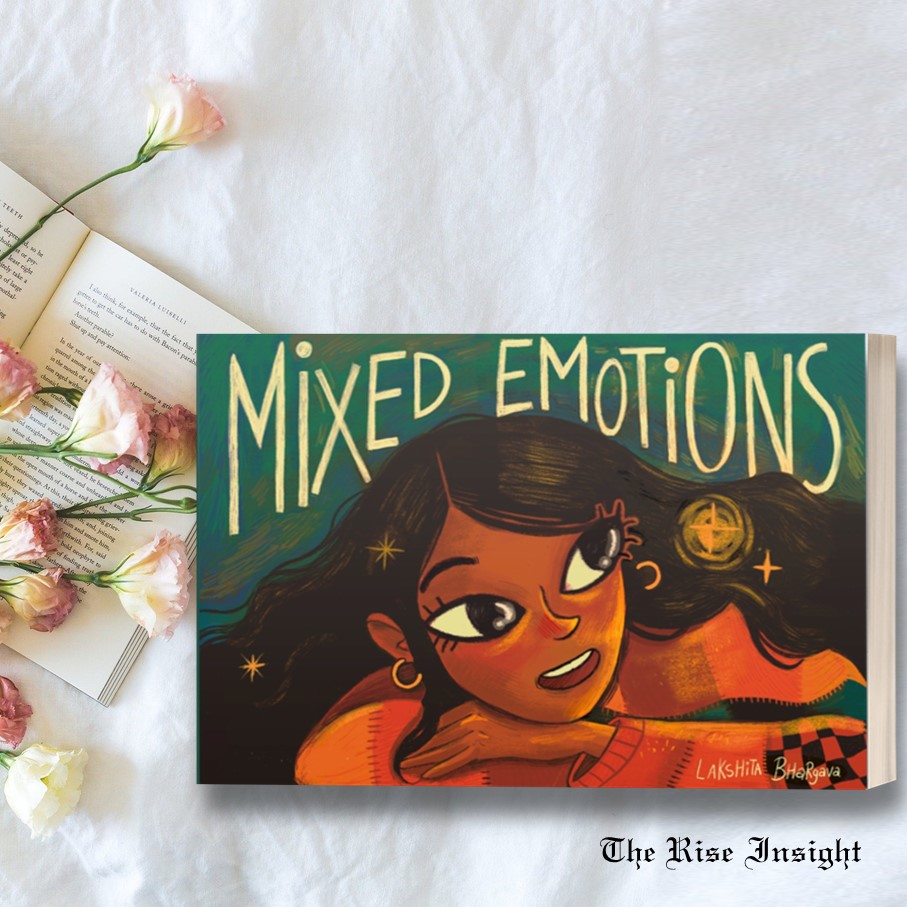
“Mixed Emotions” By Lakshita Bhargava-Book Review
Children’s fiction is one of the most upgraded forms of writing – teaching children (and parents!) about the world around them, benefitting by the short stories, inputting it to use and perform in reality, living the childhood, modifying the child’s perceptions, reliving the bliss of one’s life.

लेखक अखिलेश कुमार की उल्लेखनीय पुस्तक, “आपकी ज़िद आपकी जीत”- पुस्तक समीक्षा
“हम सभी ने इस लोकप्रिय प्रेरक उद्धरण को सुना है – जहां इच्छा है, वहां रास्ता है; और इसलिए हमें अपनी ऊर्जा को दिशा देने की जरूरत है और अंतिम लक्ष्य को ध्यान में रखते हुए हमें जीत की दिशा में आगे बढ़ने की जरूरत है। खैर, यही है जीवन की यह खूबसूरत यात्रा!”

Book Review: “A Conversation With Time” By Author Nabaghan Ojha
“True courage results in some extraordinary outcomes, something which we hope for deep down in our hearts but don’t expect in our practical life and yet life surprises us with some beyond imaginable out-turns, only because of our courageous and bold decisions!”