

Matters of the heart are best known to the heart. However, as it pulsates through the ups and downs of life it ought to align with the ongoings of the body and mind. It is not always easy to find this agreement and this is where The Zen Heart comes in. From the author of A Turning of Seasons and Zen On The Go, The Zen Heart is a rather contemporary and clean take on the modes and means that best ally the heart and the mind. One highlight of this book is the romanticised take on the relationship between man and nature, where nature becomes solace, support and sanctuary. The author gently persuades readers to reignite their connection with nature to bring harmony into their lives. Although we’ve perhaps read or heard these before, the author’s take and writing style makes them new again. Sometimes candid and sometimes ambiguous, these stories find a way to move you as they are laced with empathy, simplicity and truth. The author gives us glimpses of her life which mirrors our own and we know that the connection we feel with the author and the stories is real. This is no ordinary self-help book as it gently exposes life to you in its myriad forms without being didactic. It urges you to draw your own conclusions and make of the stories what you will. The author’s eye for detail, philosophical outlook, sense of gratitude and deep connection to the essence of her being and the world at large resonates with us as we move from one story to the other. Deep and cosmic concepts are explained using a simple writing style that makes it easy for the reader to grasp and imbibe these ideas. Each story is a gem, or lets say a pearl perhaps, as it empowers us by throwing light upon the fact that happiness is not just within our reach but actually a by-product of our thoughts and actions and a life lived well. The author displays a fantastic ability to be conversational, lucid, reflective, profound and sententious at the same time which makes The Zen Heart a refreshing, enjoyable and informative read. To Buy This Book: https://www.amazon.in/ZEN-HEART-ADITI-PANT/dp/9356731543

Book Review: Whispers of a Snowfall by Rashika Ranjini
Winter is often portrayed as a cold, harsh season, but in Rashika Ranjini’s latest poetry collection, “Whispers of a Snowfall: Celebrating the Pensive Beauty of Winters,” she offers a unique perspective on this often-neglected season. Through her delicate and lyrical writing style, Ranjini captures the melancholic beauty of winter and explores the complex emotions that the season can evoke. The result is a powerful and thought-provoking collection of poetry that will leave a lasting impression on the reader. Through her collection, the author not only spell bounds the readers but uses her world to convey a depth of thought that comes through the minimal words that she uses. One of the standout features of this book is the author’s use of vivid imagery and sensory details. In each poem, Ranjini transports the reader to the world of winter, where the snow whispers secrets and the cold wind stirs the soul. Her descriptions of the winter landscape are both beautiful and haunting, painting vivid and memorable images in the reader’s mind. For example, in the poem “The stranger seller at Snowslope,” she writes: “We’ve got some lovely joy capsules/ He offered, “I’ll give you a fine price.”/ “I’d rather have some lunacy pills,” I replied..” The use of imagery and sensory details in this poem and others like it sets the tone for the rest of the collection and provides the reader with a glimpse into the pensive beauty of winter while keeping the readers fixed on the happenings of the life of an ordinary human. “Whispers of a Snowfall” has such poems that take them to the lands of wonder. Even though the world she depicts is inspired by reality, yet it seems to be set in a different world altogether. But poems like “The stranger seller at Snowslope” keep the readers fixed on the present world. Another strength of this book is the author’s ability to explore complex emotions through her writing. Whether exploring themes of solitude, loss, or renewal, Ranjini’s poems are infused with a sense of introspection and contemplation. Her words flow seamlessly, painting vivid and memorable images in the reader’s mind, and her delicate and understated use of language is truly a joy to behold. Every poem captures the sadness and finality that can accompany the winter season but also hints at the promise of renewal and a fresh start. Moreover, through her words, the author paints a landscape that is run by the merriment of winters and transports the readers to the snow-filled landscapes that send cool breezes through the text. Ranjini’s writing style is both lyrical and poignant, and her verse has a musical quality that is both calming and haunting. The poems in this collection are often short and to the point, but they pack a powerful punch, leaving a lasting impression on the reader. The author’s delicate use of language, combined with her insightful observations, make this book a must-read for fans of poetry and introspection. “Whispers of a Snowfall” is one of the few poetry collections in its league that reaches the readers through its simplistic style that is accompanied by grandeur, grace, and a different perspective on winters and their meaning for the author. This meaning eventually becomes the same for the readers too, as they connect with the author’s words and begin to see the winter full world through her eyes. In conclusion, “Whispers of a Snowfall” is a beautifully written and thought-provoking collection of poetry that offers a fresh perspective on the winter season. Rashika Ranjini’s lyrical writing style and insightful observations make this book a must-read for fans of poetry, winter, and introspection. Whether you are a fan of winter or simply looking for a thought-provoking read, “Whispers of a Snowfall” is the book for you. The poems in this collection will take you on a journey through the quiet, contemplative world of winter, where the snow whispers secrets and the cold wind stirs the soul. The poetry collection is highly recommended for all those readers who look forward to reading a collection that comes as a breath of freshness, unique perspectives, and subjects that are interesting, entertaining, and seem equally dreamy. While the book is likely to introduce the readers to a whole new perspective that comes through the words of the poet, it will also enthrall them with her uniqueness and the concise manner in which she uses her words to convey deeper thoughts.

Vaidehi Taman Talks About Her Latest Book “LIFE BEYOND COMPLICATIONS”
Vaidehi Taman has been a journalist for 20 years and is the Founding Editor of Afternoon Voice and The Democracy. She is an Investigative Journalist from Mumbai, who believes in fighting against all odds in the fourth estate, for which she has been bestowed with three Honorary Doctorates in Journalism. She has contributed significantly to society as an editor, ethical hacker, philanthropist, and author. In the past, she has worked with many major media houses such as The Times of India, Free Press Journal and Sunday Observer. She has three other books to her name. An Interview with Author Vaidehi Taman The Rise Insight: Congratulations for the launch of your recent book “LIFE BEYOND COMPLICATIONS” How did you come across Sadhguru Shri Riteshwar’s story? Vaidehi Taman: I am journalist, met Sadguru in one award event and form there we developed an affinity. His lifestyle is mesmerising, when I probed further I came to know many aspects of his life. The Rise Insight: What was the inspiration behind writing this book? Vaidehi Taman: There are many saints in India who went to jail under some or the other allegations. Sadhguru Shri Riteshwar ji only saint who started his spiritual journey from jail. He understood the pain of under trials and also what one faces when wrongly convicted. He worked intensely for the jail reforms and also brought peace behind bars. The Rise Insight: What was your goal in mind when you wrote this book? Vaidehi Taman: My intention is to tell people life is all about the choices we make. Sadguru had many choices but he chose spiritual path and elevated in life. He gave up all materialistic pleasures and walked his path. I wanted to tell my readers when our life goes beyond complications, we remain with compound solutions. The Rise Insight: What do you want readers to learn from this book? Vaidehi Taman: Many things, my Job is to write and convey, what one has to receive is reader’s choice. The Rise Insight: What are your other upcoming publications? Vaidehi Taman: My first Hindi novel Vedanti. It is a unique love story. I believe on this earth LOVE is the only hope. But unfortunately love is mistaken. This love story emphasises the need of Brahmacharya, means to stay in conduct within one’s own Self. The Rise Insight: Do you think you have an affinity for the genre of non-fiction? Vaidehi Taman: Not at all, my next book is purely a fiction The Rise Insight: What are the aspects of the life of Sadhguru Shri Riteshwar that inspired you a lot? Vaidehi Taman: His royal way of living and wisdom to win over the odds. The Rise Insight: What challenges did you face while writing this book? Vaidehi Taman: Absolutely no challenges, I have already mentioned I am journalist and investigating facts and assessing it is not difficult for me. Rather I enjoyed each moment while writing it.

“Niyatinati – the ultimate justice of Karma” by Aruna Shaibya: Book Review
Sometimes, one lifetime is enough to show the different phases of time and impact the personality of a person into an entirely different and unique person. The fact that a person is a product of the circumstances holds true when one reads “Niyatinati- the ultimate justice of Karma” by Aruna Shaibya. Through her story, the author shows the different phases of a person’s life and all that goes into the making of his personality on the whole. It also takes the readers into the different points of time in the protagonist’s life where there are sad times and happy times and times that make them wonder about the untold stories that exist in society and the life of a person. It also raises several issues of power, honesty, the corrupt nature of people, and the innocent being a victim in a major case. In that sense, the novel rises from being a simple story and becomes a writing for a social cause. “Niyatinati” has an interesting title that bears impressions throughout the story. Even though the readers can understand its meaning, its relevance at different levels makes sense when they read the story till the end. In one word, the title sums up the whole idea of the novel and yet does not spill the beans explicitly. This is the beauty of it. It is only later when the readers start exploring the book in depth and understand the happenings in the light of being a design of destiny that they experience the hold of destiny in people’s lives and its relevance on the whole. Although the effects of Niyatinati silently resonate in the book, they make their mark in the later phases of the novel when the protagonist resolves to finish the unfinished business of his father. It is here that the powerplay of destiny makes absolute sense. When Shaibya’s novel begins, the readers are taken into a happy world where everything seems perfect and more of a dream life. Things begin in an ideal world where everything seems perfect and falls into place like the natural course of life. “Niyatinati” takes the readers into a world that has talented college students with big dreams and hopes to achieve the heights of success based on their educational experience backed up by support from their families. This reflects in their behavior as well as their conduct among themselves and their peers. In the midst of this, they equally experience the highs and lows of life, only to understand who is there for them and who is not, thus resulting in the filtering of the right people. Thereafter, when the plot is constructed, the author gives it a twist that would not have been anticipated by the readers anytime in the plot. While this twist shows the characters, it leaves the readers lost in equal shock and wonder about how unpredictable life can be and how one moment is enough to change a person’s life, their share of responsibilities as well as the fact that life’s goodies may not always last for long. This holds true in the context of the plot of “Niyatinati.” The author shows how destiny pulls the strings of people’s lives and how everything that happens for a reason also has a fundamental purpose in determining the meaning of the life of any person. On observing “Niyatinati” closely, the readers also notice numerous themes and questions of relevance that the author covers in the novel. These range from personal to social issues and issues of universal relevance. Dheeraj’s troubles to adapt to different societal requirements, Vivek’s family’s short-lived happy days, his father’s and sister’s fate, and the fate of many girls like his sister, which is shown through Mrigi later and the contributing characters who also show a different side of life through them all address the different themes of ‘Niyatinati.” In this sense, “Niyatinati” has a wider significance on a universal level due to covering different issues at the same time. It also raises the serious issue of the innocent being prey to cunning and corrupt individuals who make the lives of others miserable in order to fill their treasury. While this issue disturbs the readers, it also opens their eyes to the unspoken reality and the stories of many who do not find mention anywhere and mostly die the same way. Hence, “Niyatinati” also becomes a novel for a social cause. Since it is available in both Hindi and English, it is likely to attract a larger reader base. This book is recommended to all readers who are interested in reading fiction and works that are of social relevance and hold a universal validity at the same time. It would also be enjoyed by people who are interested in reading books that evolve through the different phases of life and show the different sides of characters as life progresses and unfolds further.

The CLOWN: The Rakshasa Gana by Author Piyusha Pushp – Review
As the popular Hollywood Actor Keanu Reeves has said, “When you truly understand Karma then you realize that it is you who is responsible for everything in your life!” Well, with that same theme this remarkable title, “The CLOWN: The Rakshasa Gana” by Author Piyusha Pushp has been written & presented to the readers. The book is one of its kind and very different from most of the other literary fiction titles. A great presentation about the theory of the different levels of the Ganas (Inbuilt Nature) has been made where all 3 Ganas, be it the Deva Gana (Devine) or the Manushya Gana (Human) or the Rakshasa Gana (Demonic) have been highlighted by the author in this volume! Author Piyusha Pushp has done her Masters in the field of Biochemistry and she is passionate about teaching the subjects of Physics & Chemistry. She feels excited about reading, researching & developing utilitarian practices from the Sanatana Literature. Author Piyusha is a fitness freak and she is very much passionate about Yoga too. She is a person with a positive mindset & attitude who believes in the strong value systems imparted by her parents to her. Well, she is passionately associated with Non-Government Organizations that supports a chain of orphanage as well as old age homes. Author Piyusha Pushp is married to Pankaj Lochan, who himself is an author of several management books and other literature titles. Readers can find this title, ‘The CLOWN: The Rakshasa Gana’ on any of the top online marketplaces and the book is available in both paperback as well as in e-book format. This amazing title, “The CLOWN: The Rakshasa Gana” by Author Piyusha Pushp is a sequel to the title ‘SIGMA, as life sums it all’ by Author Pankaj Lochan (Author’s Husband) and the second part of the ‘Karmic Short Stories Trilogy’ by the husband-wife author duo. The real people & the true events of their life has inspired the stories in this trilogy. The book is also about Sanatana, the fountainhead of ancient Indian wisdom and explores deeper layers of the belief system with a lens of human nature, its impact on the social ecosystem and the ways it may be course-corrected. The ‘3 Books’ in the trilogy are based upon the three Ganas – Rakshasa, Manushya and Deva well, this particular volume: The CLOWN is about the Rakshasa Gana! The book is masterfully written and the author has done an excellent job of bringing the world of the Rakshasa Gana into the limelight. The characters are richly drawn and the plot is filled with twists and turns that keep the reader on the edge of their seat. The author has very well used the Indian mythology and folklore as that is something, which adds a sense of depth and richness to the story. Well, the readers would find an incredible collection of stories through the “7 Reading Worthy Chapters” presented by the author in this book. Coming to the choice of the Book Title, we find that the title “The CLOWN: The Rakshasa Gana” for this book, which is a collection of short stories based upon the beliefs of the Sanatana Literature is certainly an appropriate one. Moreover, with reference to the collection of chapters added to this book by the author the book title makes complete sense. In addition, it is a very ‘Catchy Title’ and this is something, which makes the book even more interesting, as the title itself compels you to pick up this book for a read. In this case, the title is giving a very interesting & thrilling vibe so you would feel the urge to go inside the book. In addition, I must mention that the title of this book is much “Justified” with regards to the sequence of the chapters in this book. Undoubtedly, it is a very apt title for this title and the author had been extremely wise to go for a book title like this one! Well, if we go over the Readers’ Connect part for this book then interestingly we can note that this title, ‘The CLOWN: The Rakshasa Gana’ is written in a real appealing manner. In addition, the various chapters in this title are indeed engrossing & fascinating and the narration carried out by the author is so amazingly lucid, that it would totally hook the readers until the very last page of this incredibly written title. Moreover, it should be noted that this is one such title, which will make the readers think about the stories inside this book for several times, even after completing the book. The book covers a great story revolving around some of the main characters and the incidents of their lives. The manner in which the events will occur in the lives of the prime characters is certainly going to bind the readers and feel the thrill while going through this amazing novel. The book is an interesting read and the author has narrated the events in a real clever manner that will make the readers go deep in the storyline! Now, coming to the final part, i.e. the Book’s Verdict where I must mention that a title like, “The CLOWN: The Rakshasa Gana” is for sure a MUST READ one& deserves a chance by the readers. The book is most certainly a collection of reading worthy stories for the people of all ages and is written in a very clever manner. We do not get to see much amazing titles very often in the market so it will be a great deal for the book lovers to give this title a chance. In addition, author Piyusha Pushp deserves all the appreciation for her honest & hard work in this title! Overall, this particular volume is a gripping and powerful novel that is sure to leave a lasting impression on readers. The author’s skilful use of the Indian mythology and folklore, combined with well-drawn characters and a thought-provoking plot, simply makes this book

Life Beyond Complications by author Vaidehi Taman is a coming of age story of a young boy and his serendipitous introduction to spirituality
Life beyond complications by author Vaidehi Taman is a coming of age story of a young boy and his serendipitous introduction to spirituality and spiritual practices of Hinduism through a chance meeting with the Shiv Sena Supremo Bala Saheb Thackeray. This is a work of non-fiction and a fresh, confessional, insightful view of a young boy’s journey from ignorance to a better understanding of himself and his spiritual senses. It is a tete-a-tete with Sadhguru Shri Riteshwar who was not born as his public persona but was a commoner unaware of his spiritual obligations and far from the quest to understanding his place in the universe and the beauty of the Creator. The book talks about his journey as a young boy from Jharkhand who became a student leader in undivided Bihar at the age of 20. He led the student wing called ABVP of a leading political party of India named BJP. As a leader of ABVP he was a karyakarta and a staunch believer and flag bearer of the ideals of the party which are deeply rooted in Hindutva. It was in the year 1993 that he came across a gathering in which Bala Sahed Thackeray was giving a speech enthusiastically which instilled in him the values that he was working on and he felt inspired by that speech to further the cause of Hindutva. This made him put his thoughts into action and he called for public prayers among the masses and started to conduct Maha arti. His immediate presence and influence at such a large scale rattled the ruling party and the then government asked for immediate actions to be taken against him which led to him being convicted in a false murder case. This shook his mother to the core and made her die of shock. This became a major turning point in his life which is also the major climax of this book. Prison is where he became closer to his spiritual self but did not lose touch with reality. He began to hear about the problems of prisoners in his jail and started to fight for their rights and their needs. This made others look up to him as a reformative revolutionary. In jail he continued with spreading the word of spirituality and brought about spiritual awakening among the prisoners through conducting prayer meets and satsang. After the four years in jail, he was transformed into a completely different person who became closer to his spiritual self and did not have any inclination to return to worldly life. This is the point that he became the Sadhguru that he is revered as now. This book is a sneak peek into the life of one such ordinary person who became extraordinary by firmly holding on to the light of faith that is within each individual but is realised by few. He is a believer of Shri Krishna and his word Shrimad Bhagwat Mahapuran only. He acknowledges that happiness and sorrows are temporary part of life but the real goal is to unite with the inner light within all people which is a part of the higher light. The realisation of this is the realisation of higher spirituality that will lead to spiritual awakening and overall betterment of life. The book is an inspiring read and one that instils hope in the reader that despite all the mistakes that people make, despite their ordinariness and all the worldly temptations, they can all transform themselves and unite with the goodness of the higher world setting their goals in place. Author Vaidehi’s writing style is simple, easy to follow with apt vocabulary and clear explanation of thoughts. There is no circumlocutory manner of noting anything. The language is formal and respectful of the topic at hand. All these incorporate the twist of fate that brings an honest soul towards its goal of becoming one with their real duties in this world and make them exemplary through their good deeds. It is this clear, straight forward manner of relaying the journey of Sadhguru Shri Riteshwar that makes for an interesting read. The book does not dictate anything to the reader but leaves the reader to absorb the core values that Sadhguru Shri Riteshwar’s life resonates so that the reader may whole heartedly and in an open minded manner deduce the morals and key takeways from his life. This is done so that they may imbibe these lessons in their own daily lives and bring about a lifestyle change. The goal of the book is clear. It is about showing people real living examples of how being at one with one’s inner light of faith and having their goals adjusted to causes that benefit humanity will eventually bring about betterment for themselves and those around them. Not once is Sadhguru Shri Riteshwar talked of in terms of someone who is out of this world. It is his journey from being ordinary to an extraordinary individual that makes his story so relatable and worth replicating. At around 80 pages, the book is a short read though it is deep and thought provoking. The book also has a lot of beautiful, colourful photos of high definition that makes for an engaging read. Title: LIFE BEYOND COMPLICATIONS: tête-à-tête with Sadguru Shri Riteshwar Author: Vaidehi Taman (http://authorvaidehi.com/) Genre: Biographies & Autobiographies/ Spirituality Publisher: Astitva Prakashan Reviewed By: Tasnima Yasmin Order Book: Amazon
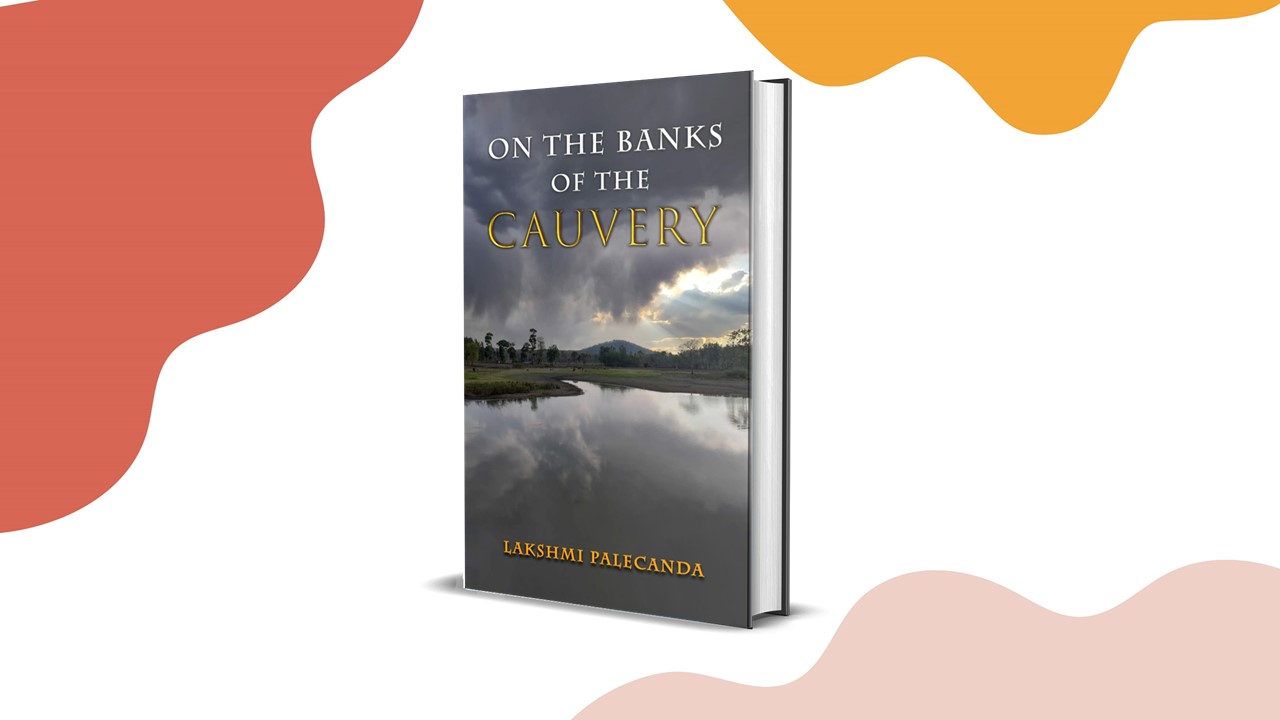
On The Banks of The Cauvery by Lakshmi Palecanda Launched
Short stories are more interesting and engaging in comparison to long texts due to multiple reasons. What makes them more appealing in comparison to the longer part of the prose format is the fact that authors blend fewer words with heavier emotions and meaningful passages. The short story collection book written by Lakshmi Palecanda has an amazing title, “On The Banks of The Cauvery.” The title seems like the author wants to portray the story which is about characters living on the banks of the Cauvery, but the book is a collection of short emotional stories that touch the readers’ hearts in no time and reach out to their senses in no time. The author has made it very evident that emotions are real and let emotions be a part of normal life despite the world moving towards practicality by allowing all the characters to embrace their emotions. This makes the characters human, realistic, close to life, and promising in terms of containing the qualities that humans have. The short stories are about people from India, particularly from South India. Through the short stories in the book, Palecanda has brought vivid people that live in India performing a variety of activities while being in different places and professions. The author in “On The Banks of Cauvery” has portrayed men and women that live complex and tough situations of life with hope in their hearts and strength in their minds. They exhibit the courage that it takes even to live the life of the ordinary. The characters are well-developed and portrayed wonderfully by the author. The cover of the book is designed well as per the title of the book. It leads people to different streams of thought and makes them ponder about what would be the subject content of the book. People of almost every caste, class, social status, and culture have been portrayed by the author in the book. By bringing them on the same platform, she gives the message of the universal nature of human life, feelings, qualities, and the similarity of circumstances. “Senseless Sacrifices” is one story that is genuinely inspiring and worthy to be read is about a character named Tulasi, who was married at the age of twelve and widowed at the age of sixteen. But she does not give up on life and lives gracefully. All the characters in each story have been written in an even manner which showcases how in real life, the nature and the personality of the person are mostly similar in all the situations. The characters in the short stories, many of them inspired by the changing mental states associated with various situations and environments, convey a range of emotions. They also teach the readers to live free of worry despite odd circumstances that feature challenges and hardships. All the stories written by the author Lakshmi Palecanda in “On The Banks of Cauvery” are relevant now and will be relevant even in the future as the author has written stories in a very relatable and modern manner. While they bear the impressions of the present time, the fact that they address the universal question of human beings and their emotions ensures that the book is read even by the later generations and understood at the same level. Every scene is written very carefully in a manner that does not get too exhausting at any point and can be seen with the naked eye, but the author’s words and language will help the reader understand the suffering, joy, and all the other emotions that are being felt by the characters easily. Every time, one has the option to accept bad things or good things, engage in bad deeds or good ones, overcome obstacles or give up. And many times, people give up. But through these short stories, the author has tried to inspire people and has sent a very strong message that situations should not overpower anyone rather, everyone can face them bravely with the right attitude. While the stories appeal to the readers for their emotional sensibility and infusion of powerful incidents, they also remain powerful in developing their attitude and fighting through tough situations without giving up. In today’s time, when people are under a lot of pressure, whether due to personal or professional life, “On the Banks of Cauvery” comes as a positive light. The readers would enjoy reading each story as they would feel different emotions while reading the book. As such is, the writing style of the author mysterious yet simple. Each short story has something unique to reveal as they. All the short stories have wise life lessons as well, which would be relevant for people of almost all ages as it is something that would make life worth living. That makes “On the Banks of Cauvery” published by Astitva Prakashan a recommended reading.

Book Review : Displaced Roots
ISBN: 9789354467387Author: Partha Pratim PaulAuthor: Publisher: Evincepub Publishing (2022) Another addition to partition literature, Displaced Roots is a moving and heart touching tale of love, loss and language set against the backdrop of the Bengal partition. The book deals sensitively and closely with the manner in which two families are separated and their ties are severed as they come face to face with the politics of partition that rendered the Bengal province into two halves. The story is poignant, tear jerking and passionately conveyed. It conveys the political cost of partition that divided the people who were living side by side and fuelled sectarian violence and political partisanship while forcing people to take sides in order to save themselves. The plot begins with the efforts put into seeking refuge across the newly set borders in order to protect oneself and one’s family or loved ones from the political turmoil and violence unleashed in a matter of moments upon commoners who have little to do with the larger politics of partition but bear the brunt of separation, segregation and discrimination to the extent of physical assault and not to forget its implied psychological trauma. Through the eyes of the characters, the plot goes back in time and gives a detailed explanation of the Bengal partition and the formation of Bangladesh as it came to be, the events that led to its creation and the issues that cropped up as a result of its creation. This is a significant section of the plot as it not only allows the reader to understand the myriad impressions that fell on Bengal but also educate, sensitise and highlight the importance of Bengal and Bengalis in the freedom struggle of India. The plot goes into the past and comes back to the present several times in order to situate the characters and help decipher their emotions and motives which explain the reasons behind their actions. This affects the pace of the plot that is dynamic and undergoes changes in order to accommodate the incidents that unfold. This has a mixed effect on the reader who is made to focus on certain sections through slowing down of the pace while the quickening of the pace of the plot in other sections leads to the creation of a fast- moving narrative that renders the reader capable of understanding the deep- seated impact of the partition. It shows the manner in which lives are uprooted from their places of long- term residence and they get displaced from the place they called home. This creates in them an alienated feeling of being separated from their sense of belonging. It increases their gypsy like behaviour in which the characters struggle to come to terms with their new place of residence or call it their new home. While the plot revolves around two families, it also lays special emphasis on some characters like Narendra and Dhirendra whose sides of the story are focused upon to explain the impact of partition on them. These characters are not just individuals who have to go through the ordeal of partition but are also archetypes for all individuals who have been through the partition of Bengal. This is not only because such individuals were displaced and lost a lot that cannot be counted materialistically but also because they become examples of all the real people who went through the partition of Bengal with complete confusion and horror at the manner in which events unfolded. The characters in this sense are all rounded ones and with each chapter of the plot, these characters show their various sides. They are at once resilient, strong and brave and again broken, hurt and shattered at their fate. The tone of the narrative is a neutral and balanced one. It is sensitive towards the people and all that they face but it is neither overly sympathetic nor utterly understated in its disclosing the horrors of the characters. Striking of this balance is the key to simplifying a difficult topic like partition that has a political angle, has many players and has many who are affected in different proportions. This is the beauty of the narrative. It does not exaggerate and it does not undermine. At the same time, it is not a boring narration of factual events which lack human angle. It balances all the aspects with ease and it is this effortlessness which holds the attention of the reader and keeps them asking for more. Though mostly, narrated in the third person omniscient narrative voice, but all throughout the narrative is interspersed with dialogues that add to the understanding the characters better and making more sense of the events and incidents from the perspective of the characters who are deeply affected. This increases the affiliation and relatability with the characters who are set in a distant past. It also foregrounds the issue of the partition of Bengal to sensitise and allow people to acquaint themselves with the kind of loss suffered not just for the characters in the plot but also the real people who went through it all. The writing style is easy to follow. The narrative is well written, gripping and provides room for detailed analysis and discussion surrounding the impact of Bengal partition. The vocabulary sustains the narrative well. It is neither too tough nor too plain and simple. The book cover is rather attractive for a sad story like the Bengal partition. On the whole, the novel is a good read for students of history, historical fiction lovers and just generally anyone who may be interested in partition literature.
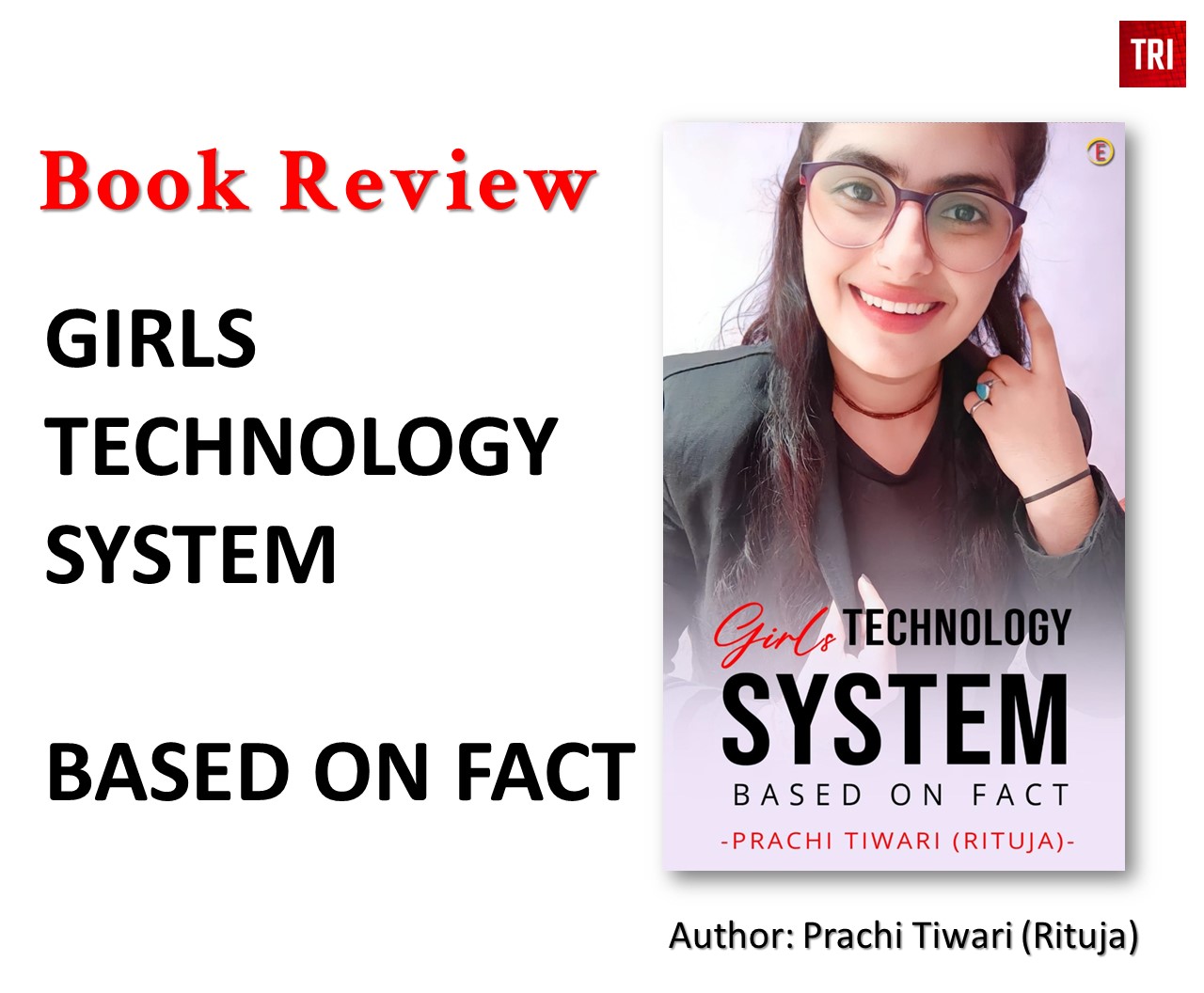
Book Review : Girls Technology System – Based On Fact
Uncategorized
“We all had talked a lot upon women empowerment. However, what is women empowerment in actual? Well, treating women as equal to men & giving them the equal amount of opportunities at each level, which the men receives is the real meaning of women empowerment!”
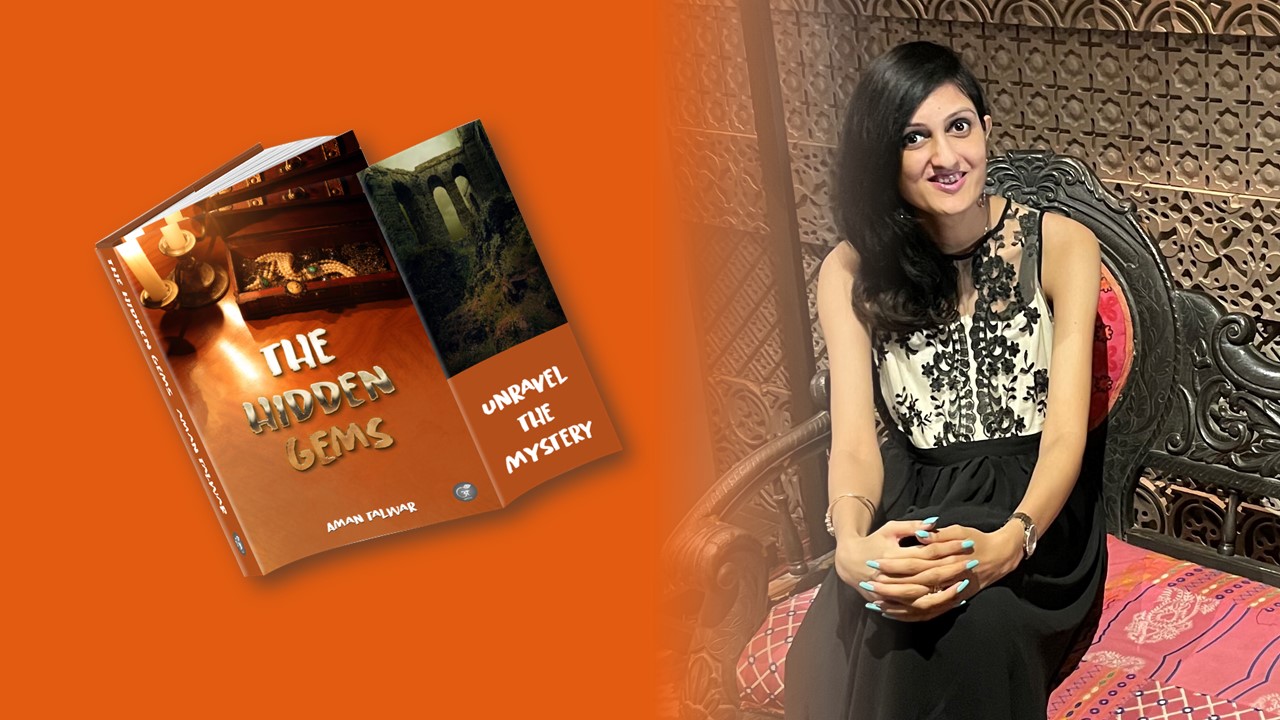
Author Aman Talwar comes up with a different view of life where she harps upon recognizing the hidden gems in life
In routine life, human beings become so busy and involved that they forget to pay attention to the little details and miss out on the little things that can make significant differences when one talks about changing life or seeing life from a different perspective. This differentiated perspective makes a difference in the lives of those who see the world differently. In her book “The Hidden Gems,” the author Aman Talwar comes up with a different view of life where she harps upon recognizing the hidden gems in life and how these gems have big keys to happiness in them. Through her book, she opens people’s eyes to a different world and tries to highlight the little things that many may have been ignoring subconsciously and tries to make them realize them. In her short book of fewer than 100 pages, Talwar packs up different thoughts and ideas, which are supplemented by interesting pictures and titles. To add to the excitement, she applies different forms of writing to express her thoughts. Through these different forms, she creates an intangible rhythm that resonates in the senses of the readers, and they have many moments of realization when they agree with the author on a subconscious level. As the preface says, the book takes the readers on a “flight to the offbeat destinations,” where the only objective is to take a break from the routine of life and give some moments to introspect. Through different sections in “The Hidden Gems,” the author hints at how the modern day developments in technology and everyday priorities have taken over people’s lives and how, unknowingly, they have adapted to the new system accepting it as the new normal. “The Technological Maze” is worth mentioning here. Through the book, the readers are able to introspect, realize and understand the difference that life has and draw parallels with the past when life was simpler. The author does not exactly divide the book into chapters, she keeps them unnumbered and only focuses on delivering the message in a transparent manner which would give clarity and understanding to the readers. Other sections like “The Bygone era of Fairytales” and “Knight in Shining Armour” in “The Hidden Gems” take the readers on a nostalgic spin and take them back to their childhood days when they realized their hidden gems. The last part of “Food for Thought” and “Living the Moment” teaches a parting lesson to the readers and gives clarity to the message that the author wants to give. This book would instantly appeal to readers who like to read short and yet thought-provoking books that would set their minds to action. The other appealing factor would be the language that the author uses in her book. The language is simple, easy to understand and matches the vocabulary of any regular reader. The author in “The Hidden Gems” talks about different aspects of life that would take the readers away from the routine world which is dependent on and driven by technology. She talks of different ways like reading, taking time off and spending it with self and family, going close to nature to enjoy it instead of just going as a tourist, listening to the heart more often, talking about emotions instead of running away from them and striving to have a balanced approach towards life and all that comes with it. These ways would help the readers understand the gems that have been hidden due to the swift movement of life and the quick development of technology that somehow has increased materialism and reduced the depth of people’s thoughts. “The Hidden Gems” would make readers ponder over the points that the author has mentioned and would also instigate them to take action and try to alter their lives a little, if not too much. The author agrees with the fact that even a little change would make big differences, so even little changes can create waves in a person’s life. The readers can begin by making small changes and thus feel the magnitude as time passes. The book is recommended to all those readers who want to find the hidden gems in their lives and make their lives a little more happy than they are at present.