
A life that feels as good as it looks
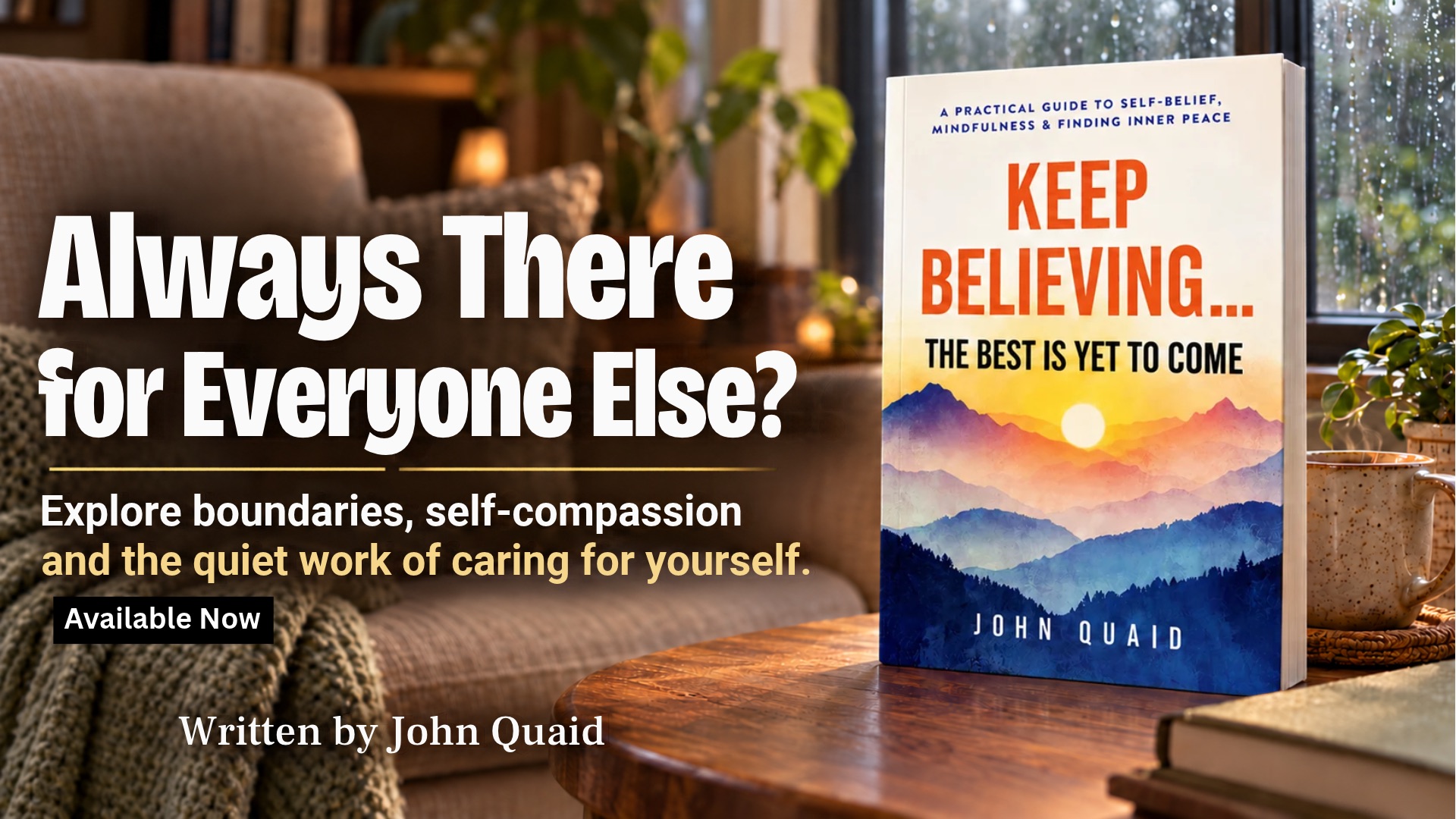
There is a particular kind of dissatisfaction that is difficult to explain because, on paper, everything appears to be working. Responsibilities are met, a career has been built, and other people see someone dependable. Yet the person doing all that work may feel strangely absent from the life it supports. John Quaid addresses that uncomfortable distance in Keep Believing… The Best Is Yet to Come. His subject is the relationship between visible achievement and private experience, and his starting point is unusually sympathetic to readers who feel unsettled without knowing how to justify the feeling.
Quaid brings thirty-five years of corporate experience to this discussion. That background matters because he understands the appeal of momentum. He describes commitment, professional satisfaction and valued relationships alongside pressure and an increasingly demanding pace. His account does not require the past to become a mistake before a different future becomes possible. It allows a career to have been worthwhile and its demands to deserve reconsideration. For readers whose identities have formed around being useful, capable or ambitious, that combination gives the book a persuasive point of entry. Change can begin with a reassessment of what a successful life includes.
The opening emphasis on self-awareness establishes the guide’s direction. Before offering another target, Quaid asks the reader to examine the person pursuing existing targets. His interest lies in automatic responses, habitual self-explanations and the effort involved in protecting an image. There is something quietly revealing about this choice. A restless reader might expect an improved schedule or a new project to provide relief. Quaid instead places attention on the assumptions accompanying every schedule and project. The question becomes whether the reader’s activity expresses a considered choice or simply continues a pattern that has escaped examination.
Humility develops that idea through the experience of being wrong. In Quaid’s account, maintaining a reputation for certainty consumes energy that could be used for listening and connection. His observations about accomplished people who remain approachable are especially relevant here. He values achievement that leaves room for curiosity. This gives the book a social dimension: an inward change can alter the quality of an ordinary exchange. The reader is invited to consider what other people encounter when they offer a different view. Self-understanding becomes consequential because it affects the space available for someone else’s contribution.
Fear and courage then bring movement into the discussion. Quaid describes hesitation that can hide beneath sensible explanations, while locating courage in familiar decisions rather than exceptional displays. A withheld apology, an unspoken need or a difficult change of direction can carry considerable emotional weight. By giving such moments attention, the book makes personal development recognisable at the scale of a normal week. It also connects reflection with responsibility. Seeing a pattern matters, but the pattern acquires practical significance when a person notices the next decision it might otherwise make on their behalf.
The treatment of thought continues this movement toward greater choice. Quaid examines the commentary that develops around an event and the ease with which an interpretation can acquire the force of certainty. His language is direct and accessible, frequently returning to situations that need little explanation. A message remains unanswered; a comment feels uncomfortable; an old conclusion about personal inadequacy arrives. The interest of these examples is their familiarity. They bring a large subject into the small intervals through which much of daily life is experienced, where a quick assumption can influence the mood of an entire afternoon.
Stress gives that inner activity a tangible setting in working life. Quaid remembers the cost of sustained intensity and acknowledges that the pace he normalised affected others. This admission adds weight to his reflections because it includes consequences beyond his own discomfort. The discussion of unnecessary complication at work is equally telling. A task can become exhausting through the way it is framed and expanded, even when those involved are capable and conscientious. The book’s appeal for a professional audience rests partly on this recognition that familiar habits can be productive in one respect and costly in another.
The personal history in Self-Belief brings a different kind of pressure into view. Quaid recalls losing his father young and watching his mother work to support the family. His account of learning through practical necessity gives confidence a history. It emerges through experience, effort and continuing despite uncertainty. The writing is most engaging when these personal details accompany the larger message, because they make encouragement less abstract. Readers encounter an author explaining how an outlook developed, with attention to the circumstances that made it necessary, rather than presenting confidence as a quality everyone should already possess.
The exercises give the guide a participatory character. One particularly concrete example asks readers to record what they have managed, learned and endured, then reconsider that record with greater fairness. The value of this approach lies in its attention to overlooked evidence. A reader is asked to examine an existing life before rushing toward an improved one. Across the available chapters, reflection questions also provide natural stopping points. They make space for disagreement, hesitation and personal association. This format suits readers who want to think alongside a book and connect its ideas with situations that remain unresolved.
Mindfulness changes the pace of the discussion by concentrating on ordinary experience. Quaid describes attention through warmth, movement, sound and conversation. Such details make presence feel close at hand. They also support the book’s larger concern with the gap between having a life and inhabiting it. An ordinary morning already contains experiences that can pass almost entirely unnoticed when attention remains elsewhere. Quaid’s writing encourages a closer encounter with those moments. The appeal is less about the novelty of any individual example than the consistent attention he gives to what readers may have stopped registering.
Respect and gratitude extend this attention in complementary directions. Respect concerns the consideration a person gives to their own needs and the language they use about themselves. Gratitude concerns the people and details that familiarity can make invisible. Together, these subjects broaden the meaning of an inward journey. It includes how a person receives care, communicates a limit and acknowledges another person’s presence. The small domestic observations are particularly effective because they resist spectacle. A familiar voice or a changing view can carry meaning without needing to become an extraordinary event or evidence of a transformed life.
The resulting reading experience is reflective, personal and openly encouraging. Quaid repeatedly returns to a hopeful outlook, which will appeal to readers seeking patient reinforcement. Readers who prefer a tightly argued academic treatment will be looking for a different kind of book. Here the main relationship is conversational: the author shares a perspective, illustrates it through lived experience and leaves the reader with something to consider. That approach is well matched to the audience he identifies, especially people who have become skilled at meeting expectations while finding it harder to recognise their own emotional needs.
Keep Believing is compelling when understood as an invitation to examine the quality of a life from within. Its central concern is neither status nor the appearance of serenity, but whether daily choices allow room for the person making them. The hopeful title gains substance through this concern. A better future need not depend entirely on adding another achievement to the record; it can also involve paying closer attention to the life that record describes. For readers ready to question the relationship between success and satisfaction, Quaid offers a warm, accessible starting point with enough personal detail to give the invitation a human voice.
Book purchase link https://mybook.to/OrderKeepBelieving