
When Two Hands Build a Home: Understanding the Heart of The Rolling Stone That Gathered Moss
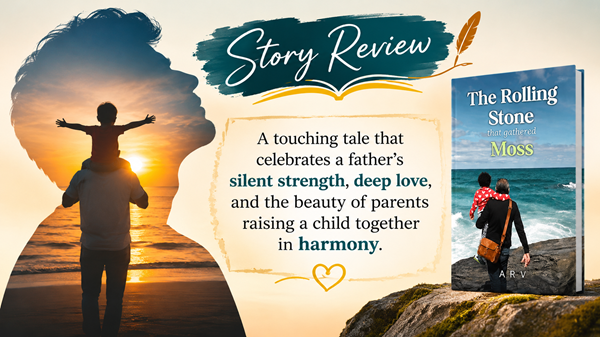
A home is more than a physical space. It is a collection of relationships, responsibilities, memories, and emotional connections that gradually shape our understanding of belonging. In The Rolling Stone That Gathered Moss, author Arv explores this deeper meaning of family through the lens of fatherhood and the essential partnership between mothers and fathers.
One of the most memorable ideas introduced through the book’s description is the comparison of parenting to two hands joining in prayer or coming together in a warm embrace. This simple image becomes a thoughtful representation of shared responsibility, suggesting that a child’s upbringing is strengthened when caregivers work together with mutual respect and understanding.
The emotional significance of this concept lies in its recognition that parenting is not an individual performance.
Raising a child involves countless decisions, some important and others apparently ordinary. It requires patience during difficult conversations, reassurance during moments of uncertainty, and the ability to balance freedom with responsibility. No parent approaches every situation with perfect knowledge or unlimited emotional strength.
What makes a family resilient is not the absence of difficulty but the willingness to confront challenges together.
Arv’s central message emphasizes the importance of different yet equally valuable parental contributions. Within a supportive partnership, individual strengths can become shared resources. One parent may offer a particular perspective on a challenge, while another may recognize an emotional concern that has gone unnoticed.
The value of this cooperation is not measured by whose contribution appears more important. It emerges from the sense of security that consistent and respectful care can create.
The book’s focus on fathers is particularly meaningful here. Discussions of family life have sometimes limited fatherhood to financial responsibility and protection. Although providing stability is important, the emotional dimension of fatherhood deserves equal recognition.
A father can contribute to a child’s development through listening, encouragement, everyday companionship, and the willingness to remain present during difficult periods.
His love may be quiet, but quietness should not make it invisible.
Similarly, a mother’s role cannot be reduced to a fixed collection of emotional tasks. Both parents are individuals who bring their own experiences, strengths, limitations, and aspirations into family life. The challenge is to transform these differences into cooperation rather than conflict.
The metaphor of two hands captures this possibility beautifully. Two hands do not need to be identical to work together. What matters is their ability to respond to a shared purpose.
The book’s striking title adds further meaning to this reflection.
The Rolling Stone That Gathered Moss suggests that human beings can move through life’s changing circumstances while developing stronger emotional roots. Parenthood itself embodies this contradiction. Every year brings new situations, fresh responsibilities, and unexpected adjustments. Yet within these changes, a family’s emotional bonds can become deeper.
A child grows, expectations evolve, and the relationship between parents changes with time. Remaining rooted together requires flexibility rather than rigidity.
This perspective is especially important for families confronting the demands of modern life. Professional responsibilities, changing lifestyles, and personal ambitions can place considerable pressure on relationships. Without communication, those pressures may create emotional distance even among people who genuinely care for one another.
The book’s message offers a reminder that meaningful connection requires attention.
It also encourages reflection on the values passed from one generation to the next. Children learn about relationships not only through direct instruction but also by observing how adults treat one another. Respect, patience, compassion, and accountability become more meaningful when demonstrated through everyday behavior.
The legacy of parenting is therefore not confined to material security or educational opportunities. It also includes the emotional habits and principles that children may carry into their own relationships.
Ultimately, Arv’s The Rolling Stone That Gathered Moss presents family unity as something that must be actively nurtured. Its emphasis on paternal love and parental partnership encourages appreciation without competition and responsibility without emotional isolation. The most enduring idea is that a strong home is created through shared commitment rather than individual perfection. When two people offer dependable care, communicate with respect, and remain willing to grow together, they can create the kind of emotional foundation that supports a child through life’s changing seasons. In that sense, the roots of a family are not simply inherited. They are built, strengthened, and sustained through love.