
Author: Rakhya Ranjan Sahoo India, or Bharat, as it has been known for centuries, is a land of incredible diversity, rich traditions, and profound cultural wisdom. While modernization and globalization have propelled the nation forward, they have also created a disconnect between contemporary society and the cultural heritage that once formed the foundation of Indian identity. In The Heartbeat of Bharat: Unveiling Hidden Cultural Gems, Rakhya Ranjan Sahoo takes on the vital mission of reconnecting young Indians with their roots, offering a compelling exploration of India’s overlooked cultural treasures. A Journey into the Soul of India This book is more than just a historical or cultural analysis; it is a heartfelt journey into the soul of Bharat. Through vivid storytelling and in-depth research, Sahoo presents the richness of Indian traditions, art forms, folklore, and festivals, each carrying the essence of the country’s diverse heritage. The book uncovers forgotten or lesser-known aspects of Indian culture, ensuring that these invaluable gems are not lost in the rush of modernization. The narrative seamlessly weaves together past and present, offering insights into the wisdom of ancient customs while highlighting their relevance in today’s fast-paced world. The author emphasizes that India’s cultural heritage is not just a relic of the past but a living, breathing entity that continues to shape identities and values. By doing so, he makes a strong case for preserving and celebrating these traditions, especially among the youth who stand at the crossroads of modernity and tradition. Themes and Cultural Insights One of the book’s strongest aspects is its exploration of diverse themes. Sahoo does not limit himself to well-known cultural markers but goes beyond mainstream narratives to highlight unique and often ignored traditions. Some of the key themes include: Engaging Narrative and Research Depth Sahoo’s writing is both engaging and insightful, making complex cultural narratives accessible to a broad audience. His passion for the subject matter is evident in the way he brings India’s history and traditions to life. The book is not just an academic exploration but a deeply personal and emotional journey, as the author shares his reflections on how these cultural elements have shaped his own understanding of identity and belonging. Furthermore, the research in The Heartbeat of Bharat is commendable. Sahoo has meticulously gathered information from historical texts, regional sources, and firsthand experiences, ensuring that his depiction of Indian culture is both accurate and immersive. He strikes a perfect balance between academic rigor and storytelling, making the book appealing to both scholars and casual readers. Relevance in the Modern World One of the book’s key strengths is its ability to connect the past with the present. While many books on Indian culture focus solely on history, The Heartbeat of Bharat actively explores how these cultural elements can be preserved and adapted in a rapidly changing world. The author urges young Indians not just to appreciate their heritage but to actively engage with it—whether through practicing traditional art forms, celebrating festivals, or understanding the deeper meanings behind age-old customs. In an era where Western influences dominate popular culture and lifestyles, this book serves as an important reminder of the beauty and wisdom inherent in India’s traditions. It challenges readers to rethink their perceptions of progress and identity, encouraging them to take pride in their cultural roots rather than seeing them as outdated relics. Final Thoughts The Heartbeat of Bharat: Unveiling Hidden Cultural Gems is an inspiring and enlightening read for anyone interested in Indian heritage. Rakhya Ranjan Sahoo has masterfully crafted a book that not only educates but also evokes a deep sense of appreciation and pride in one’s cultural identity. This book is particularly significant for young Indians who may feel disconnected from their traditions due to the pressures of modern life. It offers them a chance to rediscover the richness of their heritage and understand that embracing one’s roots does not mean rejecting progress—it means carrying forward the best of the past while building a meaningful future. Whether you are a history enthusiast, a cultural explorer, or someone simply curious about India’s hidden gems, this book is a must-read. It is a heartfelt tribute to Bharat’s enduring spirit, reminding us all that culture is not just about the past—it is about who we are today and who we aspire to be tomorrow.
Embracing Ethical Cheating: A book that explores polyamory and extends the boundaries of love, loyalty and commitment
“Embracing Ethical Cheating” is a book written by Yogesh Qumaar, exploring the evolving nature of relationships, attraction, and commitment. The book challenges conventional monogamous structures and proposes a framework where honesty, ethical considerations, and mutual consent play a central role in redefining fidelity. Beyond relationship ethics, the book presents a social reformative approach, advocating for the eradication of crimes linked to hidden relationships and the abolition of the traditional divorce system to ensure that children do not lose either parent due to legal separations. Yogesh Qumaar, a filmmaker and author, conceived the book to question the rigid boundaries of traditional relationships and address the social consequences of secrecy, betrayal, and legal battles over love and marriage. He argues that monogamy, as enforced by societal norms, often leads to deception, emotional distress, and family breakdowns rather than fostering genuine commitment. The book aims to promote transparency in relationships to eliminate the stigma around non-monogamy, reduce crimes related to secret affairs, such as blackmail, violence, and emotional abuse, and advocate for the abolition of divorce as a means to separate partners while ensuring children retain the presence of both parents. Yogee draws from history, psychology, and mythology to demonstrate how alternative relationship structures have always existed, but modern society has enforced rigid norms that often result in emotional suffering and legal conflicts. One of the key themes explored in the book is the psychological basis of desire. It delves into why humans are naturally drawn to multiple partners, citing psychological studies on evolutionary biology and human attraction. The book also addresses how monogamous expectations often conflict with natural instincts, leading to secrecy, infidelity, and emotional pain. Additionally, it highlights how many relationship-related crimes stem from the pressure to hide affairs or suppress desires, including domestic violence due to suspicion of infidelity, murders and honor killings caused by societal rejection of non-monogamous relationships, and blackmail and financial extortion linked to extramarital affairs. By normalizing consensual, ethical non-monogamy, Qumaar suggests that many of these crimes could be prevented, as transparency removes the motive for secrecy and fear of exposure. Through historical and mythological references, the book presents various examples from Indian mythology and history that reflect non-monogamous relationships, such as Lord Krishna and the Gopis, King Dasharatha in the Ramayana, and Draupadi in the Mahabharata. It challenges the notion that polyamory and multiple romantic partners are “un-Indian,” emphasizing that Indian traditions have long acknowledged multiple romantic and sexual relationships. The book argues that modern relationship norms are restrictive impositions, contrasting with history where love, desire, and family structures were fluid rather than rigid. A radical yet humanitarian proposal in the book is the abolition of the divorce system—not to force unhappy couples to stay together, but to ensure that children are not deprived of either parent due to legal separations. Yogee argues that divorce often leads to children losing close contact with one parent, affecting their emotional well-being, and that legal battles over custody are traumatic and create lifelong resentment. Instead of divorce, the book proposes a new family model where partners may separate romantically but remain equal co-parents, preventing emotional damage to children. By removing the need for legal separations, the book envisions a future where family units adapt rather than break apart, allowing children to grow in a stable, loving environment with both parents present. Yogesh Qumaar is a promising new filmmaker and storyteller, making his debut with the Telugu film “Love You Too.” Known for his thought-provoking narratives, Yogee explores the emotional intricacies of relationships in ways that resonate with contemporary audiences. His first feature film delves into the complexities of polyamory, portraying a man navigating love for both his wife and his lover while challenging societal norms without passing judgment. Before stepping into feature films, Yogee gained recognition through his short films like “Aa Gang Repu” and its sequel, where he showcased a knack for addressing complex themes with subtlety and depth. His stories often spark reflections on modern relationships, love, and loyalty, making his work both engaging and insightful. The inspiration to write and compile “Embracing Ethical Cheating” stems from witnessing daily reports of tragic outcomes such as honor killings, blackmail, extortion, and suicides, all rooted in the stigma surrounding non-traditional relationships. These stories are a stark reminder of the consequences of a society that rigidly upholds monogamy as the only acceptable form of love. Yogee believes that by normalizing polyamory, society can become more accepting, allowing individuals to love freely without fear of judgment or retribution. The book is not just a call for acceptance but an effort to bring dignity to those who practice polyamory, offering them a path to live authentically. It challenges societal norms, aims to eradicate crimes associated with hidden relationships, and promotes a world where love in its many forms can be celebrated openly and ethically. The title “Embracing Ethical Cheating” is intentionally provocative and oxymoronic to challenge the conventional understanding of relationships. The book aims to dismantle the perception of cheating as betrayal and introduce the concept of ethical polyamory—where multiple relationships are pursued openly, honestly, and with the consent of all parties involved. By pairing the words “ethical” and “cheating,” the title confronts the reader with a paradox that compels them to rethink the boundaries of love, loyalty, and commitment. Ultimately, the book seeks to reframe the narrative around non-monogamous relationships, showing that they need not be seen as dishonest or destructive but rather as an opportunity to extend and enrich connections between people in a way that honors everyone’s needs and desires.
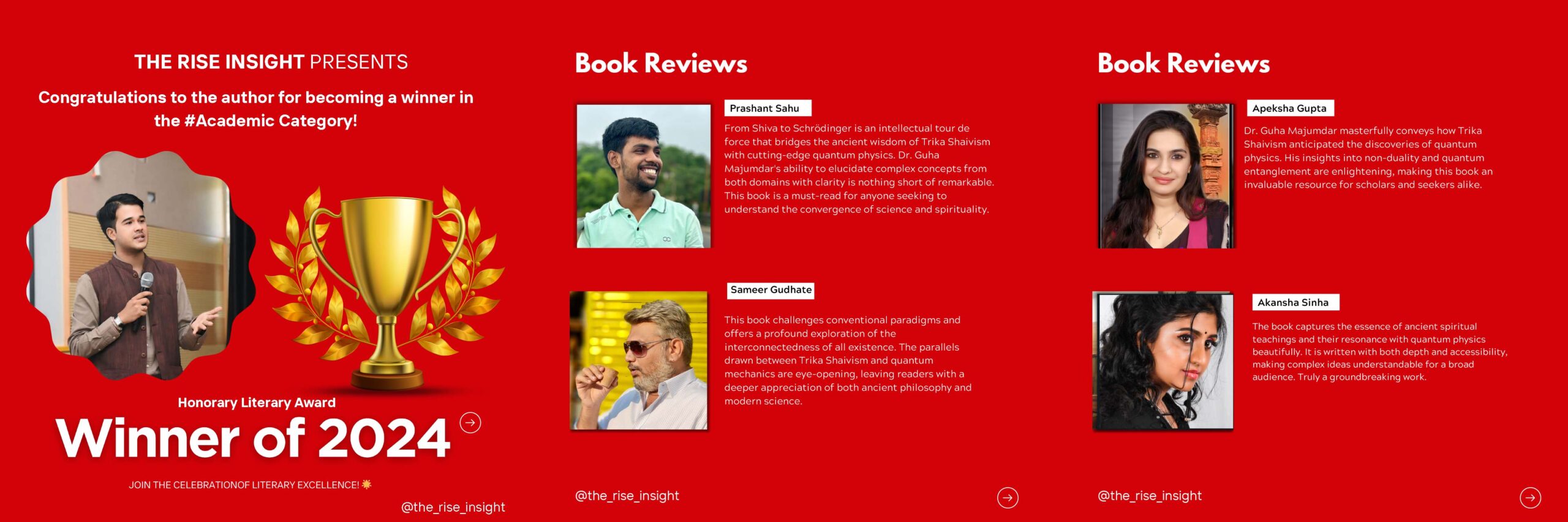
Congratulations to Dr. Mrittunjoy Guha Majumdar for winning the Honorary Literary Awards 2024, organized by The Rise Insight!
Heartiest congratulations to Dr. Mrittunjoy Guha Majumdar for winning the Honorary Literary Awards 2024, organized by The Rise Insight! Your groundbreaking book, From Shiva to Schrödinger, is an exceptional masterpiece that beautifully bridges the ancient wisdom of Trika Shaivism with the revolutionary discoveries of modern quantum physics. By uncovering profound parallels between spirituality and science, your work provides readers with a transformative perspective, uniting the realms of philosophy, consciousness, and quantum mechanics. This recognition is a testament to your remarkable vision and dedication to deepening our understanding of the universe and ourselves. May this honor inspire even more groundbreaking contributions in the future. Congratulations once again on this well-deserved achievement! Reviews for From Shiva to Schrödinger by Dr. Mrittunjoy Guha Majumdar Prashant Sahu: “A Profound Synthesis of Science and Spirituality”From Shiva to Schrödinger is an intellectual tour de force that bridges the ancient wisdom of Trika Shaivism with cutting-edge quantum physics. Dr. Guha Majumdar’s ability to elucidate complex concepts from both domains with clarity is nothing short of remarkable. This book is a must-read for anyone seeking to understand the convergence of science and spirituality. Sameer Gudhate: “A Transformative Perspective on Reality”This book challenges conventional paradigms and offers a profound exploration of the interconnectedness of all existence. The parallels drawn between Trika Shaivism and quantum mechanics are eye-opening, leaving readers with a deeper appreciation of both ancient philosophy and modern science. Apeksha Gupta: “A Beacon for Modern Thinkers”Dr. Guha Majumdar masterfully conveys how Trika Shaivism anticipated the discoveries of quantum physics. His insights into non-duality and quantum entanglement are enlightening, making this book an invaluable resource for scholars and seekers alike. Akansha Sinha: “An Intersection of Wisdom and Discovery”The book captures the essence of ancient spiritual teachings and their resonance with quantum physics beautifully. It is written with both depth and accessibility, making complex ideas understandable for a broad audience. Truly a groundbreaking work. Glenville Asbhy: “A Scholarly Yet Accessible Masterpiece”Dr. Guha Majumdar’s meticulous research and engaging narrative style make From Shiva to Schrödinger a masterpiece. It is a rare blend of intellectual rigor and spiritual wisdom, offering readers a transformative journey of discovery. Pooja Sahu: “A New Paradigm of Understanding”This book redefines the way we perceive the universe and our place within it. The exploration of the observer effect in both quantum mechanics and Shaivism’s teachings is particularly fascinating. A brilliant work for those interested in philosophical inquiry and scientific advancement. Versha Singh: “A Journey of Intellectual and Spiritual Discovery”Dr. Guha Majumdar’s work is a revelation. It seamlessly combines the abstract realms of quantum physics with the profound teachings of Trika Shaivism, offering a cohesive and transformative vision of reality. Highly recommended for those who wish to broaden their horizons. Shivangi Yadav: “A Rare Gem of Interdisciplinary Insight”This book is a testament to the author’s mastery of both science and philosophy. The connections drawn between ancient spirituality and modern physics are not only compelling but also profoundly impactful. A must-read for anyone on a quest for deeper knowledge. Exploring the Convergence of Science and Spirituality: A Deep Dive into From Shiva to Schrödinger In a world often divided by the boundaries of science and spirituality, Dr. Mrittunjoy Guha Majumdar’s From Shiva to Schrödinger emerges as a groundbreaking work that bridges these two seemingly disparate realms. This thought-provoking book delves into the profound teachings of Trika Shaivism, a non-dualistic spiritual philosophy from ancient India, and juxtaposes them with the revolutionary concepts of quantum mechanics. The result is a revelatory journey that offers readers not only a deeper understanding of the universe but also a transformative perspective on their place within it. The Essence of the Book At its core, From Shiva to Schrödinger seeks to illuminate the striking parallels between the principles of Trika Shaivism and the discoveries of modern quantum physics. Dr. Guha Majumdar artfully demonstrates how ancient spiritual insights, formulated centuries ago, predate and align with the findings of contemporary science. Through a synthesis of philosophical exploration and scientific inquiry, the book invites readers to consider profound questions about reality, consciousness, and existence. Trika Shaivism: Ancient Wisdom Revisited Trika Shaivism, rooted in the Kashmir region of India, is a spiritual tradition that emphasizes non-duality and the interconnectedness of all existence. Central to its philosophy is the concept that the universe is a manifestation of a singular, universal consciousness, often referred to as Shiva. This perspective challenges the illusion of separation, advocating instead for a holistic understanding of reality. Dr. Guha Majumdar delves deeply into these teachings, exploring concepts such as the unity of the observer and the observed, the illusion of duality, and the interplay of energy and consciousness. He draws fascinating parallels between these ancient ideas and the principles underlying quantum physics. Quantum Physics: A Modern Perspective Quantum mechanics, a cornerstone of modern science, has redefined our understanding of the physical world. Phenomena such as entanglement, superposition, and the observer effect challenge traditional notions of reality and suggest a universe far more interconnected than previously imagined. In From Shiva to Schrödinger, Dr. Guha Majumdar explains these complex scientific concepts with clarity and precision. He highlights how the findings of quantum mechanics echo the insights of Trika Shaivism, particularly in their shared emphasis on interconnectedness and the observer’s role in shaping reality. For instance, the observer effect—which posits that the act of observation influences the outcome of a quantum event—resonates deeply with the Shaivist belief in the inseparability of the observer and the observed. A Bridge Between Two Worlds One of the book’s most compelling aspects is its ability to serve as a bridge between the ancient and the modern, the spiritual and the scientific. Dr. Guha Majumdar’s interdisciplinary approach weaves together philosophical insights and empirical findings, creating a narrative that is both intellectually rigorous and spiritually enriching. The author’s exploration of quantum entanglement—a phenomenon where particles remain interconnected regardless of distance—is particularly striking. He draws parallels to the Shaivist concept of universal interconnectedness, suggesting that both perspectives point to a reality where separation is merely an

Detox: Mind, Body, and Soul By Poonam Roy
In an age where the fast pace of life often leaves us feeling drained, disconnected, and overwhelmed, finding a way to rejuvenate ourselves holistically is more important than ever. Poonam Roy’s transformative book, Detox: Mind, Body, and Soul, published by Evincepub Publishing, offers a comprehensive guide to achieving harmony within yourself. This Hindi masterpiece explores time-tested methods to cleanse your body, declutter your mind, and uplift your soul. Whether you’re a seasoned wellness enthusiast or someone taking your first step toward a balanced life, this book promises to be an indispensable companion on your journey to self-discovery and inner peace. About the Book Detox: Mind, Body, and Soul is not just another self-help book; it’s a life-changing guide to holistic wellness. With the perfect blend of ancient wisdom and practical advice, Poonam Roy provides readers with tools to transform their lives from within. The book delves into the core principles of detoxification, addressing the interconnectedness of physical, mental, and spiritual health. Through the pages of this book, you will: The author’s engaging style and ability to simplify complex concepts make this book accessible to readers of all ages and backgrounds. Each chapter is filled with actionable advice, making it a practical guide for anyone looking to embrace a healthier, happier lifestyle. About the Author: Poonam Roy Poonam Roy, a celebrated Hindi author, is passionate about helping people achieve holistic well-being. With a deep understanding of ancient wellness practices and a modern approach to health, she has dedicated her life to empowering others to live balanced and fulfilling lives. Her journey toward discovering the secrets of mind, body, and soul detoxification began with her personal quest for inner peace and vitality. Drawing inspiration from traditional Indian practices, global wellness trends, and her own experiences, Poonam has created a book that resonates deeply with readers. She believes that true wellness goes beyond physical health; it’s about nurturing every aspect of our being. This philosophy is at the heart of Detox: Mind, Body, and Soul, a book that has the power to inspire, heal, and transform. Poonam Roy’s partnership with Evincepub Publishing has enabled her to reach a broad audience, bringing her invaluable insights to readers across India and beyond. Her ability to connect with readers through her empathetic writing style has earned her a loyal following in the literary world. Key Highlights of the Book Why You Should Read This Book If you’ve ever felt stuck in the endless cycle of stress and exhaustion, Detox: Mind, Body, and Soul is the guide you need to break free. Poonam Roy’s insightful writing will help you: By following the practices outlined in this book, you will not only detoxify your body but also rejuvenate your mind and soul, allowing you to live life to its fullest potential. Reader Testimonials Since its release, Detox: Mind, Body, and Soul has received widespread praise from readers. Here’s what some of them had to say: Conclusion In a world that often prioritizes external achievements over internal well-being, Detox: Mind, Body, and Soul serves as a gentle reminder of the importance of self-care. Poonam Roy’s wisdom and compassionate approach make this book a valuable addition to your personal library. Embark on a journey of self-discovery and rejuvenation with Detox: Mind, Body, and Soul. Whether you’re looking to cleanse your body, clear your mind, or reconnect with your soul, this book will be your trusted guide every step of the way. Available now through Evincepub Publishing, grab your copy today and take the first step toward a healthier, happier you!

Author Feature: Arushi Kohli – A Rising Star of Empathy and Expression
In the literary world, there are authors who touch hearts not just with their words but also with the stories they choose to tell. Arushi Kohli is one such remarkable individual—a young yet profound voice who has woven her personal journey into the pages of her debut memoir, Let. Me. Be. This heartfelt tribute to her late mother, Divya Kohli, stands as a testament to love, resilience, and the unbreakable bond between a mother and her child. Who is Arushi Kohli? At a tender age, Arushi Kohli is already making waves with her empathetic outlook and deep sense of responsibility toward society. A true wonder kid, Arushi embodies warmth, affection, and gratitude. Her heart of gold shines in her actions, as she is constantly seeking ways to uplift and help others. Whether it’s lending a listening ear or engaging in meaningful conversations, Arushi connects with people in a way that makes them feel valued and understood. Despite her youth, Arushi exhibits maturity far beyond her years. She firmly believes in the power of affirmations, practicing gratitude for even the smallest blessings in life. Her strong will and ability to balance her emotions make her an inspiring figure, not just to her peers but to anyone who crosses her path. The Jabbering Machine Arushi’s parents affectionately call her a “jabbering machine,” a nickname that captures her love for talking and listening. But her endless chatter is not meaningless; it is an expression of her boundless curiosity and an innate ability to understand people. Arushi recognizes that everyone is unique and deserves to be approached in ways that resonate with their individuality. This sensitivity is reflected in her writing, which is both relatable and impactful. About the Book: Let. Me. Be. Let. Me. Be. is not just a book; it is an emotional journey, a cathartic release, and a heartfelt tribute to a mother’s enduring love and strength. The memoir revolves around the life of Divya Kohli, Arushi’s mother, who fought a courageous battle against cancer. Although Divya triumphed over the disease, fate had other plans, and she could not live to relish her victory. Through this book, Arushi immortalizes her mother’s spirit. It is a collection of poignant memories, raw emotions, and veracious poetry that captures the essence of Divya’s life and her struggle. The title, Let. Me. Be., reflects the unspoken plea of every soul fighting against odds—a plea to be seen, heard, and understood. A Memoir Born from Love Writing a memoir is no small feat, especially for someone so young. For Arushi, the process was both a challenge and a solace. Revisiting the past, reliving moments of joy and pain, and putting them into words required immense strength. Yet, Arushi’s love for her mother propelled her forward. She wanted the world to know about the incredible woman who shaped her life and inspired everyone around her. The book is not just about loss but also about celebrating the legacy of a mother who taught her daughter the true meaning of courage, compassion, and resilience. Arushi’s writing is heartfelt and honest, making it easy for readers to connect with her story. Why Let. Me. Be. Matters In a world where discussions about cancer often focus on statistics and treatments, Let. Me. Be. brings a deeply personal perspective. It sheds light on the emotional toll the disease takes on patients and their families. Arushi’s narrative emphasizes the importance of cherishing moments with loved ones and finding strength in adversity. The book also highlights the role of mental and emotional well-being in fighting life’s battles. Arushi’s mother, despite her illness, remained a pillar of strength for her family. Her journey serves as an inspiration to anyone facing challenges, reminding them that courage and hope can illuminate even the darkest times. A Message of Gratitude One of the most striking aspects of Arushi’s personality is her unwavering gratitude. She believes in thanking God for everything, big or small, and this philosophy permeates her writing. In Let. Me. Be., Arushi expresses her gratitude not just for her mother’s love but also for the lessons life has taught her through hardship. Arushi’s positive outlook is a reminder that even in the face of loss, there is room for appreciation and growth. Her ability to find meaning in pain and transform it into something beautiful is truly remarkable. A Young Voice with a Big Impact Arushi Kohli’s journey as an author has just begun, but her potential is limitless. With Let. Me. Be., she has proven that age is no barrier to making a difference. Her words resonate with readers of all ages, inspiring them to embrace love, resilience, and empathy. As a young writer, Arushi has the unique ability to connect with the next generation, encouraging them to value relationships and approach life with kindness. Her book is a call to action for society to be more compassionate and supportive, especially toward those facing health challenges. What’s Next for Arushi? While Arushi has not revealed her future plans in writing, one thing is certain—this is just the beginning. With her talent, passion, and determination, she is sure to continue creating work that touches hearts and makes a difference. Whether it’s through books, poetry, or community initiatives, Arushi is destined to leave an indelible mark. Arushi Kohli’s Let. Me. Be. is more than a memoir; it is a labor of love, a tribute to a remarkable woman, and an inspiration for anyone who has faced loss or adversity. Through her writing, Arushi reminds us of the power of love, the importance of gratitude, and the strength we can find within ourselves. As readers, we are privileged to witness the emergence of a young author who is not just telling stories but also changing lives. Arushi Kohli is a name to remember, and her journey is one we will all want to follow.

Book Review: You Can Bake: “Turn Your Passion into a Profitable Home Bakery Business”
Author: Dipti Harshad Vartak Dipti Harshad Vartak’s You Can Bake is an inspiring and practical guide for anyone dreaming of transforming their baking skills into a profitable home business. Written with a blend of expertise and empathy, this book equips readers with the tools to embark on a rewarding entrepreneurial journey from the comfort of their kitchens. About This book You Can Bake is more than a recipe book. It is a roadmap to success in the world of home baking, designed to address both the creative and business sides of a bakery venture. From learning the basics of baking to scaling a thriving business, Dipti has structured her book to ensure that even beginners can confidently navigate the challenges of starting and growing a home bakery. With 11 thoughtfully curated chapters, the book covers all aspects of a home bakery business, including finding your niche, branding, pricing, customer management, and building a success-driven mindset. Whether you are a casual baker or someone serious about turning your passion into a career, You Can Bake is a mentor in book form. Highlights of the Book 1. Baking: A Path to Financial Freedom Dipti begins by explaining why baking is an excellent avenue for financial independence. She highlights its accessibility, affordability, and scalability, particularly for women and individuals seeking work-from-home opportunities. The motivational tone of this section sets the stage for aspiring bakers, encouraging them to believe in their potential. 2. Setting the Foundation of Your Home Bakery The book emphasizes the importance of mastering foundational baking techniques. Dipti includes practical advice on organizing your kitchen, selecting quality ingredients, and understanding the science behind baking. Her step-by-step approach ensures that readers can build confidence in their skills before tackling advanced recipes. 3. Mastering Basic Baking Recipes Dipti makes the learning process enjoyable by providing foolproof recipes for beginners. From simple cookies to classic cakes, this chapter ensures that readers can produce consistent results. The author also encourages experimentation, helping bakers develop their signature creations over time. 4. The Art of Cake Decoration In this visually engaging chapter, Dipti introduces the world of cake decoration. She explains various techniques, such as piping, fondant work, and edible art, making it accessible even to novices. This section also emphasizes the importance of presentation, a crucial factor in building a professional bakery brand. 5. Finding Your Baking Niche One of the most valuable sections of the book is where Dipti guides readers to identify their unique selling proposition (USP). She explains how focusing on a specific niche, like vegan cakes, gluten-free bakes, or artisanal bread, can help bakers stand out in a competitive market. 6. Pricing Your Bakes Many home bakers struggle with pricing, often undervaluing their products. Dipti tackles this issue head-on by breaking down the cost calculation process. She offers practical tips on pricing confidently while ensuring profitability. 7. Branding Your Home Bakery This chapter delves into the importance of branding in building a loyal customer base. Dipti discusses everything from choosing a catchy name and logo to crafting a compelling brand story. She also shares insights into creating an effective online presence through social media and websites. 8. Selling Like a Pro Selling is an essential skill for any entrepreneur, and Dipti’s advice is both practical and motivational. She teaches readers how to market their products, handle customer inquiries, and close sales. Her emphasis on building relationships with customers rather than just selling to them is a standout aspect of this chapter. 9. Managing Orders and Customer Relationships Dipti’s guidance on order management and customer service ensures that bakers can run their businesses smoothly. She shares strategies for maintaining clear communication, managing time effectively, and exceeding customer expectations. 10. Scaling from Home to Business For those ready to take their business to the next level, this chapter provides a roadmap for scaling up. Dipti discusses expanding product offerings, hiring help, and exploring collaborations. Her insights into maintaining work-life balance during this phase are particularly thoughtful. 11. Mindset of a Successful Bakepreneur The book concludes with an inspiring chapter on cultivating the mindset of a successful entrepreneur. Dipti emphasizes the importance of resilience, continuous learning, and having a clear vision for the future. She also encourages readers to celebrate small wins along the way. What Makes This Book Special 1. Dipti’s Expertise and Passion Dipti’s background as an engineer and MBA, coupled with her experience coaching bakers in 14 countries, lends credibility to her advice. Her passion for empowering bakers shines through every page, making the book both informative and uplifting. 2. Practical Tips and Real-Life Examples The book is packed with actionable tips and relatable examples. Dipti shares anecdotes from her journey and those of her mentees, which add a personal touch to the narrative. 3. Balanced Approach: Art Meets Business Unlike many baking books that focus solely on recipes, You Can Bake takes a holistic approach. It addresses both the artistic and entrepreneurial aspects of running a bakery, ensuring readers are well-prepared for real-world challenges. 4. Accessible Language and Structure Dipti’s writing style is simple and conversational, making the book easy to follow. The chapters are well-organized, with key takeaways and exercises that encourage readers to apply what they’ve learned. Who Should Read This Book? You Can Bake is ideal for: – Aspiring Bakers: Those looking to start a home bakery but unsure where to begin. – Experienced Bakers: Individuals seeking to turn their hobby into a full-fledged business. – Home Entrepreneurs: Anyone interested in combining creativity with entrepreneurship. – Students and Homemakers: Those searching for flexible and fulfilling career options. Conclusion Dipti Harshad Vartak’s You Can Bake is a treasure trove of knowledge and inspiration for anyone passionate about baking. The book not only teaches the art and science of baking but also equips readers with the skills to succeed as entrepreneurs. What sets this book apart is its focus on empowering bakers to achieve financial freedom while staying true to their creative roots. Whether you’re a novice or a
Nurturing Young Minds: An Entrepreneur’s Journey in Creative Writing Education
Uncategorized
Q1: What inspired you to start your entrepreneurial journey in creative writing classes for kids? A: My journey as an entrepreneur began nearly six years ago. I’ve always had a passion for teaching, especially creative writing, which I believe is a powerful tool for kids. The idea to start a creative writing class came naturally, as I wanted to help children develop essential written and verbal skills. Initially, I was hesitant, but once I realized that this was something I wanted to pursue, it became the best decision I ever made. Starting with just one student, I’ve built a thriving venture that is helping kids unlock their writing potential. Q2: What challenges did you face when you first started, and how did you overcome them? A: The journey wasn’t easy. One of the biggest challenges was getting students. I conducted multiple workshops before I started seeing more enrollments. Another hurdle was finding the right space for my classes, which led me to convert one room of my house into a classroom. After that, grouping students into appropriate batches posed another challenge. With persistence, careful planning, and adapting to the circumstances, I was able to overcome these challenges, and today, the venture is thriving. Q3: How do you ensure that your creative writing classes are both engaging and educational? A: The key is creating a balance between learning and creativity. I design my lessons to be both comprehensive and interactive. Students engage in storytelling, essay writing, and critical thinking exercises, which not only improve their writing skills but also enhance their imagination. We focus on structure, character development, and self-expression, making the process enjoyable. My goal is for students to leave each class feeling more confident in their abilities and excited about writing. Q4: What impact have your creative writing classes had on the students so far? A: The impact has been truly rewarding. Many students who started with little confidence in their writing abilities are now crafting thoughtful, well-structured stories. Beyond that, their ability to express themselves has improved, and they’ve developed critical thinking and organizational skills. Some of my students have even entered and won writing competitions, which is a testament to the skills they’ve honed in these classes. Q5: What advice would you give to aspiring entrepreneurs, particularly those interested in education and creative writing? A: First and foremost, have a clear vision. Know what you want to achieve before you start. Second, believe in yourself. Not everyone will see your vision, but if you have faith in your abilities and your ideas, you’ll succeed. Lastly, perseverance is key. Entrepreneurship has its highs and lows, and there will be challenges. Stay motivated, work hard, and don’t be afraid to adapt. Success doesn’t come overnight, but with dedication, anything is possible. Q6: How do you see technology influencing the future of writing classes? A: Technology has opened up so many possibilities. With tools like grammar checkers, spell checkers, and online writing exercises, students can now practice and improve their writing at their own pace. Additionally, the internet offers vast resources for research and learning. I envision a future where writing classes are more interactive and accessible online, allowing students to connect with each other and with their instructors in ways that weren’t possible before. It’s exciting to think about how technology will shape the next generation of writers. Q7: What do you hope to achieve with your venture in the long run? A: My long-term goal is to empower as many young writers as possible. I want to expand my classes to reach more children, both locally and online. I hope to foster a community of confident, imaginative, and skilled writers who can use their talents to make an impact in both their academic and professional lives. Ultimately, my dream is to see some of these kids grow into successful authors, journalists, or creative professionals. Q8: What do you think sets your writing classes apart from others? A: My focus on personalized instruction and the development of both creative and practical writing skills sets my classes apart. I believe that writing is not just about putting words on paper but about organizing thoughts, thinking critically, and expressing oneself clearly. I also incorporate storytelling and creativity in a way that helps children tap into their imaginations. My classes aim to make writing an enjoyable and fulfilling process for every child, helping them grow not just as writers but as thinkers. Q9: What is the most fulfilling part of teaching creative writing to children? A: The most fulfilling part is witnessing the transformation in my students. Watching them go from hesitant, unsure writers to confident storytellers is incredibly rewarding. When a student proudly shares their first story or improves their writing drastically, it feels like all the hard work has paid off. It’s also heartwarming to see how writing helps them express their thoughts and emotions, sometimes in ways they couldn’t articulate before. The joy in their eyes when they realize their potential is what makes this journey so special. Q10: How do you encourage creativity and imagination in your students, especially those who may be shy or lack confidence in their writing abilities? A: Encouraging creativity starts with creating a safe and supportive environment where students feel free to express themselves without fear of judgment. I make it clear that there’s no right or wrong when it comes to creativity. For shy students, I start with fun, low-pressure writing exercises—things like “What if” scenarios or collaborative storytelling, where they can build confidence slowly. I also encourage them to write about topics they’re passionate about, as this makes the process more personal and engaging. Over time, with encouragement and positive reinforcement, even the most hesitant writers begin to find their voice. Q11: Can you share a memorable success story from one of your students? A: One of my students came to my class with almost no confidence in their writing. They struggled with structure and often felt overwhelmed by assignments.
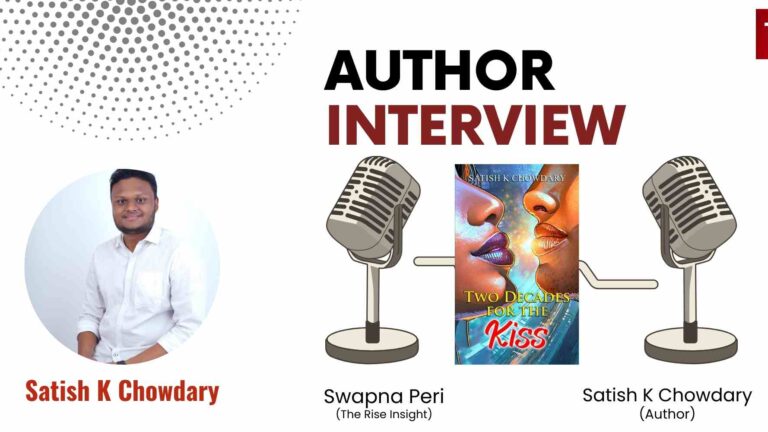
Interview with Satish K Chowdary Author of the book: Two Decades For The Kiss
About The Author: Satish Chandra Chowdary KANITHI, a mechanical engineer and an alumnus of Jawaharlal Nehru Technological University, commenced his career in the corporate world like many of his peers. However, amidst his corporate endeavors, he discovered a passion for storytelling, particularly while engaging in volunteer activities with various NGOs. It was during these experiences that he found his voice as a writer, leading him to pen his debut novel, “Two Decades for the Kiss”. Alongside his engineering background, Satish is also a marketing expert, blending technical expertise with creative flair in his writing. Beyond his literary pursuits, he finds solace in his interests, which include traveling, horse riding, and yoga. Through his debut work and beyond, Satish aims to inspire and captivate readers with his imaginative storytelling. Let’s Talk with Author: Congratulations on your debut book. Swapna Peri: Can you tell our readers about yourself and when did you realize you wanted to write? Satish K Chowdary: I develop a passion for writing at a young age, often influenced by their upbringing and experiences. It’s especially meaningful when that passion is shared within the family, like your connection with your mom. Growing up in an environment that values and nurtures creativity can have a profound impact on one’s desire to write. My mom’s influence may have played a significant role in fuelling this passion, whether through encouragement, sharing her own love for writing, or simply providing a supportive environment where creativity thrives and writing can be a powerful way to express thoughts, emotions, and ideas, and it often becomes a passion for those who enjoy crafting words and creating narratives. Swapna Peri: Your characters, Hashira and Sanjay, share a profound friendship at the core of your novel. How did you develop and portray their relationship to resonate with readers, and were there any real-life inspirations behind their dynamic? Satish K Chowdary: In developing the relationship between Hashira and Sanjay, I drew inspiration from various sources to ensure their bond felt authentic and resonated with readers. Firstly, I explored the dynamics of real-life friendships that I’ve observed or experienced personally. This allowed me to capture the nuances of trust and mutual understanding that define deep friendships. While Hashira and Sanjay are fictional characters, I also incorporated elements from my own friendships and meaningful relationships. Drawing from personal experiences allowed me to inject genuine emotions and experiences into their interactions, making their friendship feel organic and compelling. Overall, the key to portraying Hashira and Sanjay’s friendship was balancing authenticity with creativity, drawing from real-life inspirations while also allowing room for the unique dynamics and challenges that arise in a fictional narrative. Swapna Peri: The setting of Japan’s cultural backdrop plays a significant role in your book which is rare in Indian books. Can you share how you approached researching and incorporating these cultural elements into your narrative, and what aspects of Japanese culture influenced the story? Satish K Chowdary: Japanese culture influenced various aspects of the story, including character behaviours, societal expectations, interpersonal dynamics, and thematic elements. For example, concepts such as honour, respect for elders, the value of tradition, and the contrast between modernity and tradition may have played significant roles in shaping character motivations and plot developments. While it was important to stay true to cultural authenticity, I also ensured that these elements seamlessly integrated into the narrative without overwhelming or distracting readers. The goal was to create a rich, immersive experience that transported readers to the cultural backdrop while keeping the story engaging and relatable. Swapna Peri: How did you balance crafting vivid scenes with advancing the plot, and what techniques do you use to evoke strong emotions in your readers? Satish K Chowdary: I focused on selecting scenes that not only painted a vivid picture but also served to advance the plot or develop characters. Each scene was chosen purposefully to contribute to the overall story arc and keep the narrative momentum moving forward. Strong emotions often stem from authentic character experiences and interactions. I developed well-rounded characters with distinct personalities, motivations, and internal conflicts. By delving deep into their emotions and reactions within the scenes, I aimed to evoke empathy and resonance in readers. I varied the pacing of scenes to create a dynamic rhythm that kept readers engaged. Tension-building techniques such as cliffhangers, conflicts, and unexpected twists were strategically used to evoke strong emotions and keep readers invested in the plot and I crafted scenes that tapped into universal themes and experiences, making it easier for readers to empathize with the characters and emotionally invest in their journey. Themes like love, loss, friendship, and personal growth can evoke powerful emotions when portrayed authentically. Swapna Peri: Why and what made you choose to explore the themes of resilience, forgiveness, and human relationship’s particular themes, and what message or takeaway do you hope readers will gain from Hashira and Sanjay’s journey? Satish K Chowdary: Resilience is a theme that resonates with many people as it addresses the ability to overcome adversity and bounce back from challenges. I chose to explore resilience because it reflects the human experience of facing hardships, setbacks, and obstacles, yet finding the strength to persevere and grow stronger through those experiences. Hashira and Sanjay’s journey showcases resilience as they navigate difficult situations, learn from their struggles, and emerge as stronger individuals. Human relationships are at the heart of many stories because they are central to the human experience. I explored various types of relationships such as friendships, family dynamics, romantic connections, and mentorship to depict the complexities, joys, and challenges inherent in human interactions. Hashira and Sanjay’s journey delves into the dynamics of their friendship, highlighting themes of trust, loyalty, mutual support, and growth. Swapna Peri: Who is your favourite character to write, and why? Alternatively, if choosing a favourite character is challenging, which character demands the most attention and detail from you as a writer? Satish K Chowdary: One such character is Hashira, who is complex and multi-dimensional. Hashira’s journey involves

Interview with Sankarshan Das Author of the book “The Divine Love Memoir”
About the Author Sankarshan Das Author Sankarshan Das is a bona fide spiritual master in the Brahma-Madhva Gaudiya disciplic succession who has been practicing and teaching the science of divine love consciousness (Krishna Consciousness) for over half a century. He has students and disciples on every continent, with over 30,000 people enrolled in his online training program. He regularly travels and lectures in many parts of the world to audiences who greatly appreciate and benefit from his instructions. On the order of his spiritual master, His Divine Grace A. C. Bhaktivedanta Swami Prabhupada, his mission is to deliver the world from chaos by ushering in a golden era of divine love consciousness (Krishna Consciousness) for the re-spiritualization of the entire human society! Questionnaire: Neel Preet: Firstly, Congratulations on your book, “The Divine Love Memoir — How I Discovered The Most Secret Of All Secrets!” What kind of responses are you getting from this book of yours? Please share your experience about this book. Shri Sankarshan Das: On Amazon.com Amazon.in you so many wonderful response from people all over the world. Neel Preet: What inspired you to write this book? What was the impetus behind this work of yours? Shri Sankarshan Das: I was blessed with perfect formula for spiritual perfection. And I wanted everyone all over the world to become free from the miseries of material existence by learning how they could qualify to return to their original home in the spiritual world. Neel Preet: You’ve given a very interesting title to your book, which is very thought provoking too so, what made you go for this title for your book? Shri Sankarshan Das: This phrase from Lord Krishna. He states in the Bhagavad-Gita, Chapter 9, Text 2 that this knowledge He reveals is the most secret of all secrets. My book connects my readers with Lord Krishna’s perfect teachings. Neel Preet: What was your mind-set, while working on this book? What do you expect the readers to extract from this book? Shri Sankarshan Das: How I came to Krishna consciousness is a most amazing story. I wanted to share it with the whole world so that whole world can now become peaceful and happy by coming to Krishna consciousness. Neel Preet: How is this book of yours different from the other titles of the same genre? Shri Sankarshan Das: My path of spiritual awakening is unique. I don’t know of anyone else who came to Krishna consciousness the way that I did. Neel Preet: Next, I would want you to tell us about some of those writers, who had inspired you and whom you follow! Shri Sankarshan Das: I was inspired by Lord Krishna when He said, “Arise thou and fight the battle.” I knew that He was speaking to me telling me to fight the battle to lead the world out of chaos. Neel Preet: Which segment of readers is your primary target through this book of yours? And, how is your book relevant in the present-day scenario? Shri Sankarshan Das: My book is for all spiritual seekers and for persons who want to bring an end to all the chaos that is currently ravaging Planet Earth. My book is most relevant in today’s world in which there are practically no qualified leaders and the world society is gradually disintegrating into total chaos. Neel Preet: Is there any message that you would like to convey to your readers? Or any piece of advice, which you would like to give to the readers out there! Shri Sankarshan Das: You are not your material body, which is temporary full of ignorance. You are instead an eternal spiritual being, servant of God, who is eternal, full of knowledge, and full of bliss. Neel Preet: Are there any other books being worked by you? Please let us know about your future projects. Shri Sankarshan Das: Not at the present time. Neel Preet: Thank you so much for answering all my questions. All the very best to you for future and your book too! Shri Sankarshan Das: Thank you very much! Hare Krishna. To buy books: Amazon Link

Something Big is Coming: Get Ready for PINEAL by Sujay Das
From the author who brought you “UNORTHODOX,” a novel that received 100% positive reviews and has been nominated for the Sahitya Parsh Awards, comes a spine-chilling thriller that will keep you on the edge of your seat! Brace yourself as Sujay Das is back with another banger that promises to be an unforgettable experience, just in time for the new year. When a family moves into a seemingly perfect house, they are soon confronted with strange and terrifying paranormal activities. What lies beneath the surface? Is the house truly haunted, or is there something more sinister at play? Prepare to uncover the dark secrets in this suspenseful and gripping horror fiction. The novel is currently in its final stages, and according to the author, “PINEAL will be scary, really scary.” Get ready for a horror story that will truly give you chills. Get ready for an intense ride with “PINEAL.” With every turn of the page, the tension escalates, and the horror becomes more real. Sujay Das weaves a tale of fear, mystery, and suspense that will haunt you long after you’ve finished reading. Something big is coming in the new year, and it’s going to be unforgettable. Stay tuned for the scare of your life! Also Read: Unorthodox by Sujay Das