
Soli Osman’s ‘Under the Mango Tree’ portrays The Quiet Courage of a Mother Who Never Gave Up
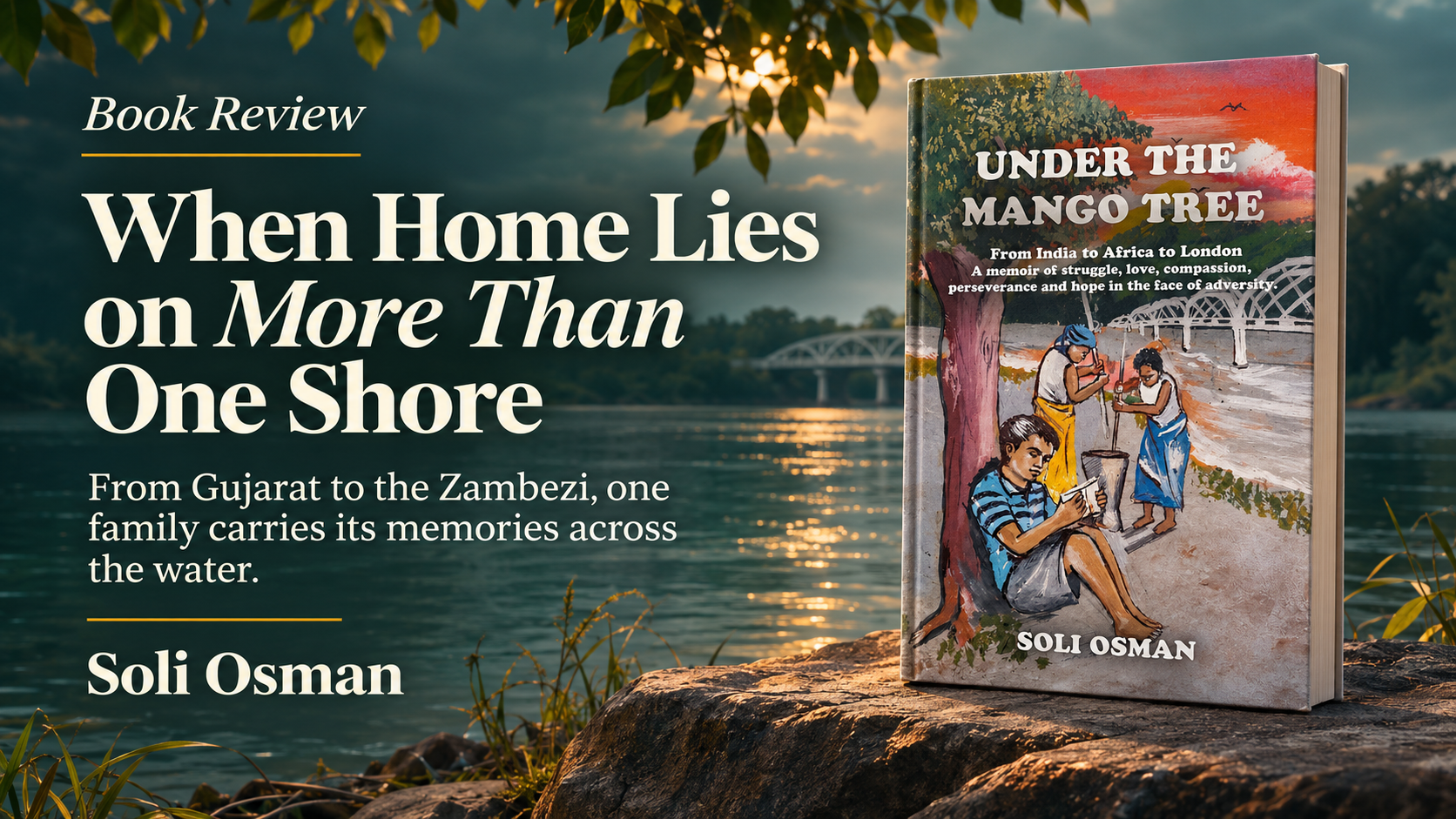
How much can a mother lose before she begins to lose faith in the future? In Under the Mango Tree, Soli Osman approaches that question through Zebee, a woman whose life is shaped by an early marriage, rejection, financial dependence, and the fierce wish to protect her son. The result is a moving memoir that gives motherhood a difficult, human face. Its tenderness comes from watching someone continue to care when caring requires almost everything she has.
The opening takes us to Chemba in March 1953. A child is born near the Zambezi, workers celebrate beneath a mango tree, and the long-awaited rain arrives. There is movement, sound, and relief in the scene. Yet inside the house, Zebee’s happiness is mixed with fear. She has already known the loss of children and the coldness of her husband. The contrast between public celebration and private anxiety immediately gives the book emotional depth.
The girl behind the mother
One of the most affecting choices in the narrative is its willingness to return to Zebee’s childhood. Before readers see her as a devoted mother, they meet a girl in Bhanvad who cooks, manages household responsibilities, and cares for relatives. Her education ends early. Marriage arrives when she is barely thirteen, before she has had much opportunity to understand herself or imagine an independent life.
These pages help explain her later vulnerability without reducing her to helplessness. Zebee grows up in a world where a girl’s worth is closely connected to the household she serves and the marriage she maintains. When that marriage collapses, the hurt is therefore larger than a personal disappointment. She must also face the judgment of people who assume that a woman’s failed marriage must reveal some failure in the woman herself.
Osman handles this pressure through ordinary exchanges and remembered advice. Wedding preparations, family expectations, and instructions about pleasing relatives reveal how obedience becomes part of everyday life. The ceremonies have colour and warmth, but the young bride’s fear remains visible. Readers can appreciate the richness of the community while also noticing the small space it leaves for a girl’s own wishes.
Love expressed through small sacrifices
The relationship between Zebee and Salman is strongest when the book stays close to daily life. A particularly memorable scene involves food rather than a dramatic speech. Salman has been asking for a bicycle. After hearing neighbours discuss his mother’s sacrifices, he notices what she serves him and what she eats herself. His decision to stop asking for the bicycle tells us how quietly a child can begin to understand love.
The scene works because it allows recognition to grow from observation. Zebee does not announce that she is sacrificing. Salman notices the difference between their meals, and the reader notices it with him. A simple domestic moment becomes an account of dignity, shortage, and tenderness. It also complicates childhood innocence. Salman is loved deeply, but he is learning early that his needs have a cost.
Her teaching, careful spending, and concern for his schooling give that love a practical form. She wants him to have choices she did not have. Education becomes one of the ways she imagines a better future, even when she cannot fully control the institutions involved. The book understands that ambition sometimes begins in the mind of a parent who has been denied the same opportunity.
Strength that needs companionship
Zebee’s resilience is made more convincing by the fact that it is not constant. After her divorce, she becomes withdrawn and struggles to imagine a meaningful life. Her distress is given room on the page. That matters because a portrait of uninterrupted courage would make her less believable. Here, strength grows unevenly, helped by affection, encouragement, and the responsibility she feels towards her child.
Donna Maria is especially important in this part of the memoir. She listens, challenges Zebee’s despair, and brings a wider understanding of women’s lives and colonial injustice. Their friendship gives the story an emotional relationship beyond motherhood. Zebee receives care as well as giving it. For a woman so often judged by what she can provide for others, that companionship has real value.
Other relationships widen the circle. Antonio Thuka introduces Salman to the natural world and offers a dependable presence. Aybee and the grandparents help create moments of safety and pleasure. The memoir therefore allows readers to see a child being sustained by several kinds of affection. Family has importance, but kindness is not confined to formal family roles.
The courage to let a child leave
One of Zebee’s hardest tasks is accepting that the future she wants for Salman may take him far away. His chance to study abroad brings hope, but it also brings separation. The preparations for departure are filled with practical concerns and unspoken fear. A meal, a glass of milk, and a goodbye become emotionally charged because both mother and son know that familiar life is ending.
The later British chapters deepen this bond through absence. Salman cannot easily tell Zebee how unhappy or insecure he is. His letters soften what he experiences, partly to protect her. This is a painful and recognisable reversal: the child she has tried to protect now tries to shield her from his suffering. Their closeness survives, but distance changes the way they express it.
As Vicky becomes important in Salman’s life, the memoir opens another question about love. Can a parent make room for a child’s choices when those choices cross familiar cultural boundaries? Zebee’s response gives the story some of its most generous moments. Her concern for his character and happiness becomes more significant than the opinions other people might hold.
What stays with the reader
- Zebee’s courage is shown through work, decisions, and repeated acts of care.
- The mother and son relationship develops as Salman begins to understand her sacrifices.
- Friendship gives Zebee support when family expectations leave her isolated.
- Cultural detail helps explain the pressures surrounding private choices.
Under the Mango Tree moves beyond this central relationship into politics, migration, and hardship in Britain. Readers seeking only a closely focused family memoir may find some historical passages more expansive than expected. Even so, Zebee remains the emotional foundation. Her presence gives the wider journey a personal meaning and keeps its questions connected to someone the reader has come to know.
For readers drawn to stories of mothers, difficult childhoods, and the patient work of rebuilding a life, this is a rewarding book. Its most lasting achievement is the way it makes everyday care visible. Long after particular events have passed, we remember a woman making room for her son’s future while struggling to secure her own. The hope she protects is never effortless, which is why it matters.
Find the book on Amazon