
Awadh: Soil, Memory, People – A Journey Through the Land, Memories, and Traditions We Leave Behind
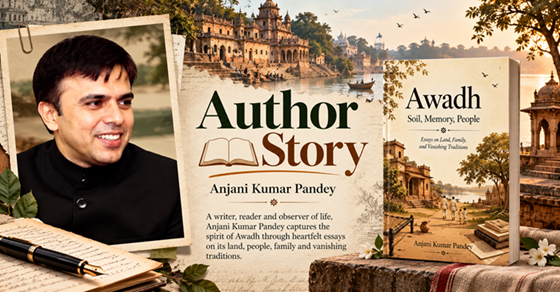
Anjani Kumar Pandey’s book explores the emotional connection between people, their roots, and the traditions that shape their lives.
Some places never really leave us, no matter how far we travel. They remain in our memories, in the stories our grandparents told us, and in the small traditions we grew up watching. This feeling of belonging forms the heart of Awadh: Soil, Memory, People, a book by Anjani Kumar Pandey that brings readers closer to the land, culture, and memories of Awadh.
Through essays about family, traditions, and village life, the author explores a world that continues to live in people’s hearts, even as time changes everything around them.
The book reminds us that a village is much more than a collection of houses and roads. It is a place where generations have lived, celebrated festivals, shared happiness, and faced difficulties together. Every old tree, temple courtyard, and familiar pathway carries memories that connect the past with the present.
One of the most touching ideas in the book is the relationship between people and their ancestral land. The author describes the village deity not simply as a figure worshipped inside a temple but as a presence felt throughout everyday life. From sacred threads tied around an ancient banyan tree to offerings shared during prayers, these customs represent the beliefs and emotional connections of a community.
The book also remembers the voices of women singing Malhar to welcome the rain, the joyful laughter of children, and the changing colours of the countryside. These ordinary moments become important because they represent a way of life that is gradually disappearing.
For many people who have moved away from their hometowns, such memories can feel especially personal. The streets may have changed, familiar faces may no longer be there, and old houses may stand empty. Yet the connection to one’s birthplace often remains strong.
Anjani Kumar Pandey brings his own cultural understanding to this exploration. Born in Pratapgarh and raised in Prayagraj, he studied at Allahabad University, NALSAR Hyderabad, and IIM Lucknow. After joining the Indian Revenue Service in 2010, he spent over a decade in government service before moving into the corporate world.
Despite his professional journey, writing has remained an important part of his life. His continued interest in literature, nature, and the environment is reflected in the subjects he chooses to explore.
Awadh: Soil, Memory, People is also a reflection on what happens when traditions slowly fade. The author encourages readers to recognise the importance of preserving stories, cultural practices, and memories before they disappear from everyday life. Perhaps the book’s most meaningful message is that our ancestors remain connected to us through the values, customs, and memories they leave behind. In a world constantly moving towards something new, this book invites readers to remember where they came from. It reminds us that progress and remembrance can exist together.
Ultimately, Awadh: Soil, Memory, People is a tribute to belonging, family, and the enduring emotional relationship between people and their homeland.