
Book Review: Paramatma Ki Masti by Subhash Gupta
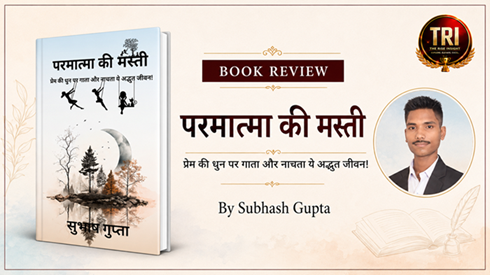
Paramatma Ki Masti by Subhash Gupta is a simple, thoughtful, and spiritually refreshing book that talks about one of the most common problems of modern life—our habit of worrying too much. The book does not try to give complicated philosophical lessons. Instead, it speaks in a friendly and direct way about happiness, peace, faith, love, acceptance, and the art of enjoying life.
The central message of the book is very simple: life is meant to be lived with joy, but human beings often make it difficult by carrying unnecessary worries, fears, expectations, and social pressures. The author suggests that if we change the way we look at life, we may discover that happiness is not as far away as we think.
From the very beginning, the book creates a personal connection with the reader. The introduction explains that many people forget their natural sense of “masti,” or joyful freedom, because they become too involved in tension and worldly concerns. According to the author, we are so busy thinking about problems that we often forget why we are here and how beautiful life can be.
One of the most interesting things about Paramatma Ki Masti is its language. The writing is not heavy or academic. It feels more like a conversation with someone who is trying to share lessons from personal observation and experience. This makes the book easy to understand even for readers who do not usually read spiritual or philosophical books.
The author talks about God and spirituality in an open and inclusive way. He does not restrict his discussion to one religion or one religious identity. In the introduction, he refers to figures such as Ram, Krishna, Mohammad, Christ, Mahavir, and Buddha, suggesting that people may call the divine by different names, but the deeper truth behind these names is connected. This makes the book broader in its approach and gives it a universal tone.
The chapter titles themselves show the practical and interesting style of the book. Chapters such as “Paramatma Ki Mauj Mein Mauj,” “Aao Sharab Piye,” “Jo Hoga Dekha Jayega,” “Saral, Sahaj Ek Shanti Mantra,” “Bhakti Hi Masti Hai… Kaise?”, “Taalmel Bithao Jeevan Sudharo,” “Prem Mein Beh Jao,” “Ram Bane Ya Ravan,” “Racho Apna Bhagya,” “Andhkar Se Prakash Ke Darshan,” “Aam Khatte Hain… Swikar Karo,” “Shakti Ka Upyog,” and “Khud Ke Driver Bane” immediately create curiosity. The titles do not sound like traditional spiritual lectures. They sound lively, relatable, and connected with everyday life.
A major strength of the book is the idea of acceptance. Many people spend a large part of their lives fighting against situations that they cannot control. When things do not happen according to our expectations, we feel disappointed, angry, or helpless. The author encourages readers to develop a more balanced attitude. Acceptance here does not mean becoming weak or giving up. It means understanding the difference between what we can change and what we need to accept with maturity.
This idea can be seen even in a playful chapter title such as “Aam Khatte Hain… Swikar Karo.” The message is useful because human beings often create more suffering by refusing to accept reality. Sometimes peace begins when we stop arguing with every situation and learn to respond to life in a calmer way.
Another important idea in the book is self-responsibility. The chapter “Khud Ke Driver Bane” is especially meaningful because it encourages the reader to take control of his or her own life. We often blame other people, circumstances, society, destiny, or even God for our dissatisfaction. But real change starts when we look at our own habits, choices, reactions, and thoughts.
The author uses the example of becoming the “driver” rather than remaining a passive passenger in life. This is an effective comparison. A person who is always controlled by habits, anger, fear, greed, or other people’s opinions may feel as if life is driving him instead of the other way around. The book encourages readers to observe their habits slowly and consciously.
What makes this message practical is that the author does not suggest that change will happen instantly. He presents self-awareness as a gradual process. First, we notice our habits. Then we understand how they control us. Slowly, we stop following every impulse. This approach feels realistic because personal growth usually happens through small changes rather than sudden miracles.
Love is another important theme in Paramatma Ki Masti. The chapter “Prem Mein Beh Jao” suggests that love can transform the way a person experiences life. Love in this book is not limited to romantic relationships. It can be understood as a wider feeling of compassion, connection, forgiveness, and openness toward life.
The author also explores the struggle between our better and darker tendencies through the idea of “Ram Bane Ya Ravan.” Every person carries the ability to make positive as well as negative choices. Instead of seeing good and evil only as characters from traditional stories, the book encourages the reader to see them as qualities within the human mind.
This makes the spiritual ideas easier to relate to daily life. A person becomes “Ram-like” when choosing truth, patience, kindness, responsibility, and balance, while anger, ego, selfishness, or harmful behavior may take a person in the opposite direction. The focus remains on personal choice.
The concept of creating one’s own destiny also appears in the book. “Racho Apna Bhagya” reminds readers that although everything in life may not be under our control, our attitude and actions still matter. We cannot always choose what happens to us, but we can choose how we respond. This message gives the book a motivational quality without turning it into a typical self-help manual.
The movement from “darkness to light” is another familiar spiritual idea that the author presents in simple words. Darkness can represent confusion, fear, negativity, ignorance, or emotional disturbance, while light represents awareness and clarity. Instead of giving abstract explanations, the author keeps connecting these ideas with normal human behavior.
One of the most touching aspects of the book is its repeated reminder that peace and joy may already be available to us. We spend so much time searching for happiness outside ourselves—in money, success, approval, possessions, or future achievements—that we forget to experience the present moment.
The author suggests that nature itself can teach us this lesson. When a person sits quietly among greenery, observes the sky, trees, rivers, or the vastness of the world, many everyday worries can suddenly appear smaller. Such moments remind us that life is much larger than the problems occupying our minds.
The book also uses the image of a river meeting the ocean. Different religions, traditions, and paths may appear separate, just as rivers travel through different places, but eventually they may point toward the same deeper reality. It is a simple image, but it communicates the author’s inclusive spiritual outlook clearly.
Stylistically, Paramatma Ki Masti is best suited to readers who enjoy conversational writing. It does not depend on complex vocabulary or long theoretical arguments. Its strength lies in familiarity. The author uses ordinary situations and simple comparisons to explain larger ideas. At times, the tone feels like advice from an elder, friend, or spiritual companion rather than a formal teacher.
The book may especially appeal to readers who feel mentally tired, worried, confused, or trapped in repetitive thoughts. It asks readers to question whether every worry deserves so much attention. It also reminds them that spirituality does not always have to mean seriousness, rituals, or difficult practices. There can also be joy, simplicity, laughter, love, and freedom in spiritual living.
Perhaps the most memorable quality of Paramatma Ki Masti is the way it connects spirituality with enjoyment. The title itself reflects this idea. “Masti” usually makes us think of fun, freedom, and a carefree state of mind. By connecting this word with “Paramatma,” the author presents spirituality not as a burden but as a celebration of life.
Overall, Paramatma Ki Masti by Subhash Gupta is an easy-to-read and meaningful book about finding peace within everyday life. Its message is not that problems will disappear, but that our relationship with problems can change. Through acceptance, love, faith, self-awareness, and conscious living, we may reduce unnecessary suffering and experience life more fully.
The book does not ask readers to escape the world. Instead, it encourages them to live in the world with a lighter mind. It reminds us that sometimes happiness does not require adding more things to life. Sometimes it begins by removing unnecessary fear, worry, ego, and resistance.
For readers looking for a simple spiritual book with practical life lessons and an optimistic approach, Paramatma Ki Masti can be a comforting and enjoyable read. It leaves the reader with an important thought: perhaps life itself has always contained enough beauty and joy; we only need to change the way we see and experience it.
Buy this book on Amazon : Link