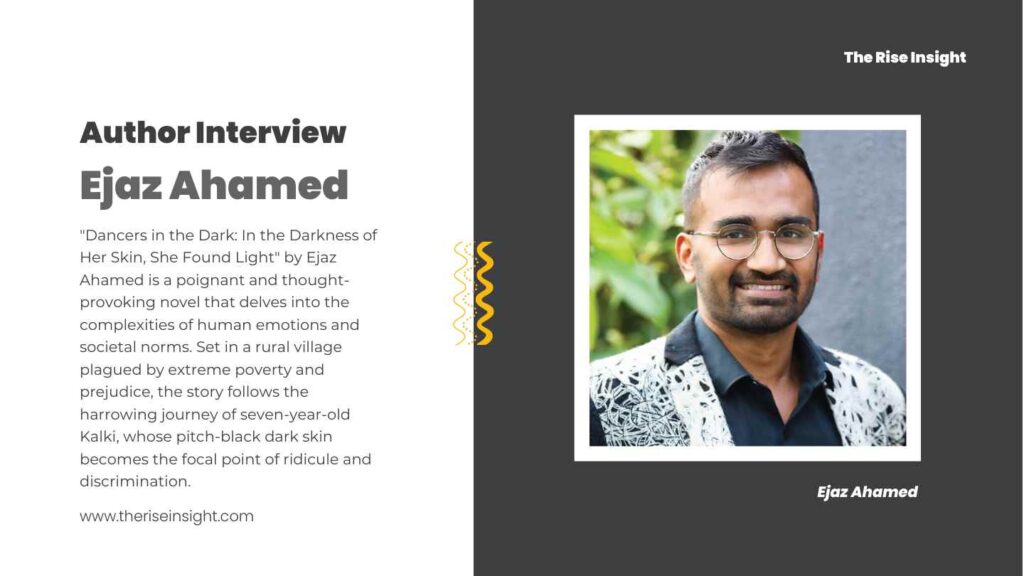
The Rise Insight: First of all, congratulations on the tremendous success of your book, “Dancers in the Dark.” It has garnered quite a following since its release. How do you feel about its overwhelming reception? Ejaz Ahamed: Thank you so much. I honestly am so grateful that people are connecting with the characters I have written about and the emotional journey they take the reader on by sharing their deepest highs and lows. Its nerve wracking not knowing how people will respond to your work so having had such positive feedback early on is such a blessing and deeply appreciated The Rise Insight: Could you share the inspiration behind the creation of “Dancers in the Dark”? What were the significant events or experiences that led you to write this book? Ejaz Ahamed: Being a person of colour, I have often felt a lot of the setbacks and discrimination on my own skin that the main characters have to battle in the book. So, although the characters are fictional their stories and emotional journey are completely authentic. I wanted to convey the extreme pressure one can feel growing up in a society that places so much importance on being fair – whether it is deliberate or not. A society where it is so ingrained that the fairer your skin the better job, marriage and life prospects one can attain. The Rise Insight: As an author, do you believe “Dancers in the Dark” effectively captures your intended message, or do you anticipate exploring further themes in your future works? Ejaz Ahamed: The strongest message I wanted to send is we are all worthy exactly the way we are, no matter the colour of our skin. We are all good enough to be anyone we wish to become and gain the respect of others, but first we must accept and love ourselves just as we are. I spent many years writing and re writing many chapters until I was convinced that the key feelings I wanted to capture can be felt by readers when they picked my book up. The Rise Insight: The abstract nature of “Dancers in the Dark” quickly captivates readers. Did you consider other formats or styles before deciding to write it as prose? Ejaz Ahamed: I definitely did but my 2 main goals for the writing style was I wanted the language to be as descriptive and emotive as possible so that readers felt like they were part of the story and were right there in the book with the characters in the situations they faced. The other goal I had was to ensure that even side characters had fleshed out backstories. The last thing I wanted was just describing a chain of events linked to characters without explaining their motivations for their actions and thoughts. Even if there was a character in the book the reader disliked I wanted to explain why they behaved the way they did. The Rise Insight: Though difficult to categorize, if you had to assign a genre to “Dancers in the Dark,” how would you describe it? Ejaz Ahamed: I would assign the genre of literary fiction to my book. The Rise Insight: As the author of “Dancers in the Dark,” have you been influenced by any other writers? Are there specific authors who have inspired your work? Ejaz Ahamed: Arundhati Roy author of God of Small Things and Khaled Hosseini – A Thousand Splendid Suns, have been a huge source of inspiration for me in both the writing style and the emotive way the describe events, emotions and characters. Their works are magnificent and left me thinking about their words long after I finished reading their books. I wanted to write an emotive piece to challenge people to reflect on their own place in society and the way they interact with others. Everyone is on their own journey and we can’t judge others harshly as we don’t know what inner battles, they may be fighting despite appearing fine on the surface. The Rise Insight: “Dancers in the Dark” has established you as a promising writer. Can we expect more literary offerings from you in the future? Could you share any insights into your upcoming projects? Ejaz Ahamed: I am currently working on a few plotlines I have very strong ideas for them. I am usually inspired the most when something triggers an emotion that I feel I absolutely have to express and convey through characters that people will be able to relate to. But for now, I am just relishing listening to people’s feedback about the current novel and super grateful for the overwhelming support I have received from those who have already read Dancers in the dark. The Rise Insight: Balancing subjectivity and objectivity can be challenging when selecting situations and crafting them in “Dancers in the Dark.” How did you approach maintaining an objective perspective throughout the book? Ejaz Ahamed: I tried to also keep in mind that even though my background is Indian and I understand Indian culture regarding colourism, caste and class systems, people from other parts of the world may find it completely foreign. So, I tried to be as descriptive as possible and put myself in the shoes of someone reading my book who has spent no time in India at all. The Rise Insight: The title “Dancers in the Dark” carries multifaceted associations. What is the story behind its selection for your book? Ejaz Ahamed: I yearned for a title that immediately instilled a sense of futility, sadness and intrigue that also alluded to the skin colour of the main protagonist. It took me a while to arrive at the final title which refers to a scene in the book where the main characters can for the first time experience the freedom to be themselves without persecution from society in the darkness of a room hidden away in the middle of a forest. The futility of something beautiful and joyous occurring in a place
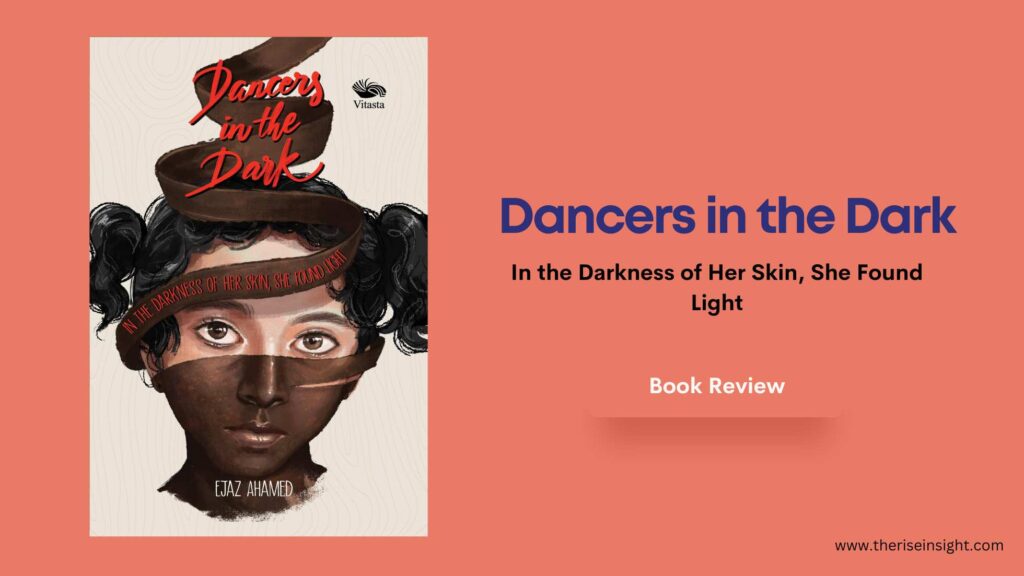
“Dancers in the Dark: In the Darkness of Her Skin, She Found Light” by Ejaz Ahamed
“Dancers in the Dark: In the Darkness of Her Skin, She Found Light” by Ejaz Ahamed is a poignant and thought-provoking novel that delves into the complexities of human emotions and societal norms. Set in a rural village plagued by extreme poverty and prejudice, the story follows the harrowing journey of seven-year-old Kalki, whose pitch-black dark skin becomes the focal point of ridicule and discrimination. Through a gripping narrative, the author skillfully weaves a tale of resilience, self-discovery, and unexpected twists that captivates readers from start to finish. Karthi as a brother, stands out as his sister’s rock who loves her without any differentiation. While this does warm the hearts of the readers, it also shows that love as a bond does not look at the color of any skin or how dark or light it is. At the same time, Karthi alone stands in contrast to the rest of the society, who shuns and considers the same Kalki as bad luck. At the same time, Kalki’s resilience and determination at times break the stereotype and show her to be the rebel that any such society would need. Ahamed also hints towards the prevalent practice of untouchability and the hatred prevalent based on the color that still forms a significant whole of people’s lives. Through these characters, he explores the psychological impact it can have on a young child’s impressionable mind and the extent to which his personality can be scarred to turn out to be flawed. Simultaneously, he also blends the Indian element of gender, where the condition to be fair and clear-skinned is quintessential to finding the desired match for marriage for a girl. Through Priya’s character, he ironically shows how nothing else matters when a person’s color is highlighted. As disturbing as it may be for once, it is also a stark portrayal of reality. Kalki envisioning her fate in the same light is only the introduction to the impressions her mind has due to her being shunned for years too. As Kalki and Karthi navigate their way through the challenges thrown their way, they encounter a range of supporting characters who leave a lasting impression on the reader. The most powerful character is Yashoda, their mother, who is an embodiment of resilience, determination and willpower and has the courage to smile even in saddening circumstances. Her power to stay hopeful and still think of the future of her children in abject poverty shows the strength of her character. Despite the problems in her life and her being alone in the struggle, she shows the strength of a man and plays the role of both parents for her children where and when required. The festival itself is described with vibrant and colorful prose, transporting readers to the heart of the celebrations. As the village comes alive with music, dance, and joy, it serves as a stark contrast to Kalki’s struggles, emphasizing the stark realities of her life. This contrast is emblematic of the broader theme of hope amidst adversity, reminding readers that even in the darkest moments, there are glimpses of light. These spiritually charged sequences provide moments of reflection and introspection, enriching the narrative with profound insights into the human spirit. The novel’s pacing is well-balanced, with moments of tension and quiet introspection carefully interspersed throughout the story. The author’s ability to evoke a wide range of emotions ensures that readers remain deeply engaged with the characters and their struggles. The plot twists are unexpected yet plausible, keeping readers on the edge of their seats as they eagerly anticipate the next turn in the siblings’ journey. The twists of the novel may be unexpected but they light the readers up with the hope that the darkness will lead to bright light at the end of the tunnel. One of the early instances is Talaivar’s intervention in saving Kalki from a beating and further shunning. “Dancers in the Dark: In the Darkness of Her Skin, She Found Light” is a captivating and thought-provoking novel that shines a spotlight on the enduring human spirit in the face of adversity. Ejaz Ahamed’s expert storytelling and vivid prose bring to life a world of struggles, hope, and redemption. The novel’s exploration of identity, self-acceptance, and societal prejudices makes it a timely and relevant read in today’s world. The novel leaves a lasting impression with its powerful message of embracing one’s true self and finding strength within. Kalki and Karthi’s journey is a testament to the resilience of the human spirit, reminding readers that even in the darkest of times, there is always a glimmer of light to guide the way. “Dancers in the Dark” is a must-read for those seeking a profound and touching exploration of the human condition and the power of love, determination, and self-discovery to overcome life’s most formidable challenges.