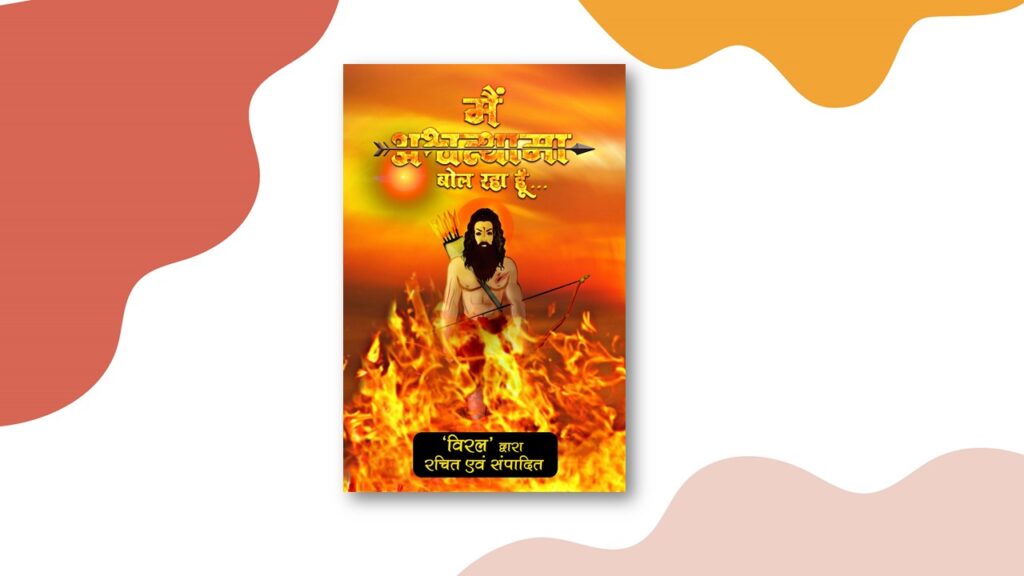
Often times, the mythologies presents us with those stupendous stories, which probably has the answer to everything on this planet. Well, this remarkable title, “Mai Aswatthama Bol Raha Hoon” by Author Amaresh Prasad Bhandary is one such religious and mythological work, which presents the readers with several insights that answers many questions! The book is based upon one of the greatest event that ever took place on the face of the earth, i.e. the War of Mahabharata – a war between the good and the evil, before the commence of the Kaliyug. Mahabharata, which is a symbol of eternal religious faith, has a lot to teach us. As presented by the author in this book, it is not only the teachings of Lord Krishna but also the roles of vital characters like Aswatthama, Sanjaya, Dhritarashtra, Shakuni, Bhishma Pitamah, Kauravas and the Pandavas has a lot to tell us. Amresh Prasad Bhandari, who is the author of the composition titled “Mai Ashwatthama Bol Raha Hu”, is an assistant professor by profession. Although the subject and language of his field of work is English, but for the present composition, the author chose Hindi as the language and the Epic Mahabharata, a symbol of eternal faith, for the subject matter, in which Shri Krishna himself fought with his mouth in the Dharma Yudh of Kurukshetra. Vimukh had given the knowledge of eight chapters of Gita to Arjuna! The creator is related to the holy soil of the present Jharkhand state, which has been the birthplace and Karmabhoomi of immortal freedom fighters like Sido, Kano, Chand Bhairav and Lord Birsa Munda. As a teacher, in addition to contributing to the society through his valuable articles and statements in various national level seminars, webinars etc., he has been leaving the identity of his writing in various magazines and through the present book creator. It is the first piece of poetry composed. Apart from writing work, the creators are also active in social media like Facebook and ‘THE VISION’ also used to run a YouTube channel and in the early stages of the Covid-19 epidemic, to make the society aware by giving information from a factual and scientific point of view related to its prevention. Apart from uploading a lot of videos, he has been expressing his opinion on various current burning issues through videos. The author has also made a mark as a poet at several instances, which makes him to post his poetry on Facebook from time to time! Coming under the category of ‘Religion & Mythology’ this epic title, “Mai Aswatthama Bol Raha Hoon” is written from the perspective of Ashwatthama, who happens to be one of main characters of the Mahabharata War and the son of great teacher, Guru Dronacharya. Through this book, the author describes the side of Ashwatthama, who himself participated in the Mahabharata war as a warrior from the Kaurava side, wandered through the ages in search of peace, taking the unbearable agony and pain of an incurable wound on his forehead that is the symbol of punishment for his merciless offence. He though a guilty himself, is describing the background of the Mahabharata war and the innumerable deceits those paved the path for the great devastation and the deceitful actions during the battle as well. He presents the post-war trauma and distorted picture of Hastinapur Empire caused in the name of Dharma Yuddha. It is also necessary to note that generally, Shakuni and Duryodhana are held responsible for the devastating war between the brothers. However, in this particular interpretation the narrator, through his analytical power and logical findings blames many characters for the Mahabharata War, it does not matter whether they are Dharmaraj Yudhishthira or Kurukul Gaurav Bhishma Pitamah, all been in one way or the other, responsible for the great destruction! The way this book has been composed by the author is something truly incredible as the author has very intelligently presented another aspect of looking through the events of the Mahabharata War. We are often stuck up with only one way of looking towards the things of concern and that is the way we have been taught. Whereas, in this title the author has presented an amazing analysis of the events and has dared to tell the same story from other’s perspective, which is something indeed reading worthy for the readers. The book is of great significance as it also teaches us to look beyond our scope and to enhance our vision. Through this phenomenal title, Mai Aswatthama Bol Raha Hoon one can learn to interpret things of concern into various other ways and understand the meaning of common things with a deeper sense. Truly, this well-crafted title carries a lot to teach to the readers and the subject matter presented by the author is something that makes this book even more Reading Worthy! The book deserves a chance by the readers for sure as the hard work and the intelligent interpretation of something common has been carried out in the most uncommon manner by the author. The writing carried out throughout this book is also something that compels the readers to pick up this title. It would not be wrong to mention that a book is this bound to be loved by the readers all across for ages.Book Book Link: https://www.amazon.in/dp/9394607129/
Self-Love : Priorities your happiness first
self love
REALITY And IT’S Manifestations By Nirbhai Singh
Divided into 7 enlightening chapters, Reality And Its Manifestations (Sikh Philosophical View) is a one of a kind book that strikes a good balance between providing information and enriching the reader with knowledge of a higher kind that cannot be measured but will enhance the quality of life by improving the manner of living for the one who puts the teachings of this book into whole hearted practice. Acceptance remains the key to creating a free and fair space for understanding of the knowledge that is both sophisticated and simple but also empowering to the reader in ways more than one. It helps them to understand their selves better, to create a sense of understanding with the world and to improve the knowledge of the Higher Power that is a positive and persistent existence, Omniscient, Omnipotent and All Powerful. This book looks at the Sikh world view in an exploratory manner through its epistemological, metaphysical and ethical aspects. The idea is to convey the essence of the Guru Granth Sahib in the 7 chapters of this book although the true grip over the teaching of the Guru Granth Sahib can only be learnt through proper understanding and actual application over the lifetime of an individual. Yet, this book is highly handy and helpful in providing a sort of crash course or basic and general information about the Sikh religious philosophy which is an indirect invitation to learn, understand, think and reflect upon the ways of the world and the nature of the Creator. The book opens with a list of abbreviations and a key to transliteration of the pronounciation of the alphabets of the Gurmukhi, Devanagri and the Arabic and Persian used in this book. This is followed by a page on Punjabi phonemes or Consonant/ Vowel Symbols. It is at the preface of the book that one is struck by the instinctive logic of questioning and deep reflection that the author takes the reader into through his rhetorical and quizzical questions. These do not interfere with the rational manner of individual thinking but is put in a pattern that sets the reader to explore new avenues of thought and seek for inner development of the mind and the soul in a whole hearted and dedicated manner. This makes the entire reading experience of the book highly engaging and enriching. The startling point remains that the book provides a whole new take on the way in which Eastern, Oriental or Indian philosophy and the basic tenets of Sikh philosophy are understood and looked upon. The combination of Western Socratic and Indian mystical leanings is what according to the author makes Sikh philosophical view so interesting. This book focuses on restoring the multiplicity to unity of reality. It differs from previous works in the sense that these provide literal meanings and exegesis which has been done over too many times. This makes this book serve a new purpose of presenting a new side through a path less treaded. It also reasserts the role played by Guru Nanak in teaching and propagating the Sikh beliefs and practices while acknowledging the influences of the Indic religions and Islam. The research questions posed at the very outset of the book are pertinent and have been posed in a timely manner. The book follows a gradual manner of progression in which the ideas flow from one aspect of Sikh teachings and philosophy to another without overburdening the reader. This makes the book highly engaging for even beginner level readers. As a non-fiction the book does not use any particular characters to convey the ideas but the narrative maintains an omniscient point of view. This creates a manner of story telling about a topic that is both interesting and also sensitive to handle. It is the sense of balance throughout the text that ensures that the ideas are well propounded and made easy to grasp for the reader. However, the book is meant to be devoured slowly and is definitely worth reading more than once if a reader wants to understand and implement the ideas in practical life. While there is some philosophical jargon to some extent, most of the book follows a simple and easy vocabulary that can be easily followed while the moderate pace makes for a systematic presentation of thoughts, logical flow of arguments and simple arrangement of ideas that make up a patterned representation of the well -researched pointers that the author wishes to draw. The book is quite lengthy at 370 pages although that is not unusual for book of non-fiction and considering the fact that the book is full of information, astounding ideas and proper presentation of new found knowledge. The concluding few paragraphs is highly enticing considering the fact that the author argues that Sikhism is a subaltern movement in which the mission of Guru Nanak was to reach out to the downtrodden and it is this idea of passing on his teachings in theory and in practice that the book encourages the reader to imbibe.
The Roller Coaster: Raghu’s Journal By Avaneesh Srivastava
A unique plotline helps sustain not only the story of the novel but also grabs the attention of the reader and takes him through a journey that is full of freshness, beauty and hope. Along similar lines is the plot of The Roller Coaster which has barely anything to do with the adventuresome ride but is in fact a term used synonymously to the ups and downs of life. It is akin to struggle and the challenges of facing hassles in life. The book is more like a journal entry but within the framework of a novel that is told in the first- person narrative point of view by the author-narrator. The subtitle: An Uncommon Story of a Common Man explains the epigram at the start of the book that says: from Difficulties to Honors. This can be noted in the initial pages of the book that comes with four quotes from the author regarding the right attitude to facing the challenges of life which serve as mantras. For example: “Your every pain, Every Bone Crush n Muscle Break… Would pen a story on its own, in Ur Journey’s Trek… U gotta Exhaust to the Hilt, keeping all things at Stake…” This gives the reader the understanding that the storyline in the novel is something inspiring and full of zeal to fight against the odds, be patient and remain persistent. It creates the notion that challenges are a humbling experience that if taken in the right manner can create a springboard effect which will allow individuals to rise and shine. Technically, the book is divided into 16 chapters of unequal length. At 156 pages the book is moderately long and is on the shorter side though the content of the book is lofty that makes for a long, time- consuming read. The book is not one that can be skimmed through and read in parts and bits. It is meant to be devoured to the extent that the book can be understood and its core themes and messages can be underlined and imbibed in everyday life. Through the world of a fictional narrative, the book helps spread moral values of patience, perseverance and positive outlook towards life by looking at the world through the lens of a single individual who is juggling the myriad facets of the roles that he plays in life along with the challenges of life to overcome them and meet a better end. He is the everyman who is the commoner, middle class individual. It is in explaining to his daughter the true meaning of success and failure that one realises his mentality. He is open minded, frank and bears a positive attitude towards life that does not include unnecessary competition with others. These are not just ideas but attitudes which he believes in instilling in the mind of his daughter as well who is too young to process the abstraction of success and failure and questions her father regarding the possibility and the stigma of having failed. It is at this juncture that the protagonist Raghu shares the three mantras of his life: Live and Let Live, Live Today as if there is no Tomorrow and Be Positive, Be Hopeful and Stand Firm on Your Choices. The story goes into flash back and describes the time when Raghu was in school as an adolescent and trying to fathom the difficulties of living and the mysteries of existence in this world. The story picks pace from there and charts out the life of Raghu as he goes through college, does his MBA and enters the work force. Meanwhile, parallel to this is the expression of his life goals and aspirations to find a suitable life partner, fall in love and experience the joys of becoming one with someone who will be by his side through thick and thin. While the plot may not be too different and very innovative but it is the writing style that is bound to pique the interest of the reader and hold their attention for great lengths. The language of the book is simple and easy to follow but has a lot of colloquialisms that may be hard for many to follow if they are not familiar with Hindi. These Hindi colloquialisms do not only occur as dialogues but also as long paragraphs which have been translated into English in parenthesis. However, the real joy of reading the text can only be derived from reading through the Hindi dialogues which makes the characters more relatable and simplifies their journey. It makes them one among many, common yet uncommon in their love for adventure and boldness to fight the odds. The poem The Glimpse from the chapter First Love is beautifully penned, emotional and descriptive of the many feelings of spotting someone with whom there is an instant connection. On the whole, the book is a good read with a simple tone but a lot of depth of thought, a good sense of humour, nice blend of emotions and a zeal for life in general which makes it worth reading more than once.
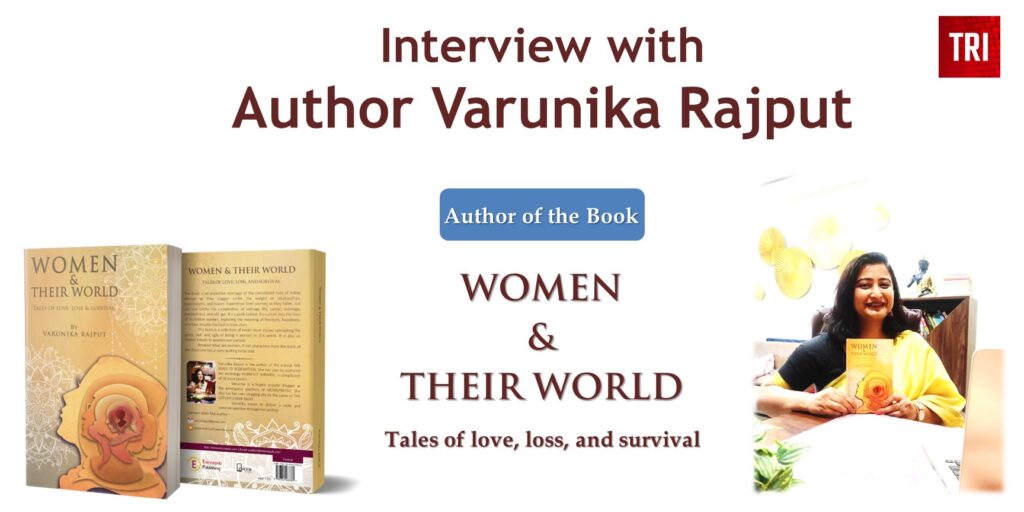
Interview with Author Varunika Rajput
Hello friends!
Today we are here in conversation with Varunika Rajput to talk about her fresh new release—Women & Their World. A heartwarming collection of seven short stories for you.
Writing about women once a fad has long since become passé. Hence, writing anything spotlighting ‘Woman’ and still being able to hold readers’ interest is nearly impossible. But all kudos to Varunika for handling such a clichéd subject so deftly. So without much ado, let’s delve into their world.