
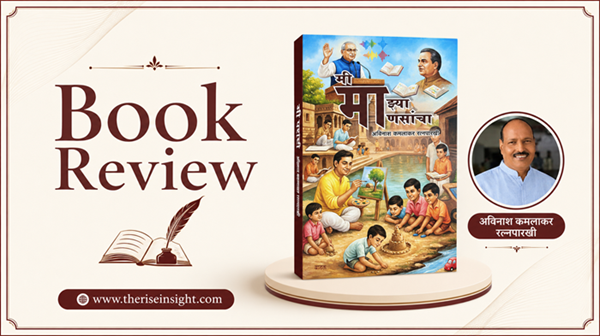
Some books entertain us, some educate us, and a few quietly remind us of the people and experiences that have shaped our lives. Avinash Kamlakar Ratnaparkhi’s Marathi book मी माझ्या माणसांचा belongs to the third category. It is a warm, sincere and deeply personal collection of memories, experiences and character sketches drawn from the author’s journey through family life, education, employment and society. Spread across 47 writings, the book celebrates ordinary people whose goodness, courage and affection created an extraordinary impact on the author.
The title, which can be understood as “I Belong to My People,” beautifully expresses the soul of the book. Ratnaparkhi does not present himself as a person standing separately from others. Instead, he recognises that his identity has been shaped by his parents, relatives, teachers, colleagues, friends, mentors and well-wishers. Each chapter is an expression of gratitude towards someone or something that left a lasting impression upon his heart.
The collection opens a window into the author’s childhood, family background, working life and emotional world. Chapters such as “मी माझ्या माणसांचा,” “माझा बाप,” “हो, मी हिमालय पाहिलाय,” “माझ्या आयुष्याची कहाणी,” and “माझी सहधर्मचारिणी” suggest the deeply autobiographical nature of the book. However, the author himself makes it clear that this is not a formal autobiography. Rather, it is a collection of meaningful episodes selected from different stages of life. This approach gives the book freedom and freshness. Readers do not have to follow a strict timeline; they can enter any chapter and discover a complete memory, personality or life lesson.
One of the book’s greatest strengths is its emotional honesty. Ratnaparkhi writes without artificial drama or unnecessary decoration. He presents people as he remembers them—with affection, respect and sometimes gentle humour. Whether he is writing about his father, siblings, teachers, office colleagues or members of his extended family, his words reflect a genuine emotional connection. The reader can sense that these pieces were not written simply to fill pages. They were written because the author felt a responsibility to preserve the memories of people who had supported and inspired him.
Family occupies an important place in the collection. The author’s memories of his father, brothers, sisters, wife and other relatives reveal the importance of traditional Indian family values. The chapters connected with his sisters, whom he lovingly describes as the lifelines of his family, are especially touching. His tribute to his life partner also reflects gratitude for the silent strength and companionship that sustain a person through different phases of life. These writings remind us that family relationships are not maintained only through blood but through sacrifice, patience, trust and everyday acts of care.
The book also presents several individuals outside the immediate family. Ratnaparkhi remembers teachers, guides, officers, co-workers, social workers and friends who influenced his personal and professional growth. Figures such as Suresh Dada, Sadhebhol Bhau, D.P. Shinde Sir, Kamthe Sir, Kiranrao, Chandatre Baba and others appear as living personalities rather than distant names. Through these portraits, the author shows how guidance may come from unexpected people and how even a short interaction can influence a person for many years.
His experience in the Income Tax Department adds another interesting dimension to the collection. Professional life often produces stories that are serious, humorous, challenging and inspiring at the same time. Ratnaparkhi draws upon his long service experience to narrate such moments with balance. He protects official confidentiality and avoids unnecessary controversy, yet gives readers a meaningful glimpse into workplace relationships, administrative situations and the human side of government service. His writing suggests that an office is not merely a place of files, rules and duties; it is also a place where friendships develop, personalities are tested and valuable lessons are learned.
Several chapters move beyond personal remembrance and enter the world of social observation. The book speaks about institutions, social work, religious experiences, rural personalities and people who contributed to the community. Such pieces give the collection a wider purpose. It is not only the story of one man’s life but also a record of the social and cultural environment through which he travelled. The author preserves a world built on mutual respect, personal relationships, community participation and faith in human goodness.
The chapter titles reveal the range of experiences included in the book. There are memories of childhood, stories of training, accounts of Pune and Kolhapur, religious encounters, tributes to respected personalities and affectionate portraits of family members. Titles like “रेड मारी पापाजीने,” “पिछे से आओ?”, and “एकादशी व खिमा मटर” also indicate the author’s humorous side. Such pieces prevent the book from becoming emotionally heavy. Humour appears naturally from situations and human behaviour, making the reading experience pleasant and relatable.
Ratnaparkhi’s language is simple, conversational and accessible. He does not try to impress readers with difficult expressions. Instead, he writes as though he is sitting with them and narrating incidents from his life. This spoken quality makes the stories feel intimate. Readers, especially those familiar with Maharashtrian culture and middle-class family life, may recognise people like these in their own families and neighbourhoods. Even when the reader does not personally know the individuals mentioned, the emotions attached to them remain universal.
The author also shows humility in his approach. He acknowledges that memory may not always preserve every detail perfectly. Some names have been altered or omitted to respect privacy, particularly in accounts connected with official service. This transparency strengthens the reader’s trust. The author does not claim that his memories provide an exact historical document; he offers them as sincere recollections coloured by time, emotion and gratitude.
The cover of the book effectively represents its central idea. It brings together images of books, education, public speaking, art, childhood and community life. The presence of children learning, reading, painting and playing suggests that personality is formed through many small experiences. The visual world of the cover matches the book’s message: life is a shared space where elders guide, children learn and relationships leave lasting impressions.
At its heart, मी माझ्या माणसांचा teaches the importance of acknowledging people while their memories are still alive within us. In today’s fast-moving world, many people forget those who supported them during difficult years. Ratnaparkhi pauses, looks back and says thank you. His book therefore becomes an act of remembrance as well as an expression of indebtedness.
The collection may particularly appeal to readers who enjoy memoirs, personal essays, family narratives and inspiring real-life accounts. Younger readers can learn about gratitude, discipline and relationships, while older readers may find the book emotionally familiar and nostalgic. It also encourages every reader to think about their own “people”—parents, teachers, friends and guides whose contribution may never have been properly acknowledged.
Overall, मी माझ्या माणसांचा is a heartfelt and meaningful work rooted in lived experience. Avinash Kamlakar Ratnaparkhi succeeds in turning personal memories into a shared celebration of human relationships. The book tells us that a successful life is not measured only by professional position or material achievement, but by the love received, the trust earned and the lives remembered with gratitude. Simple in style yet rich in feeling, this collection leaves readers with warmth in the heart and a renewed respect for the people who walk beside us throughout life.